
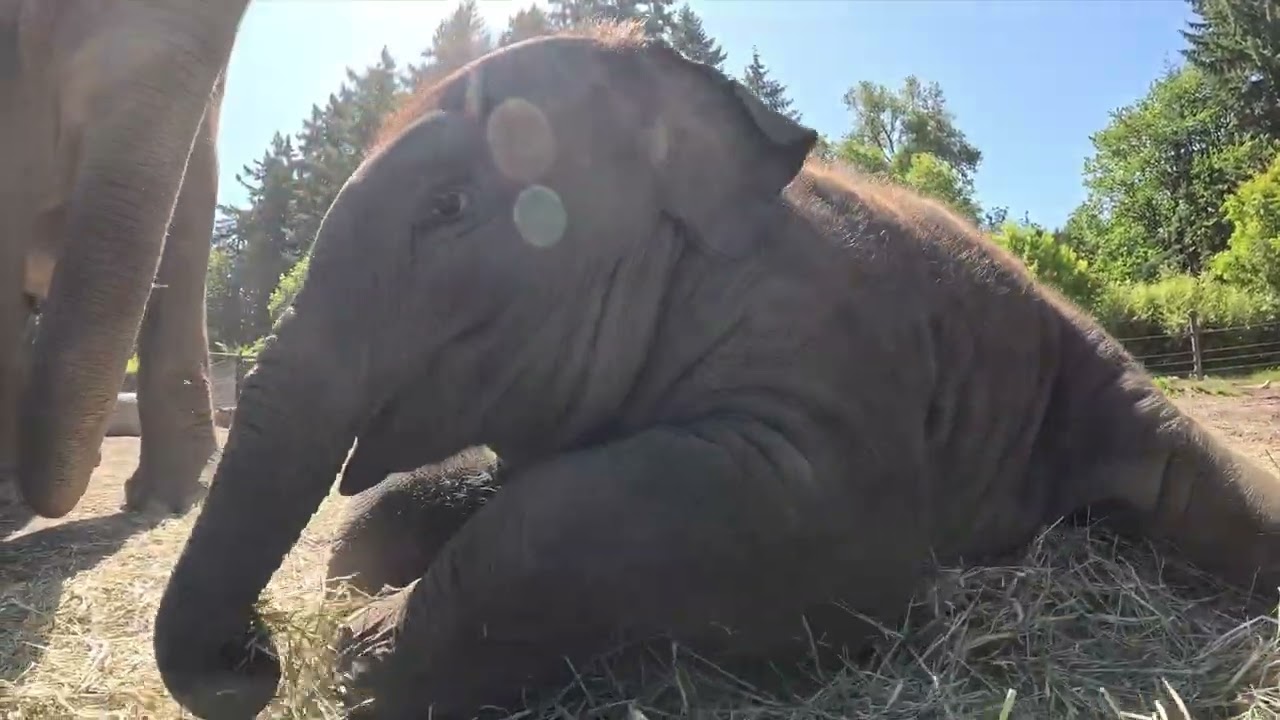
- The playful behavior and social development of baby elephants.
- The impact of environmental enrichment in zoos.
- Conservation efforts and the role of elephant sanctuaries.
- The significance of educational programs in wildlife preservation.
- Challenges and strategies in modern zoo management.
Baby Elephant Tula-Tu Plays In The Sunshine showcases how young elephants like Tula-Tu develop social skills through playful behavior. This particular form of interaction serves as a critical component of their growth. In a herd, play not only strengthens social bonds but also aids in physical development. As Tula-Tu enjoys her time in the sunlight, it is more than mere amusement; it is a rehearsal for adulthood. Activities like mock sparring and water play hone motor skills and teach young elephants how to interact with herd members.
The provision of a stimulating environment is essential for the well-being of zoo animals. Enrichment activities such as interactive toys, diverse terrain, and water features provide mental and physical stimulation. Zoos recreate elements that mimic an elephant’s natural habitat. This approach reduces stress and encourages natural behavior. For Tula-Tu, having access to such enriched environments means learning key survival skills within a controlled setting.
Conservation efforts focus on preserving the threatened populations of elephants worldwide. Elephant sanctuaries and protected reserves play a pivotal role. They offer a safe haven from poaching and habitat loss. By studying elephants like Tula-Tu, researchers can gather data that informs these initiatives. Breeding programs in accredited zoos contribute to genetic diversity and population stability, crucial for long-term conservation success.
Educational programs in zoos serve as vital tools for raising awareness. They provide insights into the lives of elephants, emphasizing their intelligence and social complexity. By educating the public, zoos foster a deeper understanding of wildlife conservation. This awareness drives engagement and support for preservation efforts. Tula-Tu’s playful antics capture attention and serve as a live demonstration of the importance of preserving such majestic creatures.
Managing a zoo involves numerous modern challenges. These facilities must prioritize animal welfare while educating and entertaining visitors. Strategies include habitat design that encourages natural behavior and implementing rigorous health care protocols. For Tula-Tu, having a supportive environment means access to care and expertise that promotes a healthy life. As zoos evolve, they become instrumental in conservation, research, and education.
*****
Source Description
oh hay baby
At five months old Tula-Tu is still nursing, but like most babies she enjoys playing with (and in) her mom’s food!
