
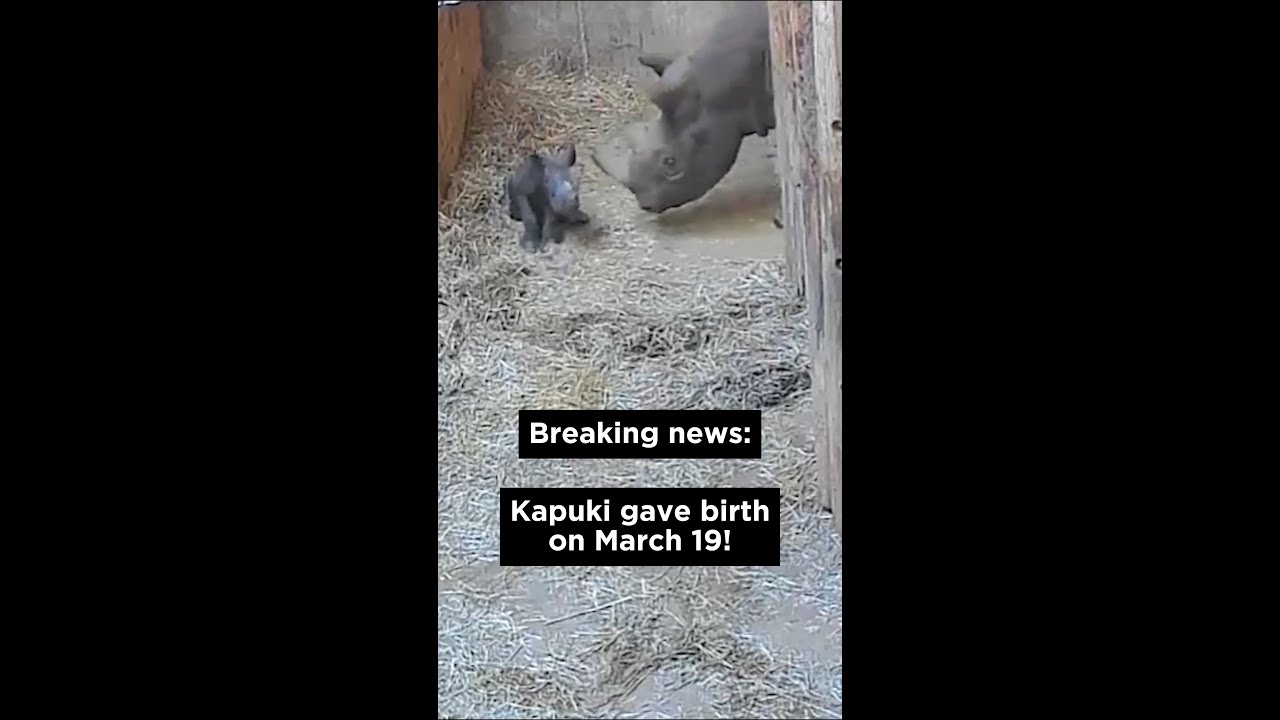
- Introduction to the new rhino calf footage and its significance for wildlife conservation.
- The importance of captive breeding programs in zoo management.
- Detailed information about rhino biology and behavior.
- The role of video documentation in understanding and conserving rhinos.
- Challenges and future prospects for rhino conservation.
Recently, footage of a new rhino calf captured global attention, marking a significant moment in wildlife conservation. The footage highlights a calf born in captivity, offering insights into the vital role zoos play in species preservation.
Captive breeding programs are central to maintaining and boosting populations of endangered species like the rhino. These programs help maintain genetic diversity and offer a controlled environment where rhinos can thrive. In this setting, zoos also provide essential veterinary care and research opportunities that are vital for the species’ survival.
Rhinos, with their distinct horned features and massive size, are integral to their ecosystems. They are essential grazers, shaping the landscape and supporting biodiversity. Understanding their behavior, from social interactions to feeding habits, helps biologists design better conservation strategies. This knowledge becomes even more crucial as habitat loss and poaching continue to threaten their survival.
The role of video documentation cannot be overstated. High-quality footage allows researchers to observe rhino behavior unobtrusively, aiding the study of their growth, social structures, and responses to stimuli. Educators and conservationists use these videos to raise awareness about the rhino’s plight, drawing public support for conservation efforts.
However, challenges such as poaching and habitat fragmentation persist. Conservationists are working on innovative solutions, including anti-poaching technologies and translocation projects, to save rhinos from extinction. Engaging local communities and implementing stricter wildlife protections are critical steps in these efforts.
The new rhino calf footage is more than just a viral sensation; it is a beacon of hope and a reminder of the ongoing efforts required to preserve these majestic creatures for future generations.
*****
Source Description
In case you missed it, eastern black rhinoceros Kapuki gave birth to a female calf on March 19!
To give Kapuki and her calf privacy, they will remain behind the scenes for several weeks as the calf grows in size and strength.
The calf is 20-year-old Kapuki’s third offspring at Lincoln Park Zoo and her first with 21-year-old male Utenzi. Eastern black rhinoceroses are a critically endangered species with only around 1,000 mature individuals in the wild, making this birth extra special.
Stay tuned for more updates!
