
- Coelacanth Discoveries: Explore the significance of the coelacanth’s discovery and its impact on our understanding of evolutionary biology.
- Evolutionary Links: Analyze the coelacanth’s evolutionary connection to humans and other vertebrates.
- Anatomical Features: Examine the distinct anatomical traits of the coelacanth that highlight its relationship to land-dwelling creatures.
- Conservation Efforts: Discuss the challenges and strategies involved in conserving the coelacanth and its habitat.
- Zoological Importance: Highlight the coelacanth’s relevance in zoology and its role in studying vertebrate evolution.
The discovery of the coelacanth in 1938 off the coast of South Africa was a landmark moment in the realm of evolutionary biology. Long thought extinct, this "living fossil" provided scientists with a unique glimpse into the distant past. The coelacanth belongs to a lineage that dates back around 400 million years, well before the dinosaurs. Its sudden appearance in modern times shattered long-held beliefs about species continuity and extinction.
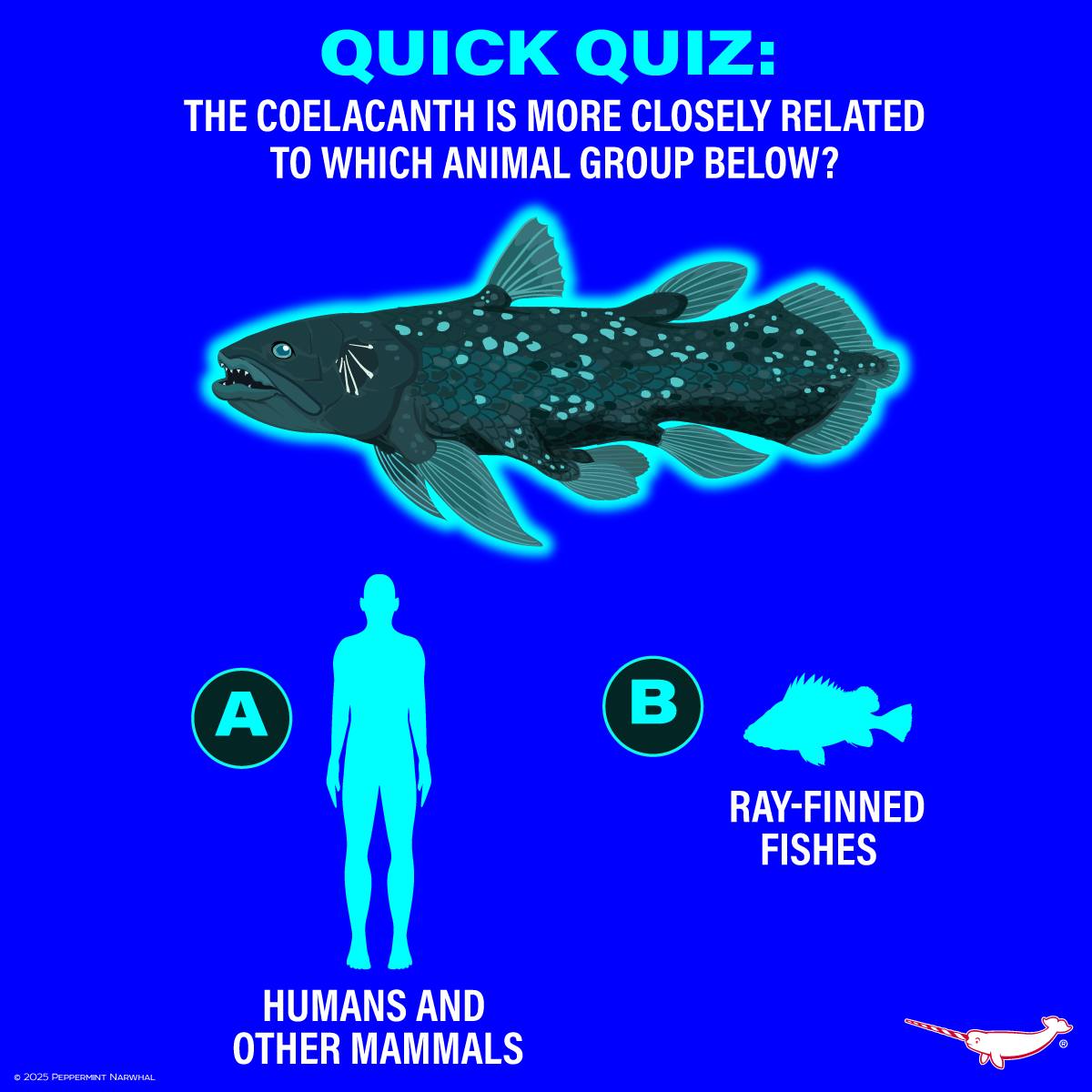
Examining the coelacanth’s place in the evolutionary tree reveals fascinating insights. Despite its fish-like appearance, the coelacanth is more closely related to humans and other tetrapods than it is to ray-finned fishes, which comprise the majority of fish diversity today. This connection is not immediately obvious, as the coelacanth swims in the deep oceans, far removed from terrestrial life. Yet, it shares a common ancestor with all land vertebrates, including mammals, reptiles, and amphibians.
Key anatomical features of the coelacanth underscore this evolutionary relationship. One of the most significant characteristics is its lobed pectoral and pelvic fins. These lobe-finned limbs exhibit a structure more akin to the limbs of land animals than the fins of typical fish. This anatomy suggests an evolutionary link to the first vertebrates that ventured onto land. Moreover, the coelacanth possesses a unique intracranial joint, a trait shared with ancestral tetrapods, allowing its skull to hinge and provide a greater range of motion.
The coelacanth’s respiratory and circulatory systems also highlight its evolutionary path. Unlike most fish that rely on swim bladders, the coelacanth has a vestigial lung, indicative of its ancestors’ adaptation to breathing air in shallower waters. This feature connects it to the line leading to terrestrial animals, providing clues to how some vertebrates transitioned from aquatic to terrestrial life.
Today, the coelacanth’s conservation status is precarious. With confirmed populations in the Western Indian Ocean and the waters around Indonesia, these ancient fish face numerous threats. Habitat degradation, accidental bycatch, and climate change are significant concerns. Conservationists are endeavoring to protect these unique creatures, employing strategies such as marine protected areas and sustainable fishing practices to preserve their environment.
The zoological and ecological importance of the coelacanth extends beyond its status as a living fossil. It offers invaluable insights into vertebrate evolution and the adaptability of life on Earth. Researchers study the coelacanth to understand developmental processes and genetic pathways that shaped the evolution of limbs and other anatomical structures. Its survival offers hope and inspiration in a world where biodiversity is increasingly threatened.
In the field of wildlife conservation, the coelacanth represents both a challenge and a triumph. Efforts to protect this enigmatic species engage scientists, governments, and local communities in a collaborative effort. The preservation of its habitat not only benefits the coelacanth but also other marine organisms, highlighting the interconnectedness of ecosystems.
Coelacanths have shaped our understanding of the natural world, providing a testament to the power of evolution and adaptation. Their existence underscores the importance of conserving our planet’s biodiversity. As we continue to study and protect this important species, the coelacanth remains a symbol of scientific discovery and conservation triumph.
For those interested in zoology, the coelacanth serves as a vital link to the past and a guide to the future. Its story is one of resilience and adaptation, reminding us of the complexity and beauty of life on Earth. As we uncover more about this fascinating creature, our appreciation for the intricate tapestry of evolution deepens, inspiring future generations to explore and protect the natural world.
*****
Source Description
QUICK QUIZ: The Coelacanth is more closely related to which animal Group below?
A. Humans and other mammals
B, ray-finned fishes
Post your answers in the comments.
COELACANTH MERCH: https://www.peppermintnarwhal.com/s/search?q=Coelacanth
Shop www.peppermintnarwhal.com
International Shoppers (outside of the USA and Canada) visit our store on Etsy:
www.etsy.com/shop/PeppermintNarwhal
