
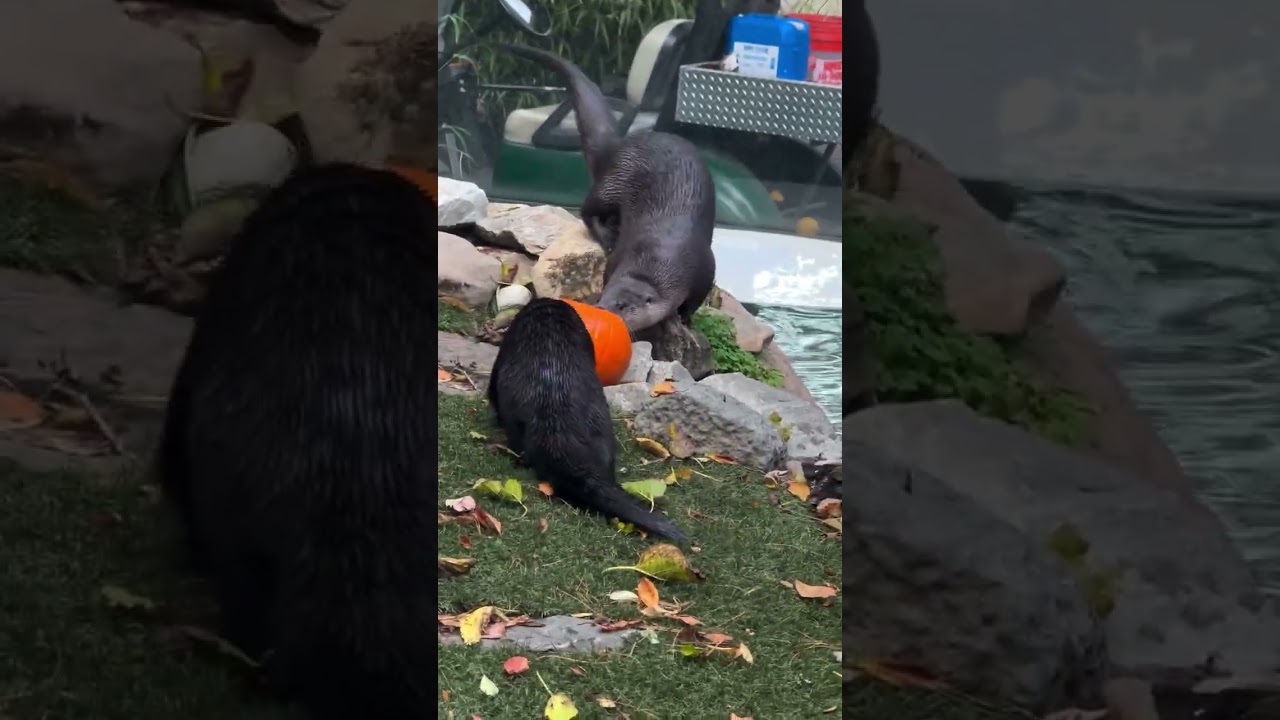
- The significance of enrichment activities for otters and other wildlife in captivity.
- Insights into zoology and otter behavior, focusing on seasonal activities like pumpkin enrichment.
- Zoo management strategies to promote animal welfare and engagement.
- The role of wildlife conservation initiatives in preserving otter habitats and populations.
- Educational opportunities for the public to understand and support otter conservation.
Enrichment activities play a crucial role in keeping otters and other animals healthy and stimulated in captivity. When observing otters engaged in playful activities with pumpkins during an event like “An otterly gourd time,” we witness more than just adorable antics. These activities are a carefully crafted part of zoo management strategies. They serve to mimic natural behaviors, encouraging physical exercise and mental stimulation critical for overall well-being.
Otters are intelligent and curious creatures. They thrive on environmental challenges that engage their problem-solving skills and physical abilities. When zoos introduce seasonal activities, such as providing pumpkins filled with treats, they are offering more than a playful distraction. These activities help simulate the complexities otters would navigate in the wild. It engages their senses and supports behavioral health. This continuous stimulation is critical to prevent boredom and its associated negative behaviors.
In-depth knowledge of zoology and otter behavior also informs how these activities are planned. Otters, particularly the North American river otter and the Asian small-clawed otter, are adapted to diverse environments. Their behavior is complex and fascinating, as they exhibit intricate social interactions and hunting techniques. The addition of new, interactive elements in their enclosure, like pumpkins, reflects an understanding of their preferences and instincts. This immersion in naturalistic behaviors helps to maintain their health in all dimensions—physical, mental, and emotional.
Zoo management is pivotal in these endeavors, using scientific insights to create enriching environments. An otterly gourd time’s success shows how well-planned activities can lead to significant improvements in the animals’ quality of life. These exercises are not just a non-serious aspect of their care routine but are integral to professional standards in modern zoological practices. Facilities often work closely with veterinarians and animal behaviorists to develop these programs, ensuring they are both safe and beneficial.
Wildlife conservation is another essential aspect of zoo practices. Each activity, like a playful pumpkin encounter, underscores the larger mission of conservation education. Otters are vulnerable to habitat destruction, pollution, and climate change. By engaging the public with educational programs alongside enrichment viewing, zoos can highlight the importance of conservation efforts. They bring attention to the challenges otters face in their natural environments and advocate for protective measures. Visitors’ fascination with these creatures can translate into support for broader conservation initiatives, fostering a community dedicated to preserving biodiversity.
Moreover, offering an enriching experience opens up numerous educational opportunities. Zoos serve as pivotal platforms for enhancing public awareness and understanding of animal conservation. An event like An otterly gourd time becomes a medium for educating the public about the life of otters, their habitats, and the threats they face in the wild. These insights are invaluable for cultivating environmental stewardship in communities. Educational programs accompany these events, providing additional layers of information and engagement for visitors of all ages.
The significance of An otterly gourd time and similar activities transcends mere entertainment. They reflect a comprehensive effort in enriching captive animal lives, understanding animal behavior, informed zoo management, and promoting wildlife conservation. By fostering a deeper connection between humans and wildlife, these initiatives enhance both animal welfare and conservation advocacy, ensuring that efforts to protect otters and their ecosystems continue to thrive.
*****
Source Description
An otterly gourd time 🎃
