
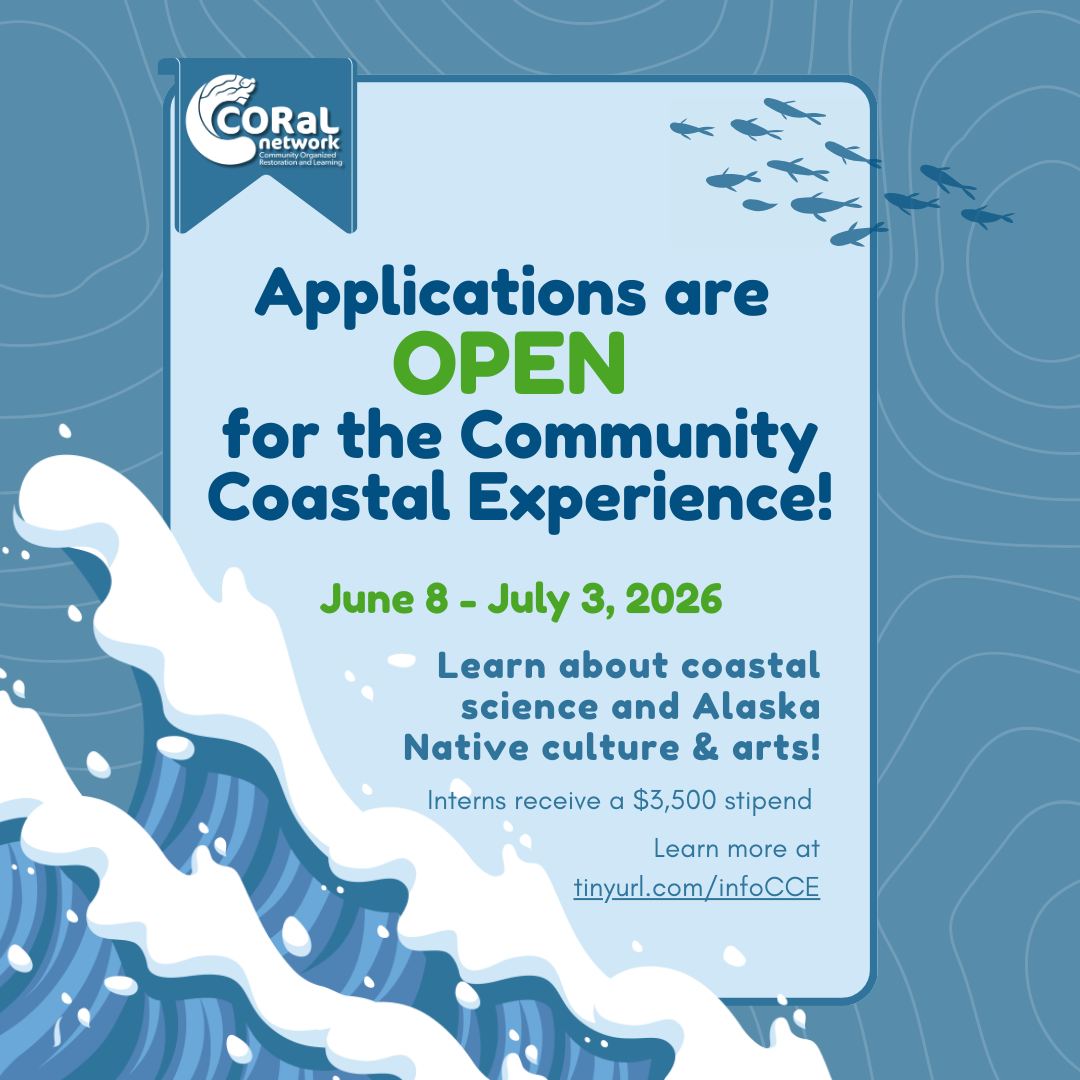
- Applications for the CORaL Network’s Community Coastal Experience (CCE) are open.
- Program details, including dates, stipend, and eligibility.
- Focus areas: marine and coastal research, environmental monitoring, and Alaska Native culture.
- Benefits of the internship and what participants can expect.
- Application process and deadlines.
The CORaL Network’s Community Coastal Experience (CCE) is a unique opportunity for adults aged 18 and up interested in marine ecosystems, environmental conservation, and cultural heritage. This program will be held from June 8 to July 3, 2026, and aims to enrich participants’ understanding of coastal environments through hands-on experiences.
Participants in the CCE will engage with various facets of marine and coastal research. This includes understanding marine biodiversity, studying climate impacts on coastal ecosystems, and examining the practices that sustain environmental health. With the urgent need to address challenges like habitat loss and climate change, organizations like the CORaL Network have increasingly recognized the importance of fostering new generations of conservationists and researchers. The program emphasizes the significance of empirical research, citizen science, and community involvement in creating sustainable solutions for these threats.
Alongside marine and coastal research, the CCE places great importance on environmental monitoring. Participants will learn how to assess ecosystems, collect data, and analyze environmental indicators. This monitoring is crucial in tracking changes over time, thereby enhancing our knowledge of coastal resilience. Effective environmental monitoring programs are essential in informing policy decisions and guiding conservation strategies. The CCE allows interns to develop skills required for conducting field research and using technological tools that assist in data collection.
Additionally, the CCE intends to spotlight the rich cultural history and arts of Alaska Native communities. Participants will acquire insights into indigenous art, traditions, and ecological practices. This component is particularly important as historical knowledge often contains lessons critical for contemporary conservation efforts. Understanding the interconnectedness between people and nature through cultural lenses fosters a more holistic approach to conservation. The involvement of Alaska Native perspectives not only enriches the experience but acknowledges the deep-rooted relationships these communities have with their environment.
Financially, the program has much to offer. The stipend for the 2026 CCE is $3,500. This financial support is supplemented by coverage for travel, food, and lodging, thereby lowering barriers for participants. Interns will have the chance to focus on their work and learning without the burden of expensive logistics. Such financial assistance makes the CCE more accessible to a diverse range of applicants who might not otherwise have the opportunity to gain experience in marine and coastal environments.
In terms of what participants can expect, interns will be actively engaged in projects involving fieldwork, research analysis, and community outreach. They will have opportunities to collaborate with experts in various fields, including marine biologists, ecologists, and cultural historians. The program encourages teamwork and fosters a spirit of collaboration, allowing participants to build valuable professional networks.
The application process for the CCE is straightforward but requires careful attention. Interested candidates should visit tinyurl.com/infoCCE for detailed information. Applications are being accepted on a rolling basis until February 6, 2026. Early submission is encouraged, as spaces may fill quickly. Prospective interns will need to submit their application materials, which typically include a resume, cover letter, and references, showcasing their interest and qualifications for the program.
Participating in the CCE offers more than just an internship; it presents a doorway to understanding complex environmental issues, community dynamics, and cultural heritage. The combination of marine research, environmental monitoring, and Alaska Native cultural education equips participants with a comprehensive view of contemporary coastal challenges. This multifaceted approach is essential to nurturing informed advocates for marine conservation.
The initiative also highlights the importance of teamwork and collaboration. Interns will have opportunities to work with their peers and seasoned professionals who share a commitment to environmental stewardship. Such experiences can significantly influence career paths for participants, providing them with a clearer understanding of possible roles within marine science and conservation. Networking opportunities abound, potentially leading to future collaborations or job placements.
Moreover, the CCE internships are not just about gaining skills and knowledge; they also revolve around making an impact. Interns become part of a larger movement aimed at conserving and protecting invaluable coastal ecosystems. Their work contributes to localized efforts that can have significant implications for broader environmental policies. Such real-world experiences are integral to the sustainability narrative, as they combine education with active participation in conservation efforts.
The interdisciplinary nature of the work fosters a more holistic understanding of environmental challenges. Those interested in zoology will find ample opportunities to study marine species, their habitats, and their interactions within ecosystems. The program encompasses various scientific approaches, from ecological assessments to sociocultural evaluations, offering a rich learning experience. Participants will learn how to think critically about environmental data and how various factors—from human activities to climate change—intersect to influence marine life.
Additionally, the program aims to bring awareness to the impact of climate change on coastal regions. With rising sea levels, shifting ecosystems, and extreme weather events, understanding these dynamics is crucial for effective conservation strategies. Interns will engage with cutting-edge marine research geared toward mitigating the effects of climate change. They will also explore potential solutions and strategies for building resilient coastal communities.
Another invaluable aspect of the CCE is the inclusion of perspectives from Alaska Native communities. Their traditional ecological knowledge often contains significant insights about environmental stewardship and resource management. Integrating indigenous wisdom into contemporary conservation efforts fosters a deeper understanding of the local ecosystem and highlights the importance of cultural dimensions in environmental issues. It also allows interns to appreciate the valuable contributions that indigenous peoples make toward preserving biodiversity.
To summarize, the Community Coastal Experience presents a multidimensional approach to learning about marine environments while also honoring Alaska Native voices and perspectives. Interns will walk away with a well-rounded skill set that equips them for future roles in wildlife conservation, marine biology, and environmental advocacy. With a stipend, financial support for travel, meals, and accommodations, and access to a network of professionals and like-minded individuals, participants will find this internship hugely beneficial.
This program embraces the importance of fostering new generations of environmental stewards who will take on the challenges faced by our coastal ecosystems. Through hands-on experience in research, monitoring, and cultural education, interns will play a vital role in the ongoing dialogue about marine conservation. Engaging with complex environmental issues in a supportive setting empowers participants to contribute meaningfully to the field.
Ultimately, this internship is not just a stepping stone but a launchpad for a career dedicated to marine science and conservation. The experiences gained from the Community Coastal Experience will resonate long after the conclusion of the program. Participants carry forward the lessons learned, the knowledge gained, and the relationships forged as they embark on their professional journeys in environmental stewardship.
This robust experience promises to ignite a passion for marine research and ecological preservation, ultimately shaping informed advocates dedicated to protecting our oceans and coastal communities. The application period is now open—engage with this opportunity and make a difference in the crucial fields of marine and coastal conservation.
*****
Source Description
Applications are now open for the CORaL Network’s Community Coastal Experience 2026!
The Community Coastal Experience (CCE) is an adult (ages 18+) internship program organized by the CORaL Network to increase opportunities in marine & coastal research, environmental monitoring, and Alaska Native cultural history & arts with multiple CORaL Network Partners (learn more about the network here: https://akcoralnetwork.org).
The 2026 CCE will run from June 8 – July 3, 2026, and interns will receive a $3,500 stipend as well as travel, food, and lodging.
Learn more and apply at tinyurl.com/infoCCE. Applications will be accepted on a rolling basis until February 6, 2026.
