
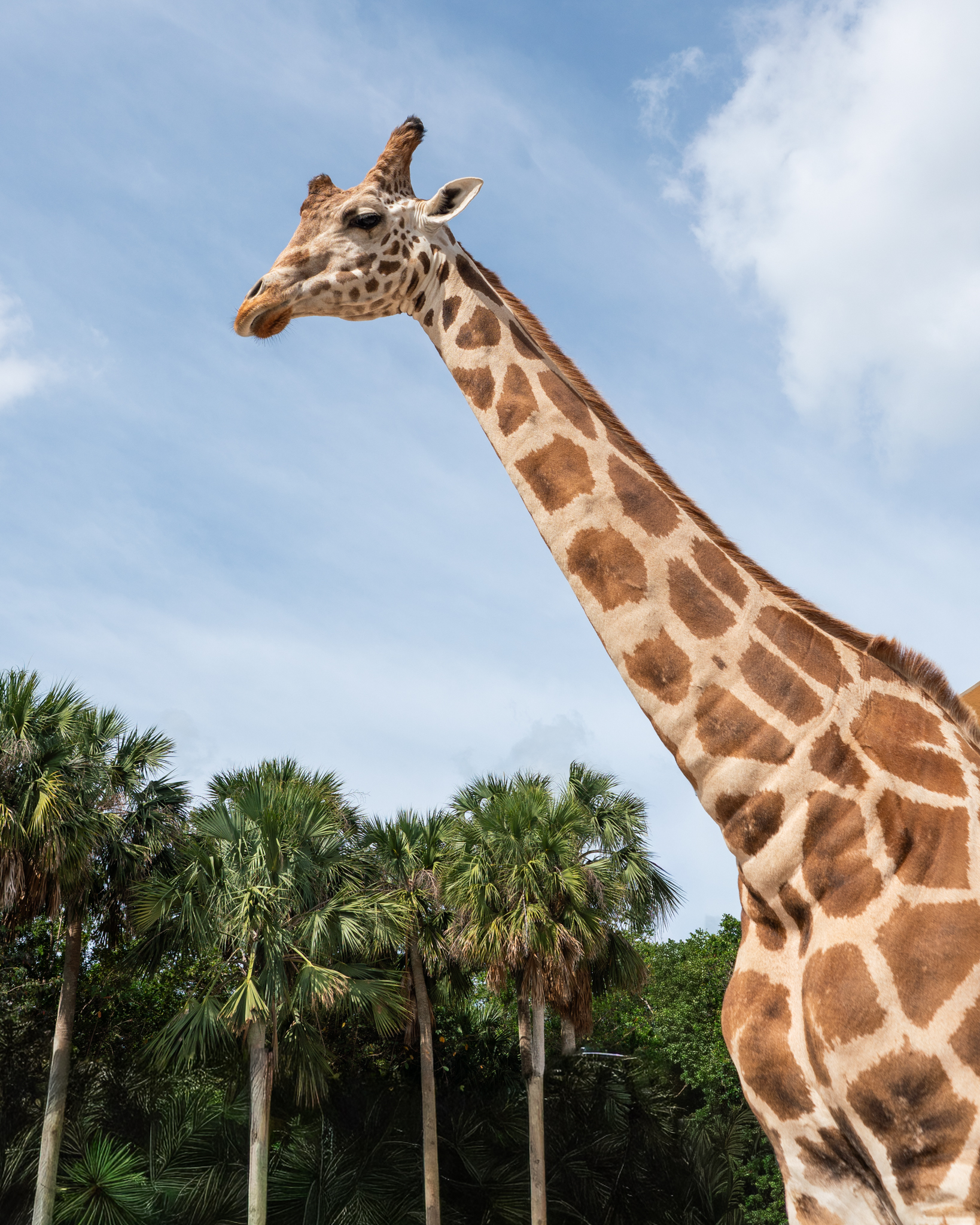
- Adult giraffes can reach heights of up to 18 feet.
- Many palm trees are shorter than giraffes, but some exceed their height.
- Giraffes, like Zuri, have unique adaptations for their height.
- Conservation efforts are crucial for giraffe populations.
- Understanding the ecological role of giraffes and palm trees can inform wildlife management.
Adult giraffes are remarkable creatures, with some reaching heights of up to 18 feet. This impressive stature allows them to browse high trees that feed smaller herbivores. The height advantage aids in their survival, particularly in their natural habitats across Africa. In their exploration of environments, giraffes often come across various flora, including palm trees. The question arises: Are giraffes like Zuri taller than a palm tree?
When comparing heights, it’s essential to consider the average heights of both giraffes and various palm tree species. The Bismarck palm and Pindo palm, for example, typically reach about 10 to 15 feet. This means that most adult giraffes indeed tower over these types of palm trees. Yet, certain species, such as the coconut palm and royal palm, can skyrocket to heights over 80 feet. Here, giraffes cannot compete.
Giraffes possess several adaptations that enable them to achieve their remarkable height. Their long necks consist of seven elongated vertebrae, just like human necks. However, these vertebrae are significantly larger, allowing them to reach high foliage. The giraffe’s legs are also long and powerful, giving them the ability to run quickly, albeit not as fast as other pace-setting animals. This combination of height and speed is key to their survival, balancing the needs for foraging and evasion from predators.
The adaptations of giraffes extend beyond mere height. Their long tongues, which can stretch up to 20 inches, help them grasp leaves and twigs with ease. This prehensile quality allows them to select the most nutritious parts of foliage. Additionally, their camouflaged coats serve as protection, blending seamlessly into the treetops, further enhancing their safety from threats.
Giraffes also have unique social structures and behaviors. They form loose herds, which can help protect individuals from predators. In these groups, females often care for their young collectively, increasing survival rates. Social interactions go beyond mere cooperation; giraffes communicate using low-frequency sounds that humans cannot hear. This form of communication is pivotal in maintaining group cohesion.
While understanding how giraffes compare with palm trees is intriguing, the focus should also be on conservation issues impacting giraffes. As populations decline due to habitat loss, poaching, and climate change, their future hangs in the balance. The Giraffe Conservation Foundation reports that giraffe numbers in the wild have halved over the last few decades. This steep decline calls for immediate action to increase awareness and funding for giraffe conservation initiatives.
Various organizations are actively working to protect giraffes and their habitats. These include habitat restoration projects, anti-poaching efforts, and community involvement programs. Education plays a crucial role in creating awareness about the threats giraffes face. Engaging local communities can lead to a more profound understanding of the importance of preserving biodiversity.
Palm trees, though often overlooked, also serve significant ecological functions. These iconic trees provide habitat for many species and contribute to various ecosystems. In many regions, palm trees play intricate roles in the local economy by providing food, shade, and timber. The over-exploitation of palm resources can also jeopardize their survival and that of the species that depend on them, including giraffes.
The ecological interplay between giraffes and palm trees is fascinating. Giraffes often consume the leaves of several tree species, including the acacia, but their foraging habits can indirectly benefit palm trees. By trimming high foliage, they can allow sunlight to reach the undergrowth, encouraging a more biodiverse environment.
The conservation of both species is therefore essential. Effective wildlife management strategies must factor in these relationships, ensuring that both giraffes and palm trees coexist sustainably. Understanding how they interact can enhance habitat preservations and promote ecosystem stability.
Moreover, the challenge of conserving giraffes extends to political and economic realms. In some regions, communities rely on wildlife for tourism, which can offer financial incentives to protect natural surroundings. This symbiotic relationship can lead to innovative conservation strategies that benefit local populations and support wildlife.
The conservation of iconic species like giraffes is often tied to larger global environmental considerations. As climate change impacts habitats, the future of not just giraffes but diverse flora and fauna is at stake. Engaging and educating individuals about these complex issues can stimulate collective action toward safeguarding biodiversity.
Organizations and zoos worldwide are crucial in research and conservation efforts. They actively study giraffe behaviors and genetics, which can provide insights into better management practices in the wild. Programs designed to simulate giraffe habitats can lead to more sustainable environments and inform public engagement.
In summary, the comparison between the heights of giraffes like Zuri and palm trees underscores fascinating biological and ecological dynamics. While most adult giraffes surpass the heights of many common palm species, others soar to impressive altitudes that dwarf even the tallest giraffes.
Understanding these interactions involves appreciating the adaptations of giraffes, the ecological significance of palm trees, and the conservation needs of both. Through continued education and responsible wildlife management, the coexistence of giraffes and palm trees can lead to healthier ecosystems.
Such efforts not only help preserve these iconic species but also enrich human understanding of the intricate relationships present in nature. Prioritizing conservation and fostering biodiversity should be a shared responsibility, paving the way for a sustainable future for both giraffes and the palm trees that coexist with them.
*****
Source Description
🌴🦒 Are giraffes like Zuri taller than a palm tree?
Adult giraffes can reach heights of up to 18 feet, which makes them taller than many types of palm trees , like the bismarck or pindo palm. But they don’t quite measure up to the towering royal or coconut palms, which can stretch over 80 feet tall!
