
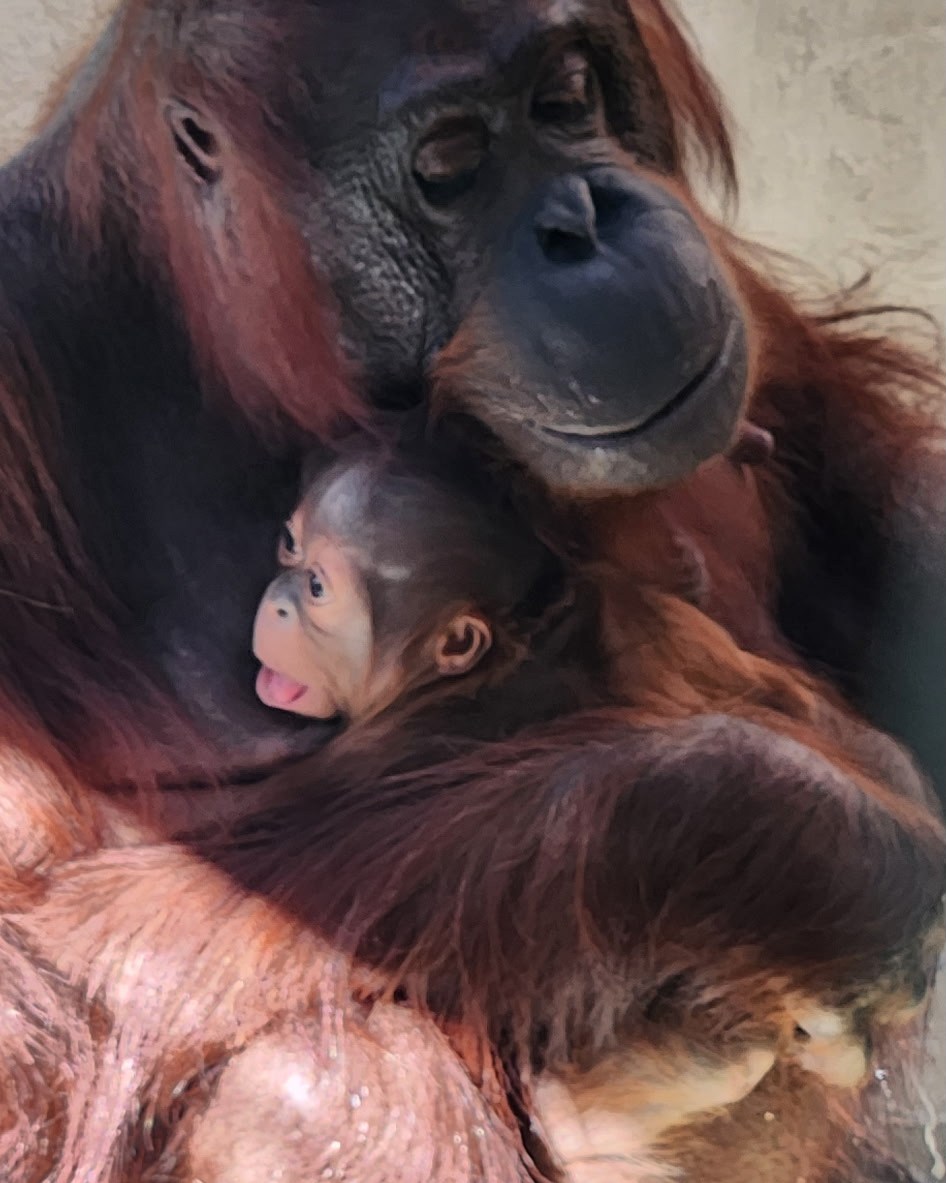
- Bornean orangutans and their habitat conservation challenges
- The significance of the L.A. Zoo’s orangutan family
- The role of zookeepers in animal care and education
- Impact of new births on species conservation efforts
- Importance of public awareness in wildlife preservation
The Bornean orangutan, scientifically known as Pongo pygmaeus, is a critically endangered species native to the island of Borneo. The primary threats to their survival include habitat destruction due to logging, agricultural expansion, and human encroachment. These factors have led to a significant decline in their populations. The birth of a new orangutan baby at the L.A. Zoo, a male born to mother Kalim and father Isim on October 10, adds a glimmer of hope to the challenges faced by this species. As guests can now admire Kalim, Isim, and their offspring at the Red Ape Rain Forest exhibit, the importance of such births cannot be overstated in the context of conservation.
The orangutan family at the L.A. Zoo plays a significant role in raising awareness about the plight of their species. Kalim and Isim inhabit an enriching environment that mimics their natural habitat, featuring elements that promote their physical and mental well-being. The exhibit is designed to encourage natural behaviors, such as climbing and foraging. When guests observe the family dynamics, they gain insight into the social structure of orangutans, which is crucial for understanding their needs and behaviors. This observation serves not only as entertainment but as an educational opportunity to inform visitors about the realities faced by orangutans in the wild.
The role of zookeepers cannot be ignored in this context. Zookeepers like Jennifer H., who oversees the care of these magnificent creatures, are essential to the well-being of both the animals and the public. Their responsibilities include daily health checks, feeding, enrichment activities, and monitoring social interactions among the orangutans. Zookeepers also educate visitors about the ecological significance of orangutans and the conservation challenges they face. This interaction is vital for fostering a broader understanding of biodiversity and the interconnectedness of ecosystems.
The birth of a baby orangutan at the zoo is more than just a delightful event; it also serves as a critical moment for conservation programs. Each new birth is a step forward in building a genetically diverse population of orangutans. Zoo breeding programs aim to maintain genetic diversity and health in captive populations, which can be crucial if the species faces further decline in wild numbers. Conservation breeding allows for the possibility of reintroducing orangutans into the wild in the future, a strategy essential for the long-term survival of the species.
Public awareness is key in wildlife preservation. Each visitor to the L.A. Zoo is presented with educational opportunities that extend beyond the confines of the exhibits. The excitement surrounding the arrival of Kalim and Isim’s baby draws attention to the pressing issues of habitat loss, deforestation, and the illegal wildlife trade. Through engaging talks and interactive displays, the zoo encourages visitors to consider their role in conservation. Understanding the significance of individual choices—such as supporting sustainable palm oil production or reducing waste—can have a ripple effect on conservation efforts globally.
Bornean orangutans are unique in many ways. They exhibit a high level of intelligence and are known for their ability to use tools. In the wild, they fashion sticks to extract insects from tree bark or use leaves to gather water. These behaviors highlight the necessity for mental stimulation in captivity, which is where zookeepers play a crucial role. They constantly innovate enrichment strategies to promote natural behaviors in apes. Such strategies not only keep the animals engaged but also improve their quality of life, which is paramount in a zoo setting.
The connection between orangutans and their ecological role is also significant. As primarily frugivorous creatures, orangutans help maintain the health of tropical forests by dispersing seeds through their diets. This ecological function underscores their importance in sustaining biodiversity. When a species like the orangutan declines, the impact on their ecosystems is profound, leading to further loss of plant and animal species. Therefore, conservation efforts that focus on orangutans serve to protect entire ecosystems.
The dynamics within the orangutan family at the L.A. Zoo can provide a practical understanding of their social structures. Orangutans are semi-solitary; adult males typically roam alone, while females often stay in close association with their offspring. Understanding these social behaviors is essential for the effective management of captive populations. Observing interactions between Kalim, Isim, and their new baby can reveal behaviors such as nurturing, play, and communication methods. These insights can contribute to improving husbandry practices in zoos and sanctuaries globally.
Moreover, with the complexities associated with orangutan care, zoos must collaborate with conservation organizations and researchers. This collaboration helps ensure best practices are implemented in both captive and wild populations. Research conducted in zoos can inform strategies to protect orangutans in their natural habitats. The L.A. Zoo, for example, often participates in broader conservation initiatives aimed at habitat restoration and protection in Borneo.
The ongoing challenges faced by Bornean orangutans make every small victory—such as the birth of a baby—significant. It provides a tangible connection for the public to the plight of the species. Initiatives aimed at improving habitat conservation and reducing deforestation often gain traction through heightened public interest. The presence of a new orangutan baby can act as a catalyst for community engagement and action. This awareness can lead to increased donations, volunteerism, and advocacy for conservation.
Visitors to the zoo not only observe a remarkable species but also receive valuable insights into the urgent need for conservation. Well-designed educational programs help translate scientific understanding into practical actions that people can take in their daily lives. The emergence of social media has further amplified efforts to spread awareness about wildlife conservation. Engaging posts about Kalim, Isim, and their baby resonate with audiences, generating conversations that extend far beyond the zoo.
Understanding the nuances of wildlife conservation requires ongoing education and engagement. Every effort made by the L.A. Zoo to care for its residents underlines the interconnectedness of all species. A stronger commitment to conservation necessitates public knowledge about both the challenges and triumphs in wildlife management. A new baby orangutan serves as both a celebration and a reminder of the challenges that still exist in the battle for survival.
As news about Kalim and Isim’s baby spreads, it serves as a reminder of how one individual animal can have an outsized impact. The excitement surrounding the birth fosters an emotional connection to orangutans and their conservation. Long-term change often starts with these connections. It requires people to reflect on their relationship with wildlife and the natural environment.
Bornean orangutans are not just a species of interest; they are part of the fabric of our planet’s health. Each animal contributes to the intricate balance necessary for diverse ecosystems to thrive. The commitment of organizations like the L.A. Zoo ensures that efforts for species survival continue. Engaging the public through captivating stories will sustain this momentum over time.
The birth of an orangutan baby is not simply a local event; it embodies global conservation efforts. The L.A. Zoo serves as a vital link between wildlife and people, promoting awareness and understanding. Kalim and Isim’s newborn son represents hope in the ongoing fight for survival of Bornean orangutans. With increased awareness and conservation action, there lies the potential for a more sustainable future for this incredible species.
*****
Source Description
🍼🦧BABY ALERT!
The L.A. Zoo is excited to share the news that Bornean orangutans Kalim and Isim have welcomed a new baby boy! Born on Oct. 10, the infant and his mother, Kalim, have been bonding behind-the-scenes. Guests can now see Kalim, Isim, and their baby on exhibit at the Red Ape Rain Forest.
📸: Animal Keeper Jennifer H.
