
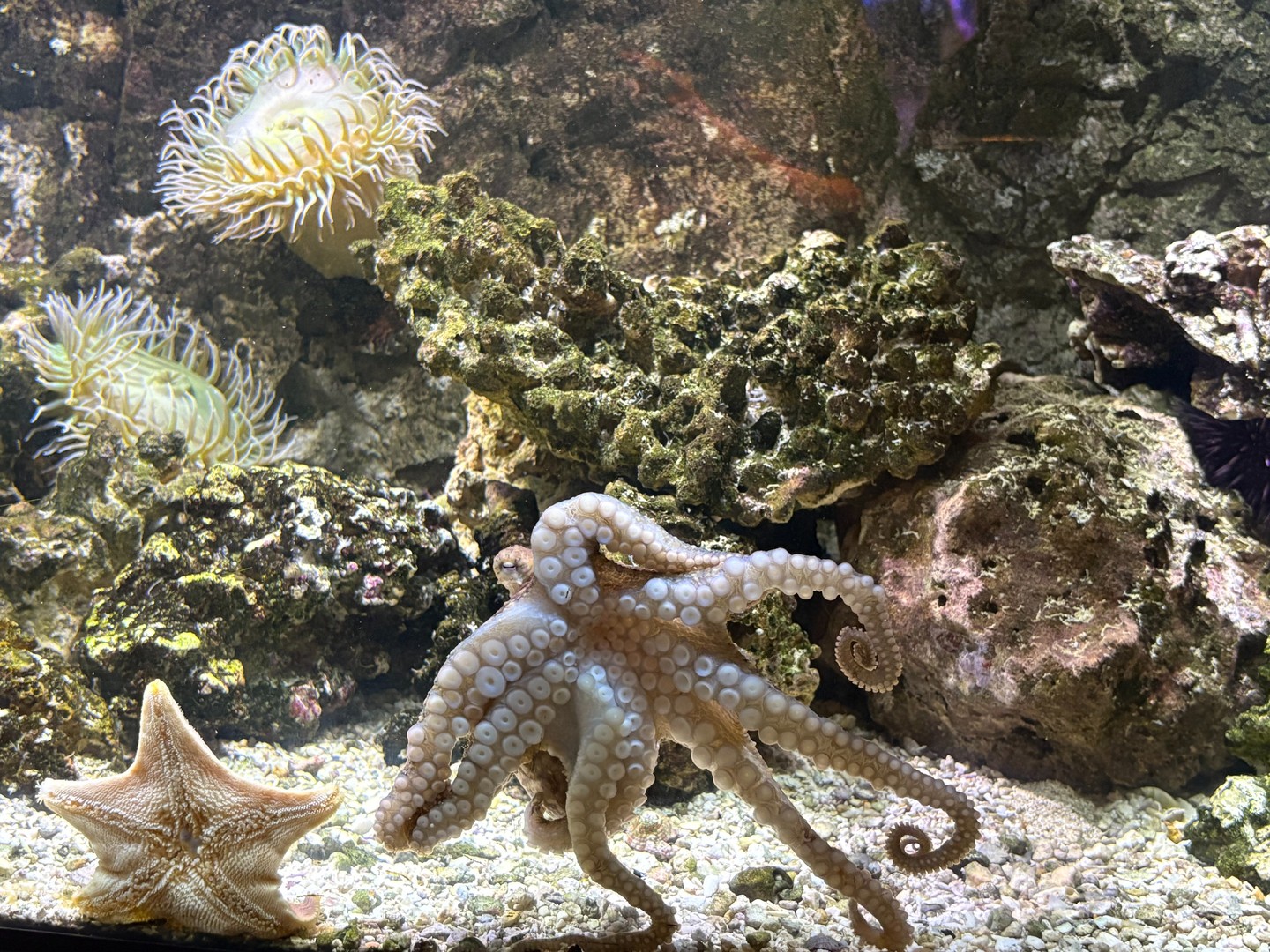
- The intelligence and biology of the California Two-Spot Octopus
- Enrichment activities at Butterfly Pavilion for octopus care
- The significance of learning beyond the classroom
- The role of Butterfly Pavilion in wildlife education and conservation
- Planning a visit to Butterfly Pavilion to explore marine life
The back-to-school season is an exciting time full of fresh starts and new learning opportunities. At Butterfly Pavilion, there’s a flourishing environment of continuous education and exploration, especially with our California Two-Spot Octopus. Known for its remarkable intelligence, this species captivates visitors with its unique abilities and complex biology.
Understanding the biology of the California Two-Spot Octopus is fundamental to appreciating its intellect. Unlike many animals, octopuses possess nine brains: a central brain and a mini-brain located in each of their eight arms. This anatomical design enables each arm to operate semi-independently, contributing to the octopus’ remarkable agility and problem-solving capabilities. In fact, about two-thirds of an octopus’s neurons reside in its arms, advancing its ability to manipulate objects, untie knots, and navigate challenging mazes.
The impressive cognitive skills of the California Two-Spot Octopus are particularly evident in their playful behavior. Octopuses can learn through observation and experience, showcasing their high level of adaptability. In controlled environments such as Butterfly Pavilion, these intelligence traits shine, providing the perfect opportunity for researchers and visitors alike to observe this marine animal in action.
Caring for such an intelligent creature involves innovative strategies to keep it engaged and stimulated. At Butterfly Pavilion, we implement various enrichment activities daily. Puzzles and foraging devices are utilized to encourage the octopus to employ its problem-solving skills. These activities not only facilitate mental engagement but also mimic natural behaviors typically observed in the wild. Objects and toys of various textures and movements provoke curiosity, leading the octopus to explore and interact with its surroundings.
The enrichment process is imperative not just for the octopus’s mental health but for its overall well-being. Ensuring that these animals have the opportunity to express natural behaviors is central to modern wildlife management. In zoo settings, providing such experiences helps prevent boredom and stress, which can arise in captivity. Each interaction enriches the animal’s life and bolsters our understanding of their needs.
Learning goes far beyond the classroom. At Butterfly Pavilion, we recognize that wildlife education is crucial for fostering a deeper appreciation of environmental stewardship. By sharing insights about our California Two-Spot Octopus, we inspire visitors to engage with marine biology actively and contribute to conservation efforts. The connection made during these encounters often ignites a passion for wildlife conservation, leading families and individuals to participate in sustainable practices in their daily lives.
Additionally, the role of Butterfly Pavilion extends into broader educational initiatives. We’re committed to spreading awareness about marine ecosystems and their conservation. The significance of educating the public about the threats faced by ocean life cannot be overstated. Pollution, climate change, and habitat destruction are daunting challenges that marine animals confront daily. By providing insights into the lives of marine creatures like the California Two-Spot Octopus, we equip our visitors with knowledge, encouraging them to advocate for policies that protect our oceans.
As the back-to-school season progresses, consider planning a visit to Butterfly Pavilion. It serves as an engaging and educational space where guests can discover marine life up close. The opportunity to witness the California Two-Spot Octopus interacting with its enrichment activities provides a once-in-a-lifetime experience. Our staff is passionate about sharing knowledge, and every visit includes interactions designed to enhance understanding of marine ecosystems.
Visitors can also learn about other species in our care, including insects, butterflies, and marine animals. There is a rich array of creatures to engage with, each contributing to the understanding of biodiversity and the importance of conservation. The often intricate relationships that exist within ecosystems demonstrate the interconnected nature of life on Earth.
Our commitment to education and conservation extends beyond just providing an interactive experience. Butterfly Pavilion actively participates in research that informs wildlife management strategies. Collaborations with universities, conservation organizations, and governmental entities help ensure that our approaches meet the latest scientific standards. Findings from our research not only guide our internal practices but also influence broader efforts to conserve marine and terrestrial habitats.
Butterfly Pavilion also plays a pivotal role in community outreach. We host programs designed to engage local schools and families, fostering a sense of responsibility for the natural world. Workshops, field trips, and educational materials are tailored to various age groups, promoting lifelong learning about ecology and conservation.
Family visits to Butterfly Pavilion enhance the educational experience, nurturing curiosity and wonder in children. This early exposure cultivates future generations who value our planet’s resources. In today’s rapidly changing environment, instilling a sense of stewardship is paramount. Children who experience the thrill of learning about marine life are more likely to advocate for sustainable practices later in life.
Welcoming the back-to-school season through exploration at Butterfly Pavilion enriches not only individual understanding but also advocates collective responsibility. Every visitor leaves with a greater sense of awareness about marine ecosystems and the importance of preserving them. The California Two-Spot Octopus exemplifies intelligence and adaptability, and highlights what can be learned through nurturing curiosity.
In a time when global biodiversity is under threat, fostering an ethos of conservation and respect for all forms of life is essential. By learning about remarkable creatures like the California Two-Spot Octopus, we empower ourselves and others to make informed choices for the future.
To facilitate your exploration, visit butterflies.org to plan your visit. Each ticket purchased contributes to the conservation initiatives of Butterfly Pavilion, linking every experience to meaningful action. Join us this back-to-school season, and let the wonders of the marine world captivate and inspire you. Discover the brilliance of the California Two-Spot Octopus and immerse yourself in an educational experience that continues beyond the classroom.
*****
Source Description
It’s back-to-school season this August and learning never stops at Butterfly Pavilion! Get into the school spirit and meet our California Two-Spot Octopus, one of the most intelligent animals in our care. Did you know octopuses have nine brains? In addition to a central brain, each of their eight arms has its own mini-brain, allowing them to act independently. About two-thirds of their neurons are located in their arms, which helps them solve puzzles, untie knots, and navigate mazes!
Working with such a smart animal, means finding smart ways to care for it! To keep our octopus mentally stimulated and engaged, we provide her with enrichment activities like puzzles, feeders, and a variety of toys and objects to explore and problem-solve.
Learning doesn’t stop with the classroom, discover more at Butterfly Pavilion this back-to-school season and see our octopus in action. Visit butterflies.org to plan your visit.
