
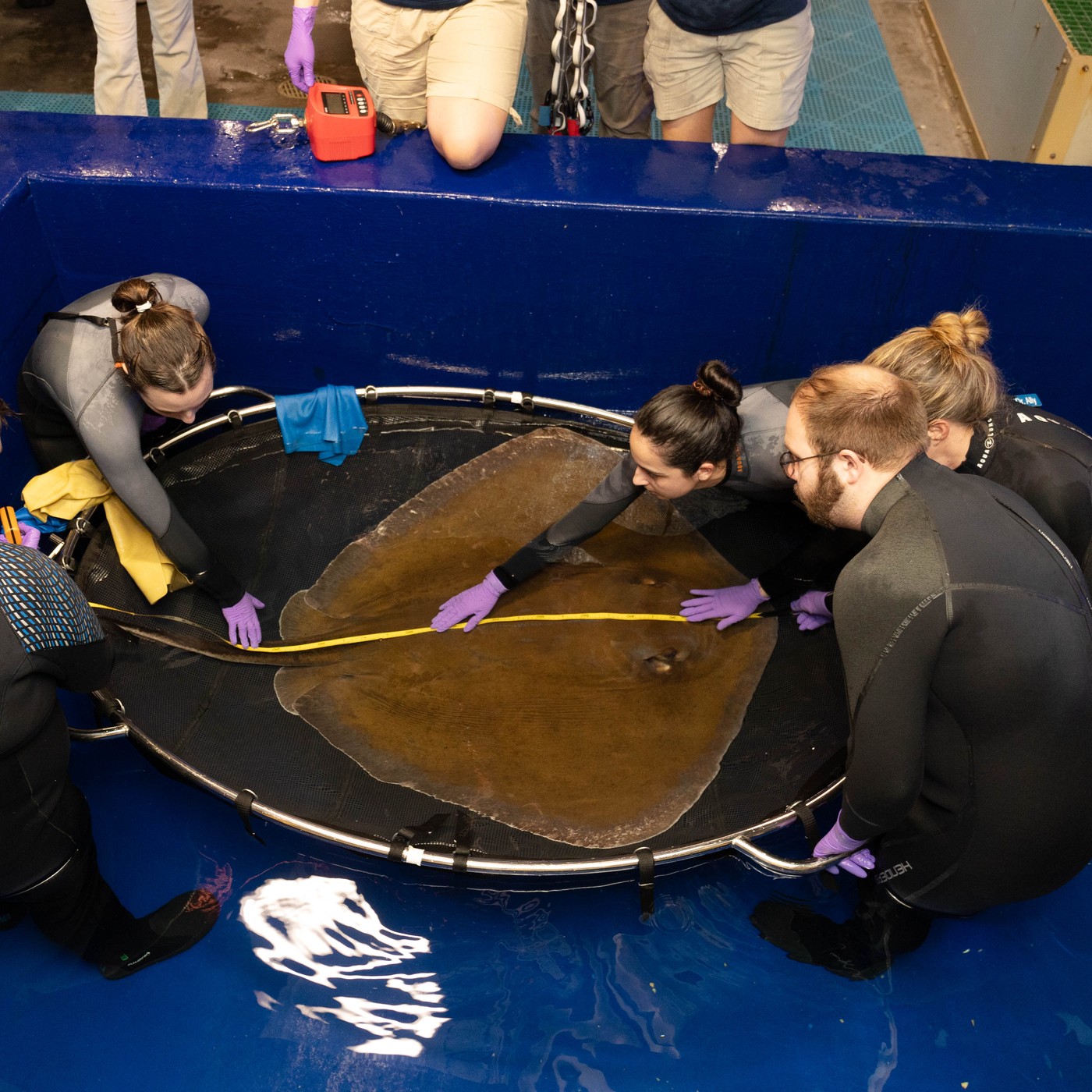
- The importance of annual check-ups for aquatic animals
- Procedures involved in the health assessment of southern stingrays
- The role of veterinary and animal care teams in aquatic animal health
- Conservation implications of monitoring and caring for stingrays
- Benefits of in-home veterinary services in animal management
Annual check-ups for aquatic animals like the southern stingray play a crucial role in maintaining their health and wellbeing. Just as with terrestrial pets, routine veterinary visits help in identifying potential health issues before they escalate. In the case of the southern stingray residing in our Norfolk Canyon Exhibit, these assessments are performed by specialized veterinary and animal care teams equipped to handle unique aquatic needs.
The health examination typically begins with a comprehensive evaluation that includes various diagnostic procedures. Weighing the stingray is essential for tracking its growth and general condition. Measuring its dimensions provides additional context regarding size and health status. Further steps include blood draws, allowing for laboratory analysis to check for any underlying issues. Ultrasounds are also performed to assess the internal organs and overall physical condition. Each of these assessments contributes to a holistic view of the stingray’s health.
The roles of veterinary and animal care teams are vital in these aquatic health assessments. Our teams are trained specifically in marine animal medicine and understand the physiological and anatomical differences between aquatic species and their terrestrial counterparts. This specialized training equips them to handle the nuances of in-home visits effectively. They conduct regular health checks, offer emergency care, and educate staff on welfare best practices. The collaborative effort between veterinarians and animal caretakers ensures that all animals receive high-quality care.
Beyond individual animal health, these examinations have broader conservation implications. Monitoring species like the southern stingray provides valuable data on population dynamics and general health trends. This information can contribute to larger conservation efforts aimed at protecting their habitats and addressing the threats they face in the wild, such as pollution and climate change. By caring for these animals in controlled settings, we contribute to broader ecological sustainability.
In-home veterinary services, although more commonly associated with domestic pets, have their benefits in zoological settings as well. The convenience of conducting exams in familiar surroundings minimizes stress for the animal, allowing for more natural behaviors. Reducing stress is critical, especially for sensitive species like stingrays. In-home care also allows veterinarians to utilize specialized equipment that is adaptable to aquatic environments, making examinations more efficient.
Combining these elements demonstrates the multifaceted nature of marine animal health care. Each examination not only focuses on individual health but also encompasses a broader understanding of species welfare and conservation strategies. The interdisciplinary approach of veterinary medicine, wildlife biology, and animal management reflects the complexity and interconnectedness of our ecosystems, highlighting the necessity of comprehensive care in maintaining the health of species like the southern stingray.
A focus on aquatic animals can lead to the development of improved veterinary practices, further contributing to the broader field of animal care. Through regular health assessments and advanced veterinary practices, we safeguard the health of marine life and contribute to their conservation, making strides toward a sustainable future for these fascinating creatures. By examining individual health conditions, we also gather data that can guide conservation strategies aimed at protecting these species in their natural habitats.
Overall, the importance of annual check-ups for aquatic animals like southern stingrays cannot be understated. Through a combination of specialized procedures, the expertise of veterinary and animal care teams, the conservation implications of rigorous monitoring, and the unique benefits of in-home visits, we ensure that these magnificent creatures receive the utmost care. This comprehensive approach not only enhances the health of individual animals but also contributes to the important work of preserving aquatic biodiversity.
*****
Source Description
Perks of being a ray: in-home visits from your PCP. Our veterinary and animal care teams suited up and made a splash for an annual physical exam for the large southern stingray that lives with the sharks in our Norfolk Canyon Exhibit. She was guided into the shallow hospital space just off the back of the exhibit, after which our team went in and gave her a full health checkup, including weights, measurements, blood draws, an ultrasound and more!
Photos Description: Our animal care and veterinary teams conduct an annual physical on the large southern stingray from our Norfolk Canyon Exhibit.
