
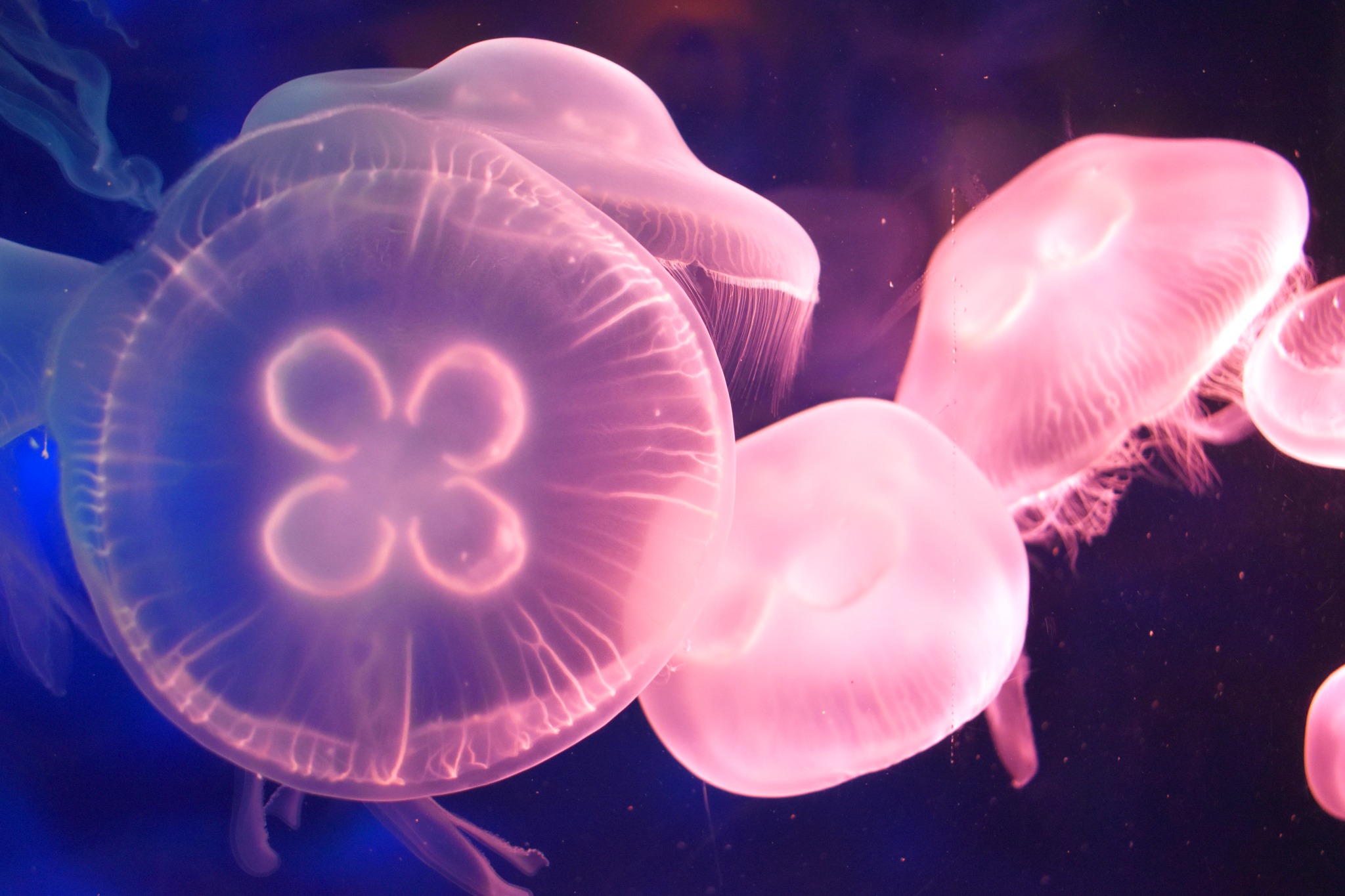
- Moon Jelly Anatomy and Physiology
- Locomotion and Feeding Mechanisms
- Nervous System and Sensory Organs
- Habitat and Ecological Role
- Conservation and Human Impact
Moon jellies (Aurelia aurita) are fascinating organisms that belong to the phylum Cnidaria. They present an intriguing study in both biology and ecology. Understanding their anatomy and physiology reveals a great deal about how these creatures thrive in their environments.
Moon jellies exhibit a gelatinous body structure characterized by a bell-shaped umbrella. This umbrella can expand and contract, allowing jellies to move through the water. Their body is composed of 95% water, which makes them lightweight and able to float easily. The bell has specialized cells called mesoglea, which provides support but is not muscular. Instead, the jellyfish utilize a unique mechanism for propulsion: they take in water into their bell and then force it out. This method creates a jet propulsion effect, allowing the adult jellies to swim efficiently.
Oxygen exchange is a critical process for moon jellies. They need a constant flow of water over their bodies to facilitate respiration. As they swim, water enters through the mouth and exits through a series of openings, circulating around their bodies. This constant motion also aids in their feeding process, as it helps to bring plankton and small organisms within reach.
The anatomy of moon jellies includes tentacles that contain specialized cells called nematocysts. When these cells come into contact with prey, they release barbed structures that can inject toxins, paralyzing the prey for easier consumption. Moon jellies primarily feed on zooplankton, small fish eggs, and larval organisms. In addition to their tentacles, they possess oral arms that help to guide captured food toward their mouths.
Understanding their locomotion reveals not just the mechanics of movement but also an important aspect of their interaction with ocean currents. While they can swim to some extent, they heavily rely on the water currents for transportation. This strategy helps moon jellies maintain their position in the water column and find food more efficiently. In regions where currents are strong, jellies can be transported vast distances, significantly affecting their population dynamics and distribution.
The nervous system of moon jellies is relatively simple compared to more complex organisms. Instead of a centralized brain, they possess a decentralized nerve net that coordinates their swimming and feeding behaviors. The nerve net allows them to respond to environmental stimuli, enabling basic motor functions and reflexes. They possess ocelli, or light-sensing organs, located at the edge of their bell. These ocelli can detect changes in light and dark, allowing moon jellies to orient themselves in the water column and avoid potential threats.
In addition to light sensitivity, moon jellies have statocysts, which are gravity-sensing structures located within the bell. These create a sense of balance, helping jellies stay upright. Together, these sensory systems equip moon jellies to thrive in their aquatic environments, making them adept at survival.
Moon jellies inhabit a variety of marine environments, from coastal areas to open oceans. They are found in both warm and temperate waters and can adapt to a range of salinities and temperatures. They often congregate in large blooms, which can significantly impact local ecosystems. As key players in their habitats, moon jellies serve as both predators and prey within the marine food web.
As voracious feeders, moon jellies influence plankton populations and thus indirectly affect the diets of other marine organisms. Larger predators, such as sea turtles, rely on moon jellies as a primary food source. In this way, the ecological role of moon jellies extends beyond their immediate interactions, influencing broader marine ecosystem dynamics.
Despite their ecological importance, moon jellies face significant threats due to human activity and climate change. As ocean temperatures rise and water acidity increases, the conditions favorable for jellyfish blooms may expand, resulting in potential overpopulation. These blooms not only compete with fish populations for food but can also lead to harmful algal blooms. Furthermore, tunas and other commercial fish species that the fishing industry relies on may experience decreased populations as a result of habitat changes caused by jellyfish overpopulation.
Conservation efforts targeting moon jelly populations involve habitat protection, pollution reduction, and sustainable fishing practices. Zoos and aquariums, such as the one in Akron, provide important educational opportunities. Visitors can learn about these animals and their ecological roles while promoting awareness of jellyfish conservation. Education can instill a sense of responsibility toward marine ecosystems and encourage sustainable practices in local communities.
Through responsible aquarium practices, institutions can help disseminate knowledge about the importance of jellyfish and their roles in marine life. Community outreach and engagement programs can also promote marine stewardship, encouraging people to participate in local conservation efforts.
Moon jellies exemplify the delicate balance within marine ecosystems. Their simple anatomy and basic nervous system highlight their unique adaptations for survival. Understanding these adaptations, along with their ecological roles, is imperative for fostering a greater appreciation of our oceans.
Preserving jellyfish habitats requires collective efforts. Protecting coastal regions, implementing clean water initiatives, and addressing climate change all play vital roles in safeguarding these species. As moon jelly populations fluctuate in response to environmental changes, our understanding and efforts can contribute to a more sustainable future for all marine life.
Understanding moon jellies is not just an exploration of a single species; it’s an opportunity to recognize the intricate relationships between organisms and their environments. By focusing on scientific research, conservation efforts, and public education, we can work together to uphold the health and diversity of our oceans. With increasing awareness, future generations can learn to appreciate and protect these remarkable animals. Embracing responsibility for marine ecosystems is essential for ensuring that moon jellies and countless other species can thrive.
*****
Source Description
Moon jellies are incredibly interesting animals. Adult jellies swim constantly, which is a necessity for oxygen exchange and feeding. They swim by pushing water in and out of their bell. They also rely heavily on currents in the water!
The nervous system of jellyfish is very basic. At the edge of the bell, there are light-sensing organs (ocellus) and gravity-sensing organs (statocysts). Therefore, they can sense light and dark and they can orient themselves within the water column.
The moon jellies at the Akron Zoo are located inside Curious Creatures.
