
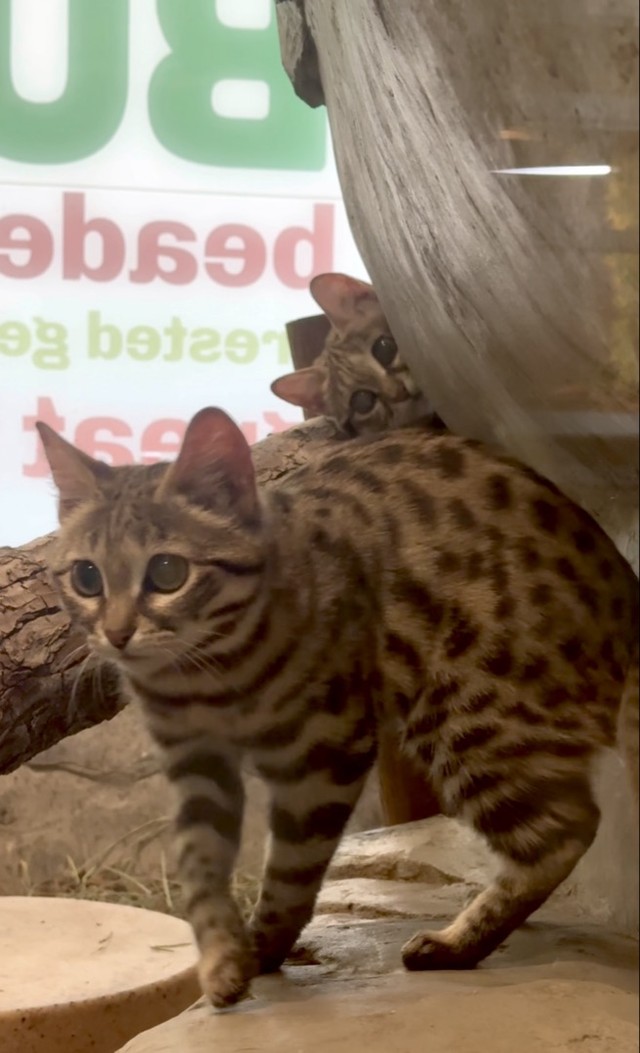
- Introduction of Thelma and Louise, the young black-footed cats, and their significance to Hogle Zoo.
- Behavioral characteristics and hunting prowess of black-footed cats.
- Conservation issues and efforts concerning black-footed cats.
- The role of modern zoos in conservation and education.
- The importance of habitats and enrichment in zoos.
The black-footed cat, one of the smallest wild felines, is capturing attention at Utah’s Hogle Zoo with the arrival of two new residents, Thelma and Louise. These ten-month-old sisters were transferred from the Fossil Rim Wildlife Center in Texas and are settling into their new lives. Their presence adds to the zoo’s mission of wildlife conservation and education, providing a close-up view of this remarkable species.
Thelma and Louise are a microcosm of varying personalities. Thelma, with her bold and spirited nature, eagerly explores and engages with her surroundings. Louise, on the other hand, portrays a more reserved demeanor, carefully observing before diving into action. These nuances highlight the behavioral dynamics present even among siblings and contribute to an understanding of the species as a whole.
Despite their small size, black-footed cats exhibit exceptional hunting skills. They are often referred to as the “deadliest cats in the world,” boasting a hunting success rate of 60%. This impressive statistic underscores their efficiency and adaptability in the wild, where they primarily hunt birds, rodents, and insects during night forays. Their agility and stealth are evolutionary responses to the harsh environments of southern Africa, where they are primarily found.
Conservation efforts are critical for the survival of black-footed cats. They are classified as vulnerable, with habitat loss and declining prey numbers posing significant threats to their existence. Zoos like Hogle Zoo play a pivotal role in these efforts. Through breeding programs and public education, zoos contribute to preserving genetic diversity and raising awareness about the challenges faced by this species in the wild.
Modern zoos are not just centers for animal exhibition; they are dynamic hubs for conservation and education. They engage visitors in understanding the delicate balance of ecosystems and the importance of safeguarding species like the black-footed cat. By hosting Thelma and Louise, Hogle Zoo provides an opportunity to highlight the species’ plight and the need for proactive measures to protect their natural habitats.
Habitat and enrichment are crucial elements of zoo management. The space designed for Thelma and Louise in the Small Animal Building is tailored to stimulate their natural behaviors, offering opportunities for exploration, hunting simulations, and rest. Enrichment activities are vital, promoting physical and mental well-being. These experiences mimic the challenges and complexities they would encounter in the wild, fostering a healthy and diverse lifestyle.
In summary, Thelma and Louise’s residence at Hogle Zoo is more than just an exhibition; it is a stepping stone towards greater understanding and preservation of the black-footed cat. Their stories serve as a gateway to broader discussions about wildlife conservation, the importance of maintaining biodiversity, and the unique role zoos play in this global effort.
*****
Source Description
The claws are out, and so is the news: black-footed cats are back at Hogle Zoo! 🐾
Meet Thelma and Louise, a pair of ten-month-old black-footed cat sisters who came to Hogle Zoo from Fossil Rim Wildlife Center in Texas. Their arrival brings exciting potential for the future of this vulnerable species.
As they settle into their new habitat, they can often be found napping, pouncing, exploring, and engaging with enrichment. Thelma is bold and playful, while Louise is a little more reserved—cautiously curious and content to observe before leaping into the action. Together, they roll, chase, and tumble through their space.
Despite their size, black-footed cats are fierce predators, known for their agility, stealth, and an impressive 60% hunting success rate—earning them the title “deadliest cat in the world.”
Meet Thelma and Louise in the third hallway of the Small Animal Building!
