
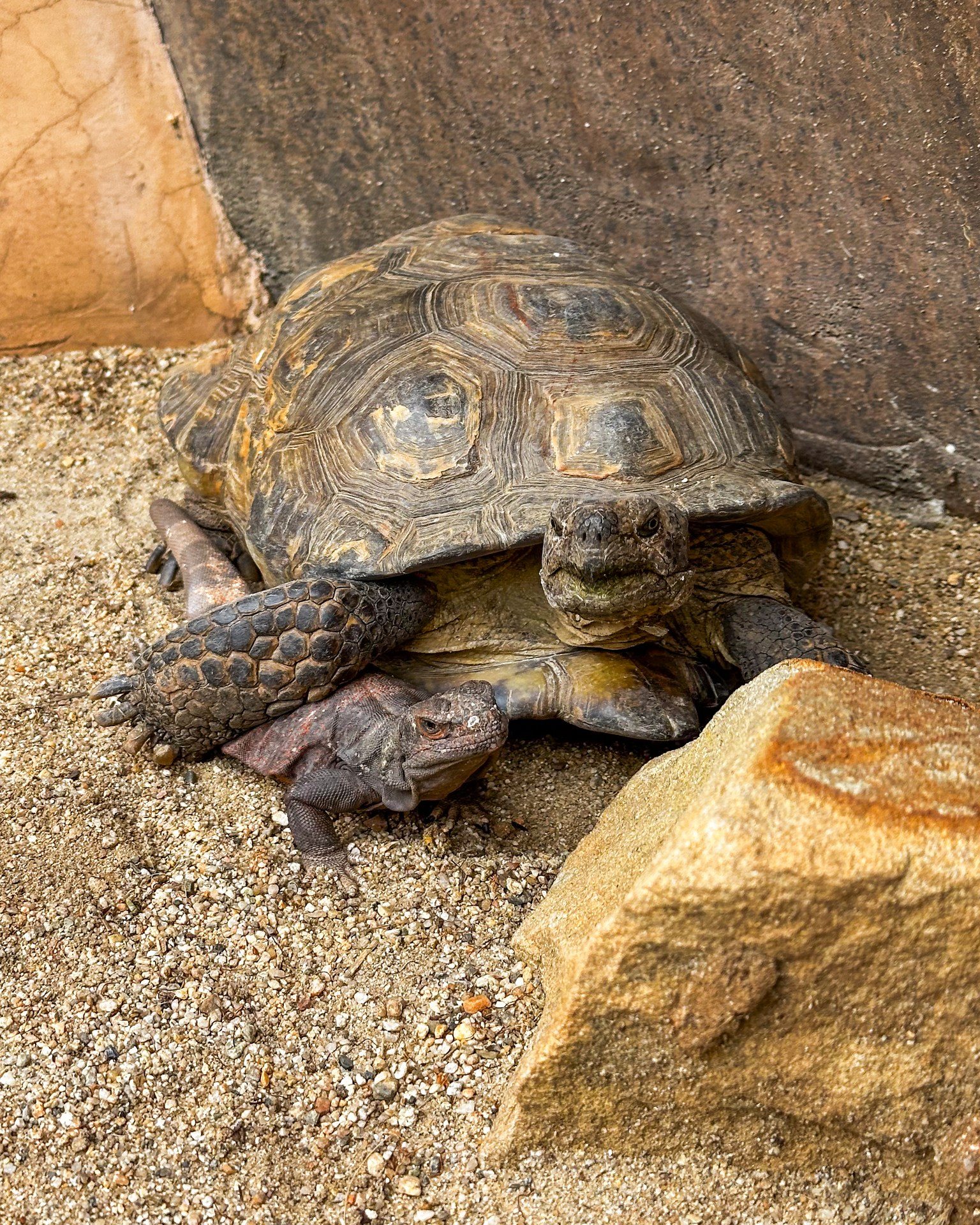
- The significance of interspecies friendships in zoos and wildlife conservation
- Biological and behavioral characteristics of chuckwallas and desert tortoises
- The role of zoo keepers in fostering animal welfare and positive interactions
- Methodologies in environmental enrichment and its impact on animal behavior
In the world of zoology and wildlife conservation, interspecies friendships provide a remarkable glimpse into animal behavior and relationships. The dynamic between Juniper the chuckwalla and Waffles the desert tortoise exemplifies this intriguing phenomenon. Such bonds not only enrich the lives of animals but also provide unique opportunities for researchers and conservationists to observe and understand animal interactions. These relationships challenge preconceived notions about competition and survival, revealing the social complexity of animal behavior.
Understanding the biological and behavioral characteristics of chuckwallas and desert tortoises enhances the appreciation for their unique bond. Chuckwallas, native to arid desert regions, are known for their herbivorous diet and ability to withstand extreme heat. Their robust bodies and flattened tails help them survive in harsh environments, using crevices and tight spaces for shelter. Desert tortoises, found in similar habitats, are renowned for their long lifespan and slow metabolism. These reptiles are adept at water conservation, a crucial adaptation for survival in arid climates. Their interactions in captivity reflect commonalities in habitat preferences and dietary needs, promoting a sense of camaraderie.
Zoo keepers play a pivotal role in fostering positive animal interactions. Responsible for daily care and monitoring, these professionals ensure the well-being of animals by providing a nurturing environment. Keeper Brooke’s photograph captures a rare moment of connection between Juniper and Waffles, highlighting the essential role keepers play in facilitating healthy relationships. Through observation and intervention, keepers help create environments that encourage natural behaviors, allowing animals to form bonds that might be difficult to observe in the wild due to competition or territoriality.
Environmental enrichment methodology is a cornerstone of modern zoo management, aiming to enhance the quality of life for animals in captivity by stimulating their natural instincts. Techniques include providing varied diets, introducing novel objects, and rotating habitats. Enrichment fosters mental stimulation and physical activity, encouraging animals to engage in natural behaviors. For Juniper and Waffles, a carefully structured environment promotes positive interactions, allowing them to explore their surroundings and interact in ways that mimic their natural habitats. The positive feedback loop created by enrichment can lead to improved health and psychological well-being.
The story of Juniper and Waffles, and their charismatic connection, underscores the importance of fostering and observing interspecies relationships within controlled environments. These friendships reveal the complexities of animal societies and provide valuable insights into their social structures. Encouraging such interactions not only enriches the lives of animals but also enhances educational outreach, allowing zoo visitors to develop an emotional connection to wildlife. Through responsible zoo management and conservation efforts, we can continue to uncover and appreciate the depth of relationships in the animal kingdom.
*****
Source Description
What could be better than this?! Just buddies being pals! 🦎🤝🐢
📸: Keeper Brooke
Alt-text: A pair of photos of Juniper the chuckwalla and Waffles the desert tortoise hanging out. We see Waffles lift a forelimb over her chuckwalla friend to give her a side hug as the two look up and smile at Keeper Brooke’s camera.
