
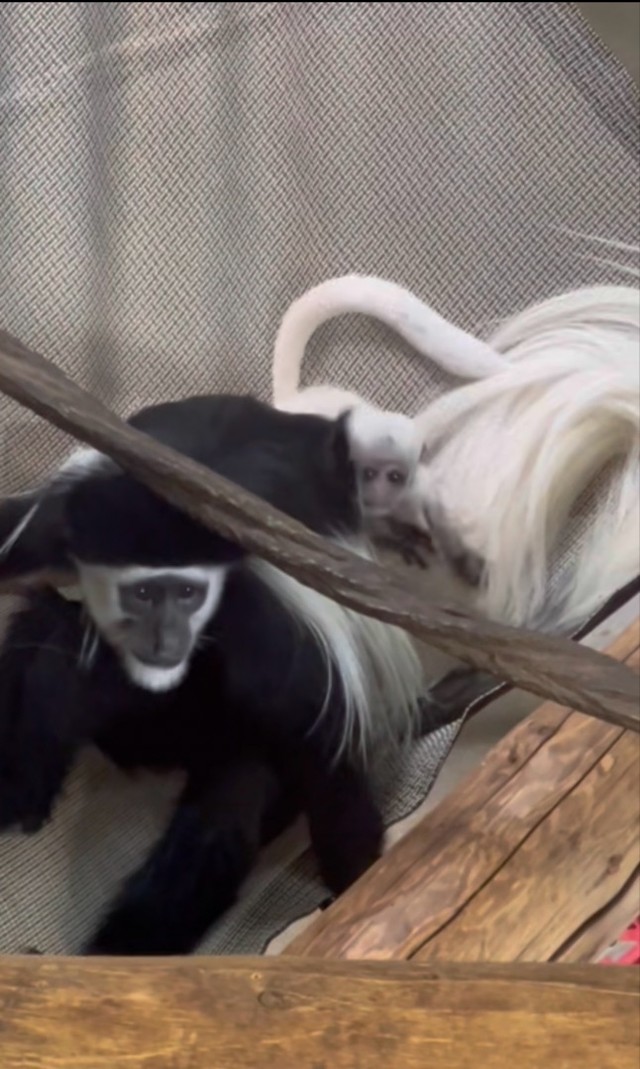
- The development of Basil, the baby colobus monkey, and its significance in understanding primate growth.
- The habitat and social structures of colobus monkeys, especially within zoo settings like the Primate Forest.
- The importance of environmental enrichment in zoos for primate welfare and stimulation.
- Zoological conservation efforts to protect colobus monkeys and their natural habitats.
- The role of zoos in education and public engagement regarding primate conservation.
Basil, a nearly two-month-old baby colobus monkey, has become an exciting focus at the zoo. Watching him navigate through jumping and climbing stages is more than just delightful; it’s a window into the developmental milestones of these fascinating primates. Colobus monkeys, known for their elegant black and white coats, are a subject of intrigue in zoology. Basil’s playful antics signal important growth phases involving increased motor skills and social behaviors — a critical period for a baby primate.
Colobus monkeys belong to the family Cercopithecidae and are native to Africa’s equatorial forests. These arboreal creatures spend most of their lives in treetops, a trait that defines their social and feeding behavior. Understanding their habitat needs helps us replicate their living conditions in places like the Primate Forest. This area isn’t just an exhibit but a carefully designed environment that mirrors their natural settings. Through thoughtful planning, zoos aim to provide the mental and physical stimulation these monkeys need.
Environmental enrichment is crucial for promoting natural behaviors and preventing boredom. For social animals like colobus monkeys, this means introducing elements that encourage exploration and interaction. Climbing structures, puzzle feeders, and varied terrain are some techniques used to mimic their wild habitat and encourage physical activity. Observing Basil’s curiosity as he explores his surroundings emphasizes the success of these initiatives.
Zoo management plays a vital role in wildlife conservation. With species like colobus monkeys facing threats from habitat loss and hunting, captive breeding programs become essential. These programs aim not only to preserve genetic diversity but also raise awareness about the challenges these primates face. Educational efforts extend beyond the zoo’s boundaries, reaching audiences worldwide through various digital platforms. Engaging stories of animals like Basil foster a connection that inspires conservation action.
Educational initiatives at zoos also focus on enlightening the public about primate conservation. Interactive exhibits and educational talks help visitors understand the importance of protecting these animals and their habitats. By engaging with a younger audience, zoos hope to instill an appreciation for wildlife that influences future conservation efforts. Basil and his troop play a part in this educational endeavor, providing a relatable face to the conservation narrative.
As Basil continues to grow, he serves as a living ambassador for his species. Observing his development offers invaluable insights into primate behavior and needs. This knowledge informs both captive management strategies and conservation practices in the wild. The spotlight on Basil isn’t just about enjoying his playful energy; it’s about understanding and appreciating the role such animals play in our world’s biodiversity.
Zoos like the one hosting Basil and his troop are pivotal in primate conservation and education. They bridge the gap between the natural world and urban societies, offering a glimpse into the lives of remarkable creatures. These institutions are vital in fostering a connection with nature, emphasizing the shared responsibility for preserving this planet’s incredible diversity. Basil’s journey is a reminder of the delicate balance we must maintain to ensure a future where wildlife thrives.
*****
Source Description
Wiggly worm alert! 🐒
Nearly two-month-old baby colobus monkey Basil has started jumping, climbing, and exploring with his troop 🥰
Jump down to Primate Forest to visit Basil and the colobus monkeys!
