
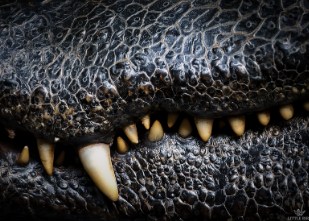
- The significance of National Smile Day and how it relates to wildlife education.
- Understanding the anatomy and biology of the Yacare Caiman’s smile.
- The role of zoos in promoting wildlife conservation and education.
- The importance of smiles in animal communication and behavior.
- Encouraging conservation efforts and public engagement with nature.
National Smile Day is an opportunity to celebrate the power of a smile, and in the realm of wildlife, smiles often carry a deeper significance. Celebrating this day "Caiman Style" gives us a chance to explore these impressive creatures, such as the Yacare Caiman, found in South America. This focus encourages people to visit zoos and engage with nature’s diversity, fostering a connection between humans and animals that can lead to greater conservation efforts.
The Yacare Caiman is a robust example of nature’s unique adaptation. Found predominantly in the wetlands and rivers of Brazil, Bolivia, Paraguay, and Argentina, this caiman features a prominent "smile," thanks to a jaw lined with sharp, conical teeth perfectly suited for gripping prey. Its powerful bite and muscular body represent the culmination of millions of years of evolution, allowing it to thrive in its aquatic environment.
The jaw structure of the Yacare Caiman is both distinctive and highly functional. Their teeth, constantly renewed throughout their lives, aid in grabbing and holding onto slippery fish and other prey. This dental renewal system is a fascinating topic for study, highlighting evolutionary resilience. Their smile also aids thermoregulation. By opening their mouths, caimans release excess heat, a necessary adaptation to their warm habitats.
Zoos play an essential role in protecting creatures like the Yacare Caiman, providing a controlled environment for research, breeding, and education. By showcasing these animals, zoos create a platform for learning and conservation. Visitors gain firsthand experience of the natural world, fostering appreciation and awareness. Programs often include detailed insights into caiman behavior and habitat needs, encouraging public understanding of preservation efforts.
Animal communication often relies on physical cues, and a caiman’s apparent "smile" can be an invitation for further behavioral investigation. While it may look friendly, this display can signal aggression, signifying territory assertion. Understanding these cues helps humans respect and appropriately interact with wildlife, reducing human-animal conflict and promoting coexistence.
Public involvement in conservation is crucial for preserving biodiversity. Educational events, like National Smile Day, serve to inspire advocacy for animal welfare and protection of natural habitats. Engaging with wildlife through zoo visits can spark an interest in individual and community-level conservation activities.
Celebrating National Smile Day by visiting a zoo allows us to appreciate the variety of smiles in the animal kingdom. It reminds us that every species, from the smallest mammal to the imposing Yacare Caiman, plays a unique role in its ecosystem. It’s an invitation to value and protect the natural wonders of our planet, encouraging us all to become active participants in conservation.
*****
Source Description
😁🐊Happy National Smile Day…Caiman Style! 🐊😁
Check out this toothy grin from our Yacare Caiman! 🦷✨ Those rugged scales and impressive teeth might look a little intimidating, but in the animal kingdom, every smile tells a story of survival and strength. 🌿💦
Swing by the zoo today and celebrate all kinds of smiles — big, small, sweet…and seriously toothy! 🐊😁
📷 Photo Credit: Robyn Elizabeth Abrams
