
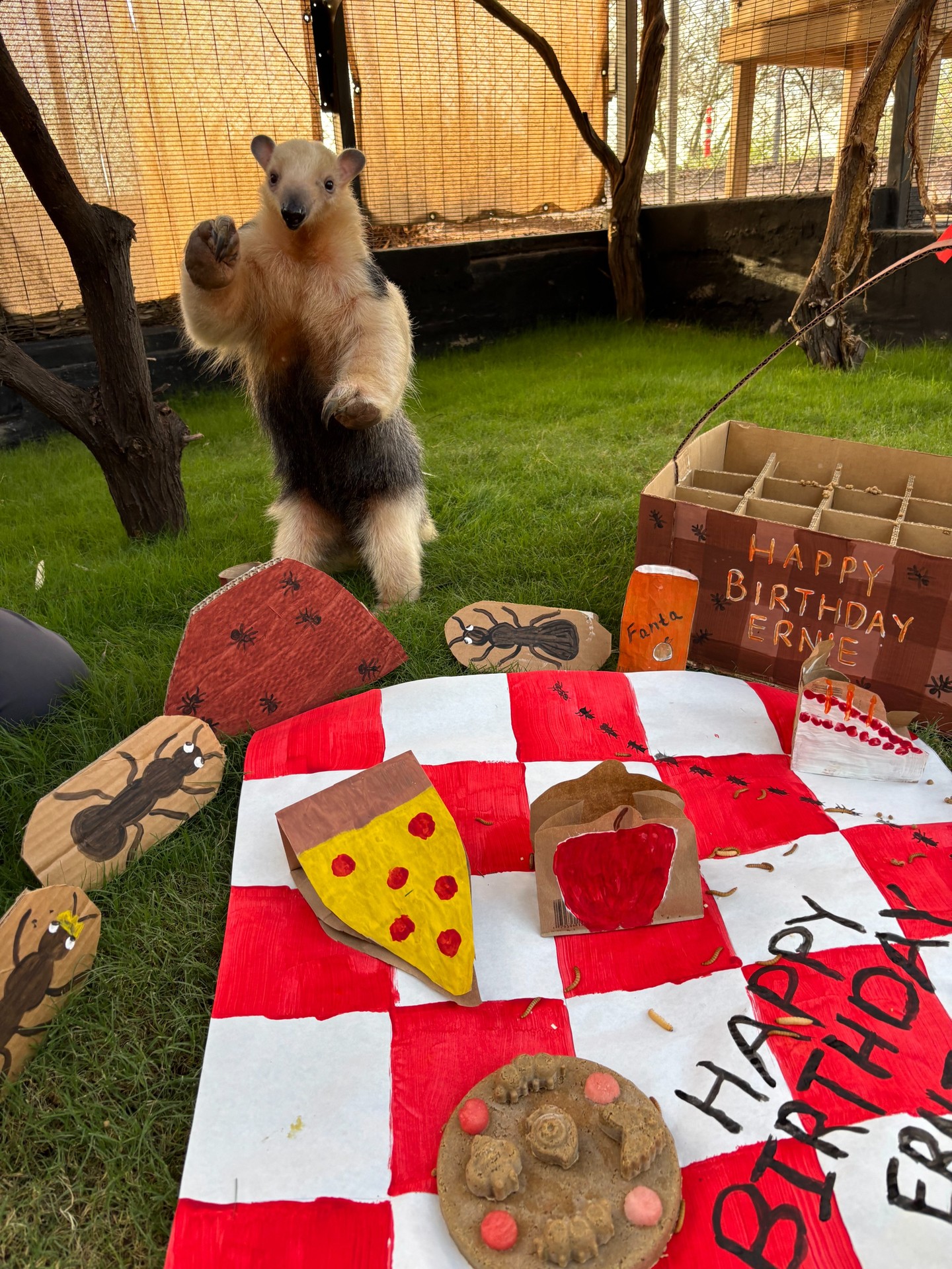
- Overview of Tamanduas and their unique characteristics
- The diet and care of Tamanduas in captivity
- Conservation efforts and challenges facing Tamanduas
- Interesting facts about Tamanduas, including Ernie’s birthday celebration
- The significance of World Tamandua Day and awareness initiatives
Tamanduas are fascinating creatures often overlooked in discussions about wildlife. Known popularly as lesser anteaters, these animals differ significantly from their larger relatives, the giant anteaters. Found primarily in Central and South America, Tamanduas possess specific adaptations and traits that allow them to thrive in their environments. They exhibit a prehensile tail, strong claws, and specialized tongues developed for their insectivorous diet. Tamanduas play an important ecological role by controlling insect populations, specifically ants and termites, which can become problematic if left unchecked.
Ernie, a resident Tamandua celebrating his third birthday, showcases the typical characteristics of his species. His playful demeanor and curious nature are indicative of the species. Tamanduas possess a relatively solitary lifestyle, often being more active at night, which aligns well with their nocturnal habits. Unlike giant anteaters that can grow up to eight feet long, Tamanduas are much more manageable in size, usually reaching about four feet.
The diet of Tamanduas primarily includes ants, termites, and certain fruits, with Ernie enjoying a varied diet of insectivore feed, mealworms, and avocados. This diverse nutrition is crucial for their health and development. In captivity, zookeepers must pay close attention to what these animals eat to replicate their natural dietary patterns effectively. The specific needs of Tamanduas can vary, and a well-balanced diet is essential for maintaining their overall health.
Tamanduas are often employed in educational programs within zoos, helping raise awareness about biodiversity and conservation. Their charming personalities and endearing features capture the attention of visitors, making them excellent ambassadors for fostering a greater understanding of wildlife and environmental stewardship.
Conservation is a pressing concern for Tamanduas, as habitat loss and hunting threaten their populations. These animals require a habitat that offers a mix of open forests and dense vegetation to find food and shelter. Deforestation, particularly in the Amazon rainforest, poses a significant risk, as it diminishes their natural habitats and disrupts their ability to hunt for food.
In the wild, Tamanduas are also vulnerable to poaching. Due to their unique appearance and temperament, they are sometimes captured for the exotic pet trade. As a result, organizations focusing on wildlife protection are working to develop programs aimed at educating the public about the necessity of preserving Tamanduas in their natural habitats. Sustainable land management practices can also play a significant role in improving the future of these fascinating animals.
There are unique facts that make Tamanduas particularly intriguing. For instance, their long tongues can extend up to 16 inches, allowing them to draw insects out of tight spaces effectively. This specialized adaptation is critical for their survival, as they rely heavily on ants and termites. Furthermore, Tamanduas are excellent climbers, often using trees as a refuge when they feel threatened, showcasing their arboreal capabilities.
The celebration of World Tamandua Day is pivotal in raising awareness about these incredible creatures. It serves as an opportunity for zoos, wildlife organizations, and conservationists to educate the public on the importance of protecting Tamanduas and their fragile habitats. Events often include educational initiatives, workshops, and fundraising efforts aimed at bolstering conservation programs.
Ernie’s birthday provides a perfect platform for highlighting the significance of World Tamandua Day. Celebrating not only fosters a connection with young audiences but also emphasizes the role these animals play in maintaining ecological balance. It encourages visitors to appreciate wildlife, sparking curiosity and a desire to learn more about the natural world.
Engagement with Tamanduas through educational experiences can create lasting impressions. Simple activities such as “meet and greets” with tamanduas, feeding demonstrations, and information sessions allow people to interact with and learn about these animals. It’s critical to convey the message that every species, including the Tamandua, is interconnected within the ecosystem.
By showcasing Ernie and his fellow Tamanduas, conservationists aim to highlight the fact that they are not only interesting animals but also vital components of their ecosystems. Promoting awareness about the challenges Tamanduas face serves to inspire action and support for conservation efforts.
Overall, World Tamandua Day and Ernie’s birthday celebration serve as reminders of the responsibilities humans have towards the environment. By embracing our role in conservation, we fortify the future of Tamanduas and countless other species that share the planet with us. Recognizing the significance of these unique creatures reinforces the need for education and advocacy, fostering a generation that will not only appreciate wildlife but also work to preserve it. This goal is crucial as the impacts of climate change and habitat destruction continue threatening numerous species globally. The story of Ernie and his kin represents a call to action for stewardship over our natural world.
*****
Source Description
It is World Tamandua (Anteater) Day!
We recently celebrated Ernie’s 3rd birthday! Tamanduas are known as lesser anteaters because they are much smaller than their relatives, giant anteaters. Ernie’s diet consists of insectivore feed, mealworms & avocados!
