
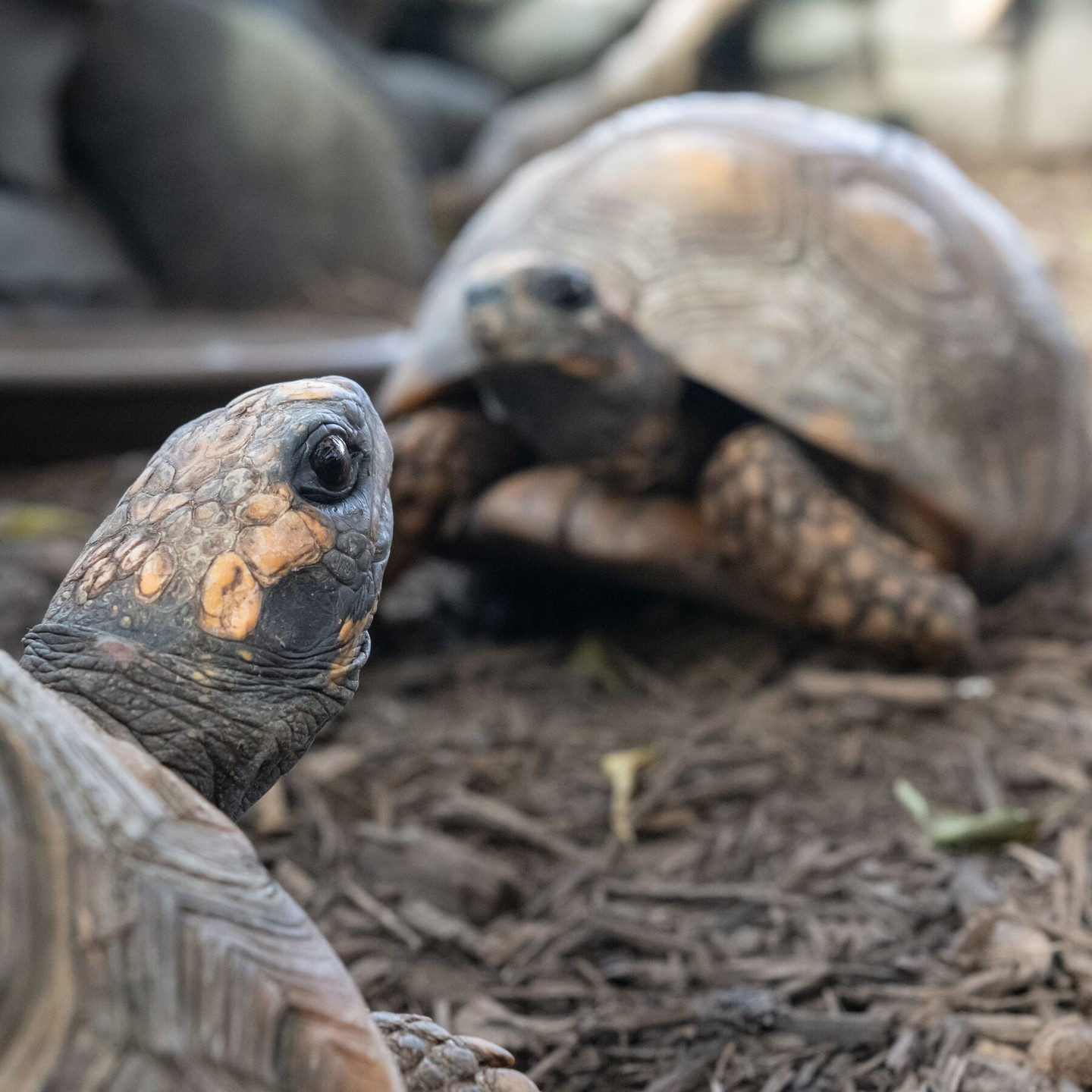
- Celebrate the diversity and importance of turtles, particularly in the context of World Turtle Day.
- Highlight specific turtle and tortoise species, exploring their characteristics and conservation status.
- Discuss the ecological roles and habitats of these turtle species and their significance in biodiversity.
- Examine challenges facing these reptile species, such as habitat loss and climate change.
- Advocate for conservation efforts and the role of zoos and wildlife organizations in protecting turtle species.
World Turtle Day is a special occasion to honor the importance and diversity of turtles and tortoises worldwide. This day not only raises awareness about these fascinating reptiles but also emphasizes their conservation. Let’s shell-ebrate World Turtle Day with a closer look at a few intriguing residents: the yellow-footed tortoise, diamondback terrapin, Mary River turtle, red-headed Amazon side-neck turtle, big-headed Amazon River turtle, sandstone snake-necked turtle, northern red-faced turtle, and box turtle.
The yellow-footed tortoise, native to South America, thrives in the humid forests of the Amazon. Recognizable by its vivid yellow scales on its legs, it serves an essential role in seed dispersal, contributing to forest regeneration. Unfortunately, habitat loss and poaching for the pet trade have threatened its population. Conservation programs in zoos aim to maintain genetic diversity and educate the public on sustainable practices.
Next, the diamondback terrapin inhabits the brackish coastal swamps of the eastern United States. It exhibits striking diamond-shaped patterns on its shell. The brackish water ecosystem is rich in biodiversity, and the terrapin plays a key role in maintaining ecological balance by regulating prey populations. Overharvesting and habitat loss pose serious threats, highlighting the necessity of legal protections and habitat restoration efforts.
The Mary River turtle, native to Australia, is an evolutionary marvel with its unique neck and efficient respiratory adaptations. Found in the Mary River of Queensland, it faces severe threats from habitat degradation and river damming. Conservationists are working tirelessly to protect its habitats and secure its future by engaging local communities.
The red-headed Amazon side-neck turtle adds a splash of color to the Amazon’s waterways. Known for its vibrant red head, this species is an integral part of the aquatic ecosystem, controlling the population of aquatic plants and insects. Human-induced deforestation and climate change have led to habitat fragmentation. Community-based conservation programs are crucial in preserving their natural habitat.
In the Amazon basin, the big-headed Amazon River turtle is a keystone species in the aquatic food web. Its large head and strong jaws are adapted for consuming hard-shelled prey. These turtles are often targeted for consumption and the illegal pet trade. Rigorous conservation laws and community awareness programs are essential to curb illegal exploitation.
The sandstone snake-necked turtle is a masterpiece of evolution with its elongated neck, enabling it to catch prey with precision. Found in Australia’s remote waterholes, this turtle is threatened by water pollution and habitat alteration. Conservationists stress the importance of maintaining pristine habitats and mitigating pollution through stricter environmental policies.
Turning our attention to the northern red-faced turtle, a resident of Southeast Asia’s freshwater habitats, we see an example of specialized adaptation. Its unique facial coloration aids in camouflage amongst vegetation. Facing threats from logging and wetland drainage, concerted efforts are required to preserve these delicate ecosystems. Conservation networks are actively involved in habitat preservation.
Finally, the box turtle, a terrestrial gem of North America, exemplifies adaptability with its hinged plastron that allows it to retreat entirely into its shell. These turtles are crucial seed dispersers within their habitat. They face challenges such as road mortality and habitat destruction. Zoos and conservation parks play a pivotal role in captive breeding programs and release initiatives.
The conservation of turtles is a global priority that demands collaboration between governments, conservation organizations, and local communities. Zoos offer a controlled environment for breeding programs and public education, creating awareness about the delicate balance of ecosystems reliant on turtles and tortoises. By focusing on habitat preservation, legal protection, and sustainable practices, we can contribute to the survival of these remarkable reptiles.
World Turtle Day serves as a reminder of our responsibility to protect these species, each with its unique ecological role and significance. As stewards of the environment, our efforts in conservation, education, and research are vital for maintaining biodiversity and ensuring that future generations can appreciate and learn from these incredible creatures.
*****
Source Description
Let’s shell-ebrate World Turtle Day with a few of our residents! 🐢
1. Yellow-footed tortoise
2. Diamondback terrapin
3. Mary River turtle
4. Red-headed Amazon side-neck turtle
5. Big-headed Amazon River turtle
6. Sandstone snake-necked turtle
7. Northern red-faced turtle
8. Box turtle
