
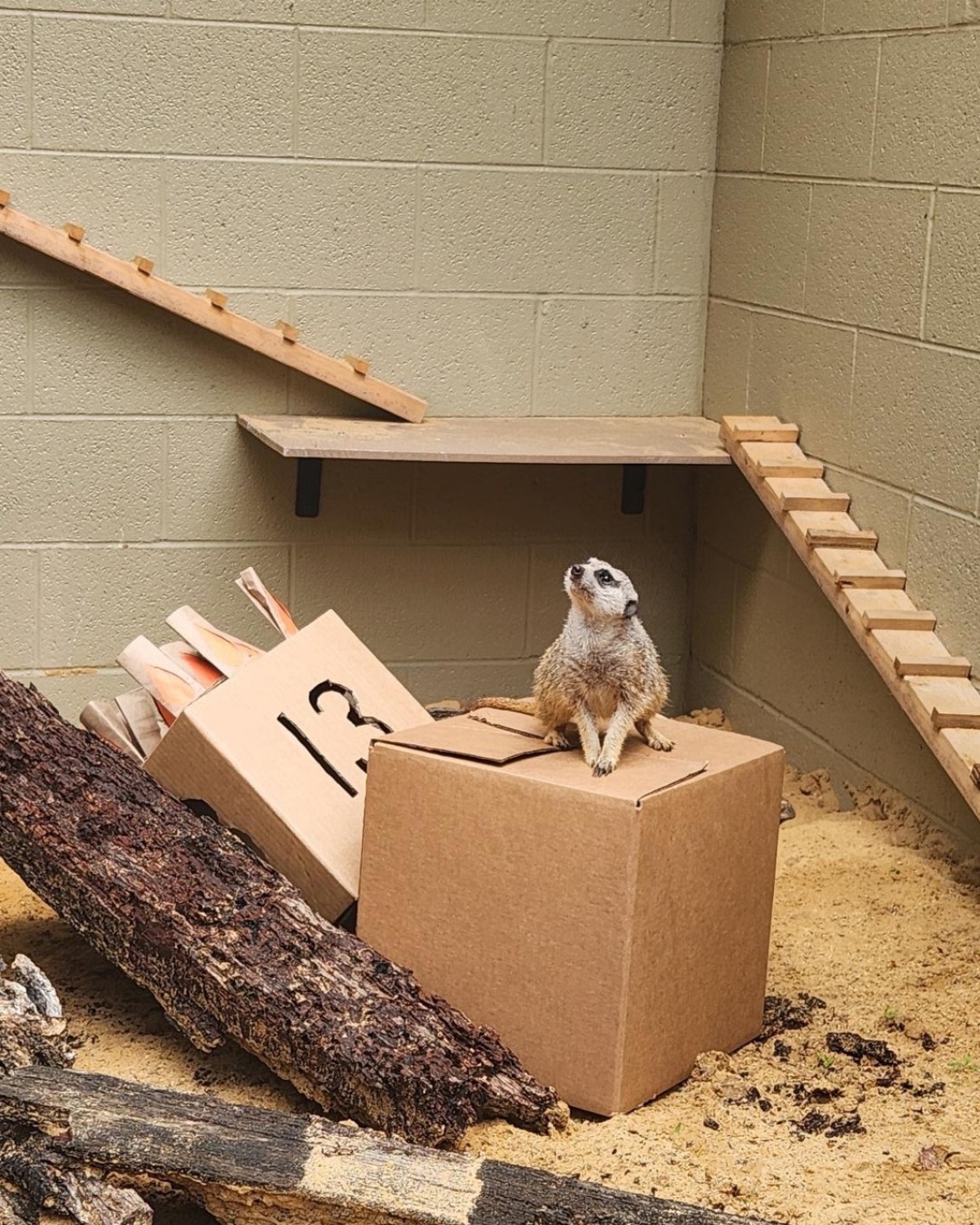
- The significance of Tifu, Gumu, and Shaka celebrating their 13th birthday.
- Understanding meerkat behavior and social structures.
- The role of enrichment activities in captive animal care.
- Insights into the animal care team’s responsibilities and daily duties.
- The importance of wildlife conservation and public engagement.
Tifu, Gumu, and Shaka have recently marked their 13th birthday, an important milestone for these beloved meerkats. Meerkats typically live between 12 to 14 years in captivity, allowing Tifu, Gumu, and Shaka to still be regarded as energetic youth within their social group. While these brothers have temporarily been behind the scenes during the construction of the new William S. Smith African Wilds exhibit, the care team ensured that their big day was celebrated in style. A special birthday cake, resembling a traditional celebration cake but crafted from their favorite snacks—bugs—was prepared. This thoughtful gesture highlighted both the appreciation for these remarkable animals and the team’s effort to enrich their lives, even during construction disruptions.
Meerkats are fascinating creatures known for their tightly-knit social groups and complex behaviors. They belong to the mongoose family and are native to the arid regions of southern Africa. Their social structures are built around families, often called mobs or gangs. A typical group can range from 20 to 50 individuals, offering the meerkats mutual support and safety against predators.
Within these social structures, roles are designated. Sentinel duty is one of the most observable behaviors among meerkats. While some members forage for food, designated sentinels stand watch, keeping an eye out for threats. This cooperative living not only improves survival rates but also strengthens social bonds within the mob. Tifu, Gumu, and Shaka exemplify this behavior, taking turns to ensure their family’s safety.
The care provided by the animal care team is critical for the wellbeing of meerkats in zoo environments. Enrichment activities, such as the birthday celebration with the bug-filled cake, are a vital part of animal management. These activities stimulate the animals both mentally and physically, promoting natural behaviors that would otherwise be restricted in captivity. Non-sentient food items, like fruits and vegetables, are often implemented alongside live insects to provide diverse dietary options.
A balanced diet is crucial. Meerkats primarily feed on insects, small animals, and sometimes plants. In captivity, it becomes essential to closely monitor their health, maintaining a diet that mirrors their natural choices to support both their physical and mental health. To provide these experiences, zookeepers frequently innovate new enrichment activities. For Tifu, Gumu, and Shaka, the birthday cake act not only provided nutritional value but also engaged their natural foraging instincts. Observing their inquisitive behavior while interacting with such enrichment is rewarding for both staff and visitors.
The role of the animal care team extends beyond simple feeding and habitat maintenance. Keepers are responsible for monitoring individual health, behavior patterns, and social dynamics within groups. This involves routine health checks and treatment of any potential ailments, using techniques that minimize stress on the animals. Training plays a pivotal role as well; it often centers around positive reinforcement to encourage desired behaviors during examinations.
The challenges of zoo management require a multifaceted approach. Regular training ensures that keepers can effectively communicate with the animals, improving care and the quality of life they lead. The care team is composed of highly trained professionals who collaborate to design and implement daily care routines that cater to the specific needs of each species. As the William S. Smith African Wilds construction progresses, the team remains dedicated to meeting Tifu, Gumu, and Shaka’s health and well-being.
Wildlife conservation is an overarching component of modern zoological institutions. Raising awareness of the issues facing wildlife has become increasingly significant in today’s world. As habitats are threatened by climate change and human encroachment, awareness through educational outreach is essential. By showcasing creatures like meerkats, zoos foster public interest in preserving biodiversity and understanding the complexities of ecosystems.
Education is key in promoting conservation efforts. Programs aimed at local communities can deepen understanding of wildlife robustly. When visitors learn about the social structures and behaviors of meerkats, they may feel inspired to partake in conservation activities or initiatives. This added layer of engagement amplifies the impact of zoological institutions beyond merely being a place of leisure to one of learning and advocacy.
As Tifu, Gumu, and Shaka navigate their teenage years, these brothers serve as ambassadors for their species. They invite visitors to explore their social dynamics and behavioral characteristics. The celebration of their 13th birthday is a reminder of the importance of compassionate care and the role that zoos play in wildlife conservation. By observing these lively meerkats, guests gain insight into their wild counterparts and the pressing need to protect their natural habitats.
Animal care is more than a job; it’s a commitment to safeguarding wildlife. The responsibilities of the caretakers at the zoo encompass a wide array of tasks, ensuring the animals not only survive but thrive in a controlled environment. By continually refining their knowledge about animal behavior, dietary needs, and environmental enrichment, the care team can address the varied challenges presented by zoo management.
As the William S. Smith African Wilds project unfolds, the ongoing care and celebration of Tifu, Gumu, and Shaka illustrate the positive impact of dedicated animal care. Their milestone birthday marks a noteworthy occasion, shedding light on the intricate world of animal care, the significance of social animals, and the broader narrative of wildlife conservation. Such celebrations foster engagement and reflect the vital role that public awareness and understanding play in conservation efforts.
In a world facing unprecedented challenges to biodiversity, institutions like the zoo strive to create a connection between humans and wildlife. The story of Tifu, Gumu, and Shaka and their 13th birthday continues to inspire curiosity and compassion. It showcases how, through exemplary animal care and public outreach, a shared future can be forged, one that honors and protects the natural world.
Every birthday celebration within a zoo symbolizes the commitment to nurture and protect wildlife. As Tifu, Gumu, and Shaka continue their journey through life, they embody the message of resilience and adaptability—qualities essential for survival in both the wild and in a human-managed environment. The efforts of their keepers not only support their health and happiness but also provide an educational framework to inspire future generations to care for all animals and their habitats.
*****
Source Description
Our meerkat brothers, Tifu, Gumu and Shaka, recently turned 13! While they’ve been behind the scenes during construction of William S. Smith African Wilds, their care team made sure to still celebrate their big day! The trio enjoyed special enrichment, including a “birthday cake” filled with their favorite snack… bugs! 🐜🎂
📸: Zoological Manager Nancee & Keeper Riley
