
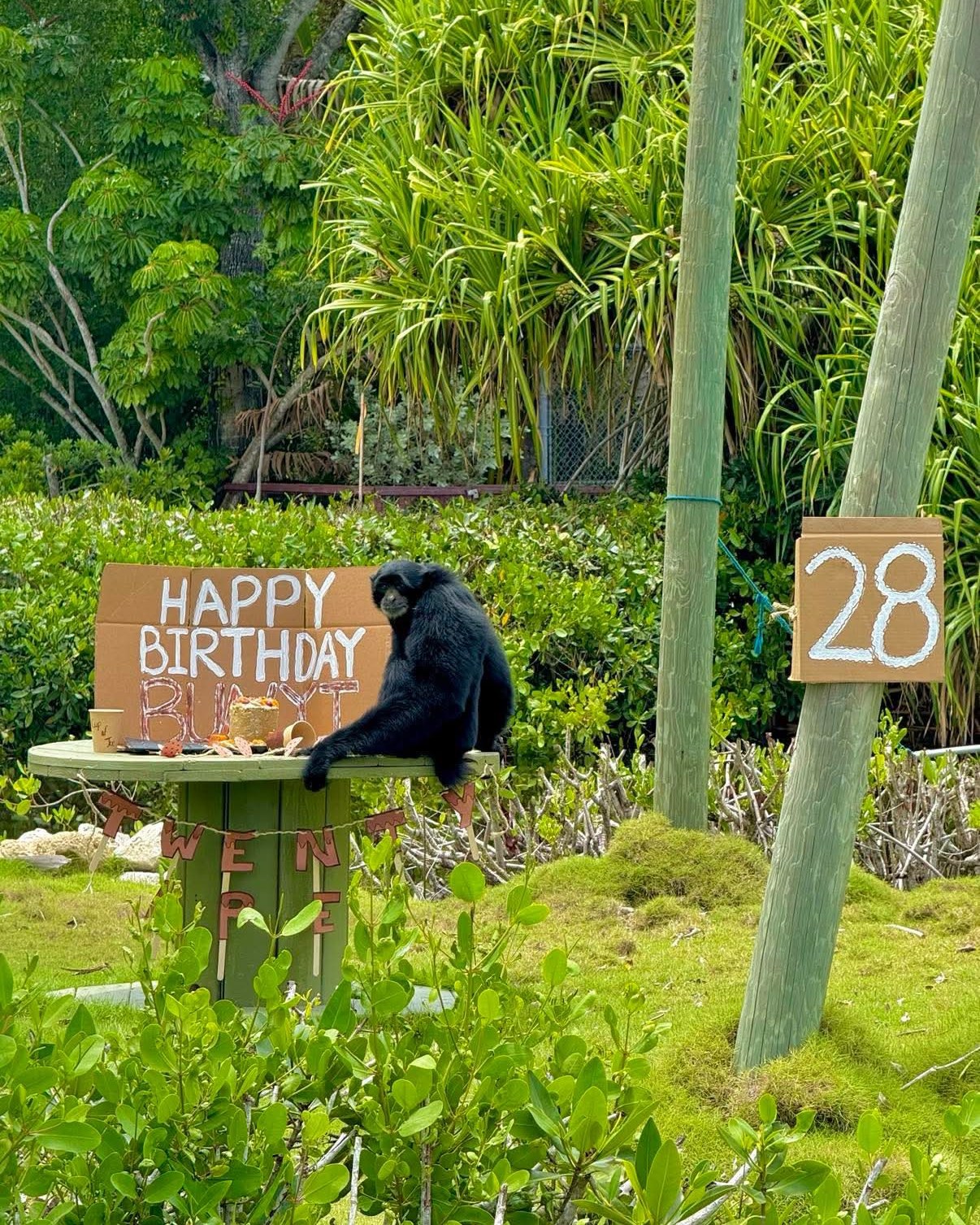
- Celebrating Bunyi: A 28-Year Journey of the Siamang Gibbon
- The Biology and Behavior of Siamang Gibbons
- The Importance of Vocalizations in Siamang Gibbons
- Wildlife Conservation Efforts for Gibbons
- Bunyi and Taylor: The Power of Pair Bonds
Celebrating Bunyi: A 28-Year Journey of the Siamang Gibbon
Bunyi, our beloved siamang gibbon, celebrates his 28th birthday today. This milestone is significant, as it offers a moment for reflection not only on Bunyi’s life but also on the broader implications of gibbon care and conservation. Gibbons, particularly siamang gibbons, are known for their agility and vocalizations, making them a prominent species in tropical forests of Southeast Asia. Celebrating Bunyi’s life calls attention to the unique attributes of siamangs and raises awareness about the challenges they face in the wild.
Siamang gibbons are fascinating animals that exhibit remarkable adaptations for life in the forest. They possess long arms and a specialized wrist joint that allows for a swinging locomotion called brachiation. This technique enables them to travel effortlessly from branch to branch, making them one of the most agile primates. Bunyi has demonstrated this agility throughout his life, captivating visitors with his impressive acrobatics. His interactions with Taylor, his mate, illustrate the significance of social bonds in gibbon communities.
The Biology and Behavior of Siamang Gibbons
Siamang gibbons (Symphalangus syndactylus) are the largest of the gibbon species. They exhibit sexual dimorphism, where males and females differ in size and vocal features. Adult males are generally larger and have a larger throat pouch, which is essential for their songs. Bunyi’s vocalizations are one of his most remarkable traits, as these calls play crucial roles in communication and territorial displays.
In their natural habitat, these primates primarily consume fruits, leaves, and flowers. Their dietary preferences contribute to their role as seed dispersers in the ecosystem, aiding in forest regeneration. The long, slender limbs of siamangs allow them to reach various food sources, maximizing their foraging efficiency. Bunyi’s life in the zoo has seen a carefully curated diet to mimic his wild counterpart’s nutritional needs.
Socially, siamangs are monogamous, often forming strong pair bonds that last a lifetime. Bunyi and Taylor have demonstrated this commitment, seen cuddling and playing together, showcasing the emotional bonds gibbons can form. Such relationships are vital for their well-being in captive environments.
The Importance of Vocalizations in Siamang Gibbons
Vocalizations are a key feature of siamang gibbons and serve multiple purposes, such as establishing territory, attracting mates, and maintaining group cohesion. These vocalizations can be heard from great distances, making them an effective means of communication in dense forests. Bunyi’s duets with Taylor are a daily delight, resonating throughout the zoo. Their harmonious songs not only foster their bond but also highlight the intricate vocal capabilities of gibbons.
The calls of this species can vary in pitch, length, and rhythm, often reflecting the context in which they are uttered. Gibbons are known for their extensive vocal repertoire; the complexity often indicates the individuals’ health and social standing. Observations of Bunyi’s vocalizations may also provide insights into his overall condition and emotional state.
In the wild, vocalizations play a significant role in protecting territories from intruders. By announcing their presence, siamangs can ward off potential threats and competitors. In a zoo setting, facilitating an environment where Bunyi and Taylor can express their vocal talents is paramount. Their songs become a joyful part of the zoo experience, enhancing visitor engagement and education.
Wildlife Conservation Efforts for Gibbons
Siamang gibbons are classified as endangered by the International Union for Conservation of Nature (IUCN). Habitat loss due to deforestation, illegal logging, and agricultural expansion threatens their existence in the wild. As their habitats shrink, so do their chances for survival. Recognizing the plight of gibbons like Bunyi is essential for fostering support for conservation efforts.
Organizations committed to wildlife conservation are working tirelessly to protect gibbon habitats and improve the living conditions of these primates. Habitat restoration, anti-poaching initiatives, and community education are vital components of these efforts. By involving local communities in conservation, it helps to ensure sustainable ecological practices and empowers residents to become stewards of their environment.
In addition to on-the-ground efforts, breeding programs maintain genetic diversity and promote the long-term survival of species like the siamang. Zoos play a critical role in these efforts, serving as refuges for endangered species while contributing to educational outreach. Animals like Bunyi become ambassadors for their species, helping raise awareness about the importance of preserving biodiversity.
Bunyi and Taylor: The Power of Pair Bonds
The relationship between Bunyi and his mate, Taylor, is an excellent example of the social complexities of gibbons. Pair bonding in gibbons goes beyond mere mating; it encompasses emotional connections that are crucial for their well-being. This bond influences their behavior and overall health. In combinations of care and companionship, Bunyi and Taylor thrive in their environment.
Observing the dynamics of their interaction provides valuable insights into gibbon behavior. They frequently engage in grooming, which serves both hygienic and social purposes. Grooming helps reinforce their bond and reduces stress, essential for emotional health. Engagement with each other and their environment highlights the necessity of maintaining social structures in captive settings.
The exhibit where Bunyi and Taylor reside has been designed to mirror their natural habitat as closely as possible. Enrichment activities, such as ropes and climbing structures, allow for stimulation and exploration. This not only boosts their physical well-being but reinforces their pair bond through shared experiences.
Educational programs at the zoo often feature Bunyi and Taylor, allowing visitors to learn about the lives of gibbons. Educational outreach highlights their unique characteristics and the environmental issues they face. By illustrating the significance of these animals, zoos encourage caring about conservation and inspire visitors to engage actively in environmental stewardship.
As we celebrate Bunyi’s 28th birthday, it offers a moment to acknowledge his life and the importance of gibbons in our ecosystem. Each day, visitors are treated to the beautiful songs of Bunyi and Taylor, a harmonious reminder of nature’s wonders and the need for conservation. By raising awareness and fostering community involvement, we can create a more sustainable future for siamangs and other species facing similar threats.
Supporting efforts to protect gibbons will enhance their habitat and contribute to a healthier planet. A voice for gibbons like Bunyi brings attention to crucial conservation stories that resonate far beyond the confines of the zoo. With every note Bunyi sings, he inspires more people to care about the Earth and the diverse life it sustains. Here’s to many more years of Bunyi’s melody and the ongoing commitment to safeguarding endangered species.
*****
Source Description
Happy 28th birthday to Bunyi! 🎉
Bunyi is one of our siamang gibbons who can be heard each and every day singing his duets with his lovely partner, Taylor! Here’s to many more years of hearing that beautiful voice from miles away! 🎶
📸: Primate Keeper Genevieve
