
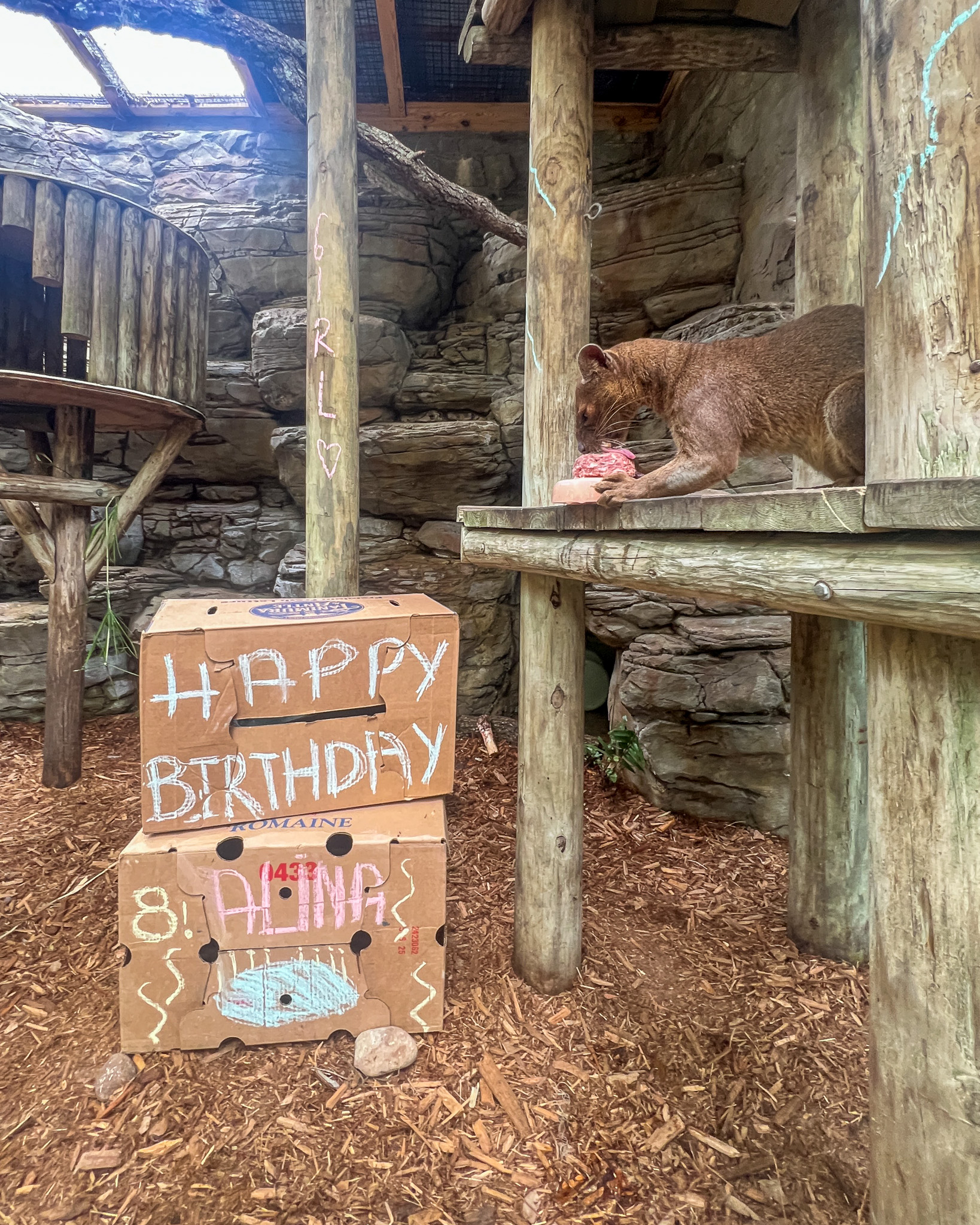
- Celebrate Alina’s 8th birthday as a female fossa and her significance in conservation efforts.
- Explore the fossa’s biological and ecological importance.
- Discuss the role of zoo management and animal care in fossa well-being.
- Highlight Alina’s special birthday enrichment activities and dietary preferences.
- Address wildlife conservation tactics and their importance to species like the fossa.
Happy 8th Birthday to our female fossa, Alina! This milestone not only marks her age but also serves as an opportunity to underscore the importance of this species in the ecosystem and crucial conservation efforts that support them. The fossa (Cryptoprocta ferox) is a carnivorous mammal found exclusively in Madagascar. It plays a vital role in controlling populations of its prey, including lemurs. This article will detail Alina’s birthday celebration, highlight her biological significance, and discuss how zoos contribute to wildlife conservation.
On her special day, our dedicated Animal Keepers and Nutrition Team put together an extraordinary frozen two-tier ‘cake’ made from Alina’s preferred foods: ground pork and goat’s milk. This thoughtful collaboration is not merely a celebration but also reflects the extensive knowledge and care that go into the husbandry of such an important species. Fossa require specific diets to thrive in captivity. Their nutritional needs must align with their natural habitat, where they primarily hunt lemurs and other small animals. Ground pork, enriched with essential nutrients, simulates their natural prey, while goat’s milk adds a beloved flavor.
The fossa’s unique adaptations make it an exceptional creature. With a long body, short legs, and a flexible spine, the fossa exhibits agility and strength. These features facilitate its skillful tree-climbing abilities, which are critical for hunting. The fossa can jump effortlessly between branches, providing a distinct advantage in its arboreal environment. This adaptability ensures that it can effectively stalk its prey, maintaining its status as a top predator within Madagascar’s delicately balanced ecosystem.
Understanding the fossa’s ecological significance further informs conservation strategies. Endemic to Madagascar, the fossa is a key player in maintaining the ecological balance of its habitat. Its predation regulates the populations of several species, helping to prevent overgrazing and ensuring the stability of the rainforest ecosystem. Unfortunately, habitat destruction and hunting pose significant threats to the fossa’s survival. With ongoing deforestation in Madagascar, it is crucial for zoos to advocate for conservation efforts that will protect the fossa’s natural environment. Supporting local communities through education and sustainable practices becomes essential in ensuring the future of this remarkable species.
Zoo management and animal care encompass many aspects that contribute to the well-being of the fossa, illustrated best through Alina’s birthday celebration. The integration of enrichment activities, such as her two-tier cake, is fundamental to her mental and physical health. Enrichment challenges fossa both physically and cognitively, allowing them to engage in their natural instincts. This practice helps prevent stress and related health issues that can arise in captive animals. Our Animal Keepers frequently rotate new types of enrichment activities and dietary options to keep Alina enriched and stimulated.
Animal nutrition is another critical factor. Fossa thrive on a diet rich in protein, with their natural intake consisting mainly of meat. The work of the Nutrition Team is vital in developing balanced diets tailored to meet the specific requirements of each animal in our care. Daily diets consider the fossa’s health, weight, and age. By providing food options that mirror their natural diet, such as the ground pork and goat’s milk, the zoo optimizes Alina’s health and overall happiness.
Conservation initiatives focusing on the fossa also play a crucial role in safeguarding its future. Zoos have evolved into centers of conservation, education, and research. They serve as hubs for breeding programs that aim to bolster the fossa population. These programs are vital, as they help maintain genetic diversity, which is essential in any conservation effort. With the decline of natural fossa populations, breeding programs in controlled environments offer a viable solution for maintaining this remarkable species.
The collaboration between zoos, conservation organizations, and local communities is essential for building sustainable futures for vulnerable species, such as the fossa. Educational outreach programs allow zoos to share informative content about the fossa’s role in its ecosystem, the challenges it faces, and what individuals can do to support conservation. By raising awareness, we create a community of advocates for the fossa and other endangered species.
Moreover, research is another critical aspect of conservation. Zoos often collaborate with academic institutions to enhance understanding of the fossa’s behavior, reproduction, and genetics. Improved knowledge within the scientific community can lead to effective conservation strategies. Scientific data benefits from public interest, which is vital for garnering support for conservation projects. Zoo visitors leave with newfound information and sometimes a desire to contribute directly to wildlife preservation efforts.
As we celebrate Alina’s 8th birthday, we honor both her and the fossa species as vital contributors to Madagascar’s ecosystems. Protecting such species requires informed efforts from various sectors, including zoos, researchers, and the public. The creativity shown in Alina’s birthday cake highlights the dedication and skill involved in animal care. Providing enriching experiences fosters not just the health of animals in zoos but also emphasizes the zoo’s mission to promote conservation.
As we reflect on Alina’s growth and achievements over the years, we also underscore the importance of collaborative efforts aimed at securing a future for the fossa species. As people learn more about the challenges faced by wildlife, they can join hands for the greater cause of conservation. Each birthday, like Alina’s, reminds us that each day spent educating ourselves and others about life on our planet can impact positively on preserving endangered species.
Zoos serve as vital sanctuaries for animals like Alina, offering an opportunity to observe them up-close while fostering a sense of connection. Experiences in a zoo can inspire advocacy and action, motivating individuals to participate in broader conservation efforts. Interacting with animals encourages visitors to think critically about environmental issues and the need for ethical treatment of all living beings.
Celebrating Alina’s 8th birthday is not just a personal milestone but a reflection of the ongoing educational journey that zoos provide. The educational value extends beyond the walls of the zoo. It inspires individuals to consider their role in conservation, urging them towards environmentally conscious choices in their daily lives. It serves as a reminder of the intertwined fates of humans and wildlife, as we work together to protect the natural world.
The future of our ecosystems depends on informed choices and active participation in conservation. Each educational encounter, like witnessing Alina’s birthday celebration, has the potential to create passionate advocates for wildlife preservation. The story of Alina and her fellow fossas exemplifies the intricate balance of nature and emphasizes the responsibility we all have in maintaining that balance for generations to come.
Happy birthday, Alina! Your journey is a celebration of life, conservation, and the community dedicated to ensuring that species like you thrive for many years to come.
*****
Source Description
🎂 Happy 8th Birthday to our female fossa, Alina! To celebrate, our Animal Keepers & Nutrition Team put together some special enrichment for her, including a frozen 2-tier ‘cake’ made from her two favorites: ground pork, and goat’s milk.
.
.
.
