
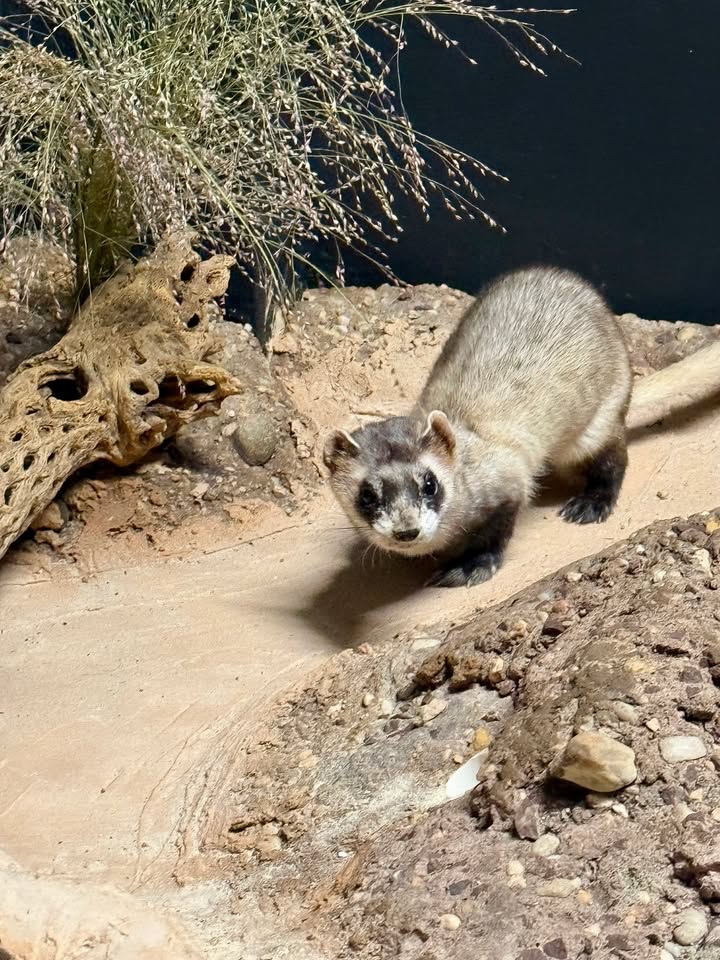
- The rediscovery of the black-footed ferret and its importance in wildlife conservation.
- The role of Shep, the ranch dog, in rediscovering the black-footed ferret 44 years ago.
- Current efforts in black-footed ferret conservation and the challenges faced.
- The educational role of MaryLou Ellen, a black-footed ferret in a zoo setting.
- The significance of nocturnal environments in understanding black-footed ferret behavior.
Forty-four years ago, the conservation world was greeted with monumental news. The black-footed ferret, once believed extinct, had been rediscovered in the wild, thanks to an observant ranch dog named Shep. This remarkable event rewrote the narrative of this endangered species, providing a glimmer of hope and acting as a catalyst for ongoing wildlife conservation efforts.
The black-footed ferret, native to North America’s Great Plains, faced a perilous decline primarily due to habitat destruction, disease, and the decimation of prairie dog populations, which form their primary diet. The rediscovery, however, opened a new chapter, shining a light on the ecological significance of these elusive creatures and prompting immediate conservation actions.
Shep, the ranch dog responsible for this extraordinary discovery, unwittingly altered the course of black-footed ferret history. While on a routine outing, Shep stumbled upon a small group of these ferrets in Wyoming, triggering a wave of scientific interest and conservation initiatives. As a result, this accidental discovery became a cornerstone event in wildlife preservation chronicles.
Since the rediscovery, conservationists have been actively working to stabilize and increase black-footed ferret populations. These efforts encompass breeding programs, habitat restoration, and disease management strategies. Captive breeding has played a pivotal role, with facilities dedicated to nurturing black-footed ferret populations and preparing them for reintroduction into the wild. However, challenges persist, including genetic diversity, habitat connectivity, and maintaining healthy prey populations.
In the realm of education and conservation, individual animals like MaryLou Ellen hold substantial value. A seven-year-old ferret residing in a controlled environment, MaryLou Ellen is part of a breeding initiative. Although she did not meet qualifications for release due to her inability to hunt rodents—a critical skill for wild survival—she serves as a living ambassador for her species. Through interactions with the public, MaryLou Ellen provides insight into the life of black-footed ferrets and underscores the importance of their conservation.
The role of zoos extends beyond housing animals; they serve as vital centers for education and awareness. MaryLou Ellen’s presence in the nocturnal hall of the Great Southwest area exemplifies this function. Immersing visitors in a setting that mimics the ferrets’ natural environment helps convey the adaptations and behaviors essential to their survival. Special lighting conditions create an optimal atmosphere for both the animal and onlookers, ensuring an educational experience that deepens understanding of this fascinating species.
Understanding nocturnal behaviors is crucial for appreciating black-footed ferrets’ ecological roles. These carnivores are adapted to a life in dim light, relying on acute senses to hunt their primary prey—prairie dogs. The simulated night environment in which MaryLou Ellen resides offers a glimpse into how these adaptations manifest, enhancing educational outreach and conservation engagement.
Awareness around the rediscovery of the black-footed ferret and ensuing conservation initiatives underscores the interconnectedness of species and habitats. As awareness grows, so does the potential to influence protective legislation and encourage sustainable practices that benefit not only ferrets but entire ecosystems.
This rediscovery day serves as a reminder of the potential for unexpected allies in conservation—like Shep the ranch dog—and the enduring impact of collaborative efforts in wildlife preservation. Such stories inspire the continuation of these endeavors and promote an informed and invested public, dedicated to the protection of biodiversity.
Happy Black-footed Ferret Rediscovery Day is more than a celebration of the species’ survival; it symbolizes hope, resilience, and the unwavering commitment of those working to sustain the natural world. Through education, awareness, and ongoing research, the black-footed ferret’s story continues, offering a beacon for future conservation successes.
*****
Source Description
Happy Black-footed Ferret Rediscovery Day! 44 years ago today, the black-footed ferret was rediscovered by Shep, a ranch dog, years after they were believed to be extinct.
We feel honored every day to work with MaryLou Ellen, a 7 year old black-footed ferret from the breeding program. She was not a candidate for release into the wild, because she would not kill a rodent, which is definitely a problem for a wild carnivore! We were thrilled to provide a permanent home for this endangered species, where she can educate visitors about her fellow black-footed ferrets in the wild.
Find MaryLou Ellen in the nocturnal hall of the Great Southwest area. During the day, dark is simulated with low blue lighting. Overnight, she has the opportunity for daylight (which also provides a great time for pictures).
