
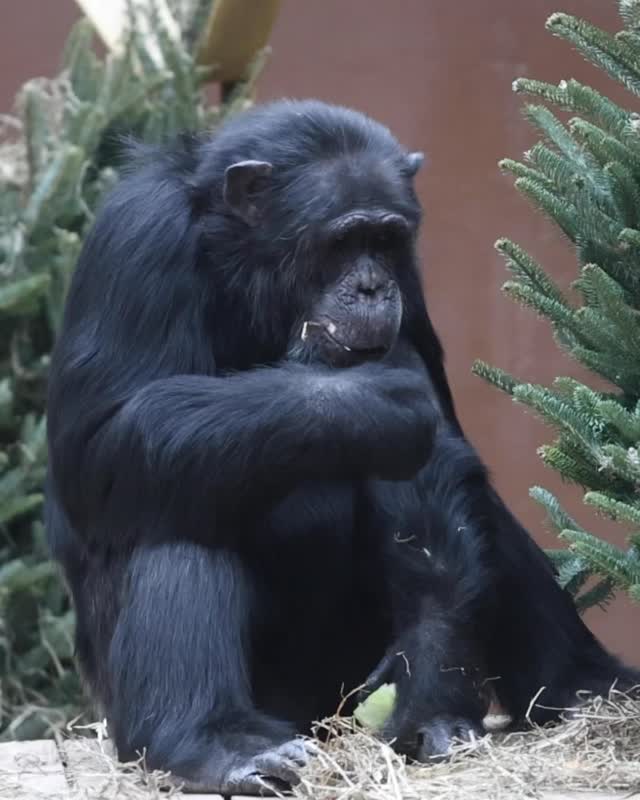
- Groundbreaking spinal surgery on chimpanzee Lu at Zoo Knoxville.
- Collaboration between veterinary and human neurologists.
- The significance of this procedure for chimpanzee health and care.
- Implications for wildlife conservation and medical research.
- Future prospects for similar surgeries and interdisciplinary partnerships.
In a pioneering effort, veterinarians and neurologists have successfully conducted spinal surgery on Mwelu, known affectionately as Lu, a 34-year-old chimpanzee residing at Zoo Knoxville. This event marks a significant advancement in veterinary medicine, demonstrating the power of interdisciplinary collaboration between human and animal healthcare experts.
Lu’s surgery unfolded at the University of Tennessee College of Veterinary Medicine on September 19. The team, composed of Dr. Talisha Moore, a veterinary neurologist, and Dr. James A. Killeffer, a human neurologist, worked together to achieve a surgical breakthrough. Their combined expertise was crucial, given the physiological similarities between chimpanzees and humans. Dr. Moore highlighted the rarity of the case and emphasized the importance of such partnerships in addressing complex medical challenges.
Chimpanzees share nearly 98% of their DNA with humans, making them vital subjects in biomedical research. This genetic proximity also means that veterinary care for chimpanzees often parallels human medical procedures. In Lu’s case, the collaboration allowed for precise tumor removal from the spine, alleviating pressure that had compromised his mobility and quality of life.
Dr. Killeffer, drawing from his vast experience in human neurology, noted the unprecedented nature of this procedure on a chimpanzee. The successful removal of most of the tumor provides Lu a better chance at recovery, setting a precedent for similar cases in the future.
Zoo Knoxville’s President and CEO, Bill Street, expressed admiration for the team’s dedication, recognizing not only the immediate benefits for Lu but also the potential impact on other chimpanzees. Such procedures could revolutionize wildlife medical care, offering new hope for animals suffering from similar conditions.
From a conservation standpoint, this feat underscores the importance of institutional cooperation. Dr. Paul Plummer, Dean of UTCVM, accentuated the role of partnerships between zoos and medical centers. These alliances expand the horizon of veterinary science, enhancing the standard of care and fostering innovation.
The success of Lu’s surgery invites a broader discussion about the intersection of veterinary and human medicine. It encourages institutions to collaborate more frequently, pooling resources and expertise to tackle complex medical cases. This interdisciplinary approach not only benefits the animals but also enriches the scientific community’s understanding of diseases shared by humans and their closest relatives.
For wildlife conservation, this surgery shines a light on the critical role of zoos as centers of research and education. By participating in groundbreaking procedures, zoos contribute to the global effort to conserve species and improve animal welfare. Furthermore, they serve as platforms where veterinary professionals can gain experience and knowledge applicable to both domestic and exotic animals.
The road to recovery for Lu is a testament to the efficacy of combined medical practices. Already demonstrating improved movement, he continues to heal under vigilant observation. The outcome of this surgery offers valuable insights into the care and rehabilitation of chimpanzees, setting a foundation for future medical interventions.
Looking forward, the implications of this surgery extend beyond individual cases. It represents a shift toward more integrated healthcare solutions for wildlife, highlighting the need for ongoing research and collaboration. As zoos and medical institutions forge stronger bonds, the potential for innovative treatments expands, benefiting both animal and human populations.
This historic spinal surgery is a remarkable example of what can be achieved when different disciplines unite for a common cause. It serves as a beacon of hope for wildlife conservation, medical research, and the continuous pursuit of knowledge. The story of Lu is not just one of recovery but of progress, paving the way for future advancements in both veterinary and human medicine.
*****
Source Description
Historic Spinal Surgery Gives “Lu” the Chimp a Second Chance
Mwelu (“Lu”), a 34-year-old chimpanzee at Zoo Knoxville, is recovering after a groundbreaking spinal surgery to remove a tumor—believed to be the first documented procedure of its kind performed on a chimpanzee.
The surgery, conducted September 19 at the University of Tennessee College of Veterinary Medicine, brought together Dr. Talisha Moore, a veterinary neurologist, and Dr. James A. Killeffer, a human neurologist from UT Medical Center. Because chimpanzees are more like humans than other animals, combining expertise was the best path forward.
“This was an incredibly rare case,” said Dr. Moore. “Partnering with Dr. Killeffer allowed us to combine expertise from both veterinary and human medicine to give Lu the best chance at recovery.”
Dr. Killeffer added: “Not only have I not heard of this procedure being done in a chimpanzee, I couldn’t find any record of it in the literature. We were able to remove the vast majority of the tumor, relieve pressure on the spinal cord, and give him a path to healing.”
Zoo Knoxville President and CEO Bill Street praised the effort: “Their dedication has given Lu the opportunity for a longer, fuller life while also paving the way for other chimpanzees who may benefit from this groundbreaking work.”
Dr. Paul Plummer, Dean of UTCVM, noted: “Our partnerships with Zoo Knoxville and UT Medical Center are essential. By leveraging our expert staff and cutting-edge facilities, we advance veterinary medicine and elevate the standard of care daily.”
Lu is already showing signs of improved movement and continues to recover under close observation.
We are excited to share Lu’s story and take you on his journey to recovery.
