
- Red River Hogs: Characteristics and Habitat
- Swimming Capabilities of Red River Hogs
- Maverick the Red River Hog: A Case Study
- Importance of Water Access in Zoos
- Wildlife Conservation Efforts for Red River Hogs
Red River Hogs, with their striking reddish-brown fur and distinctive tusks, are native to the forests, swamps, and savanna areas of West and Central Africa. These animals prefer habitats that boast plentiful water sources, as they are particularly drawn to rivers and streams. They enjoy warm temperatures and are well-adapted for their environments, spending much of their time rooting around in the mud for food, which consists of roots, fruits, and small invertebrates. In their natural habitats, these creatures play a critical role in their ecosystems by helping to aerate the soil and disperse seeds.
Water is not just an important resource for hydration; it also serves a vital purpose in thermoregulation and behavior. Red River Hogs are known for their love of water, where they can cool off and escape from heat, especially in tropical climates. This behavior is not only instinctive but necessary for their health. Like pigs and wild boar, these animals are excellent swimmers. They can submerge themselves in water and briefly hold their breath for around 15 seconds before resurfacing for air. For a species that thrives in hot weather, knowing how to navigate aquatic environments offers an advantage in evading predators and finding food.
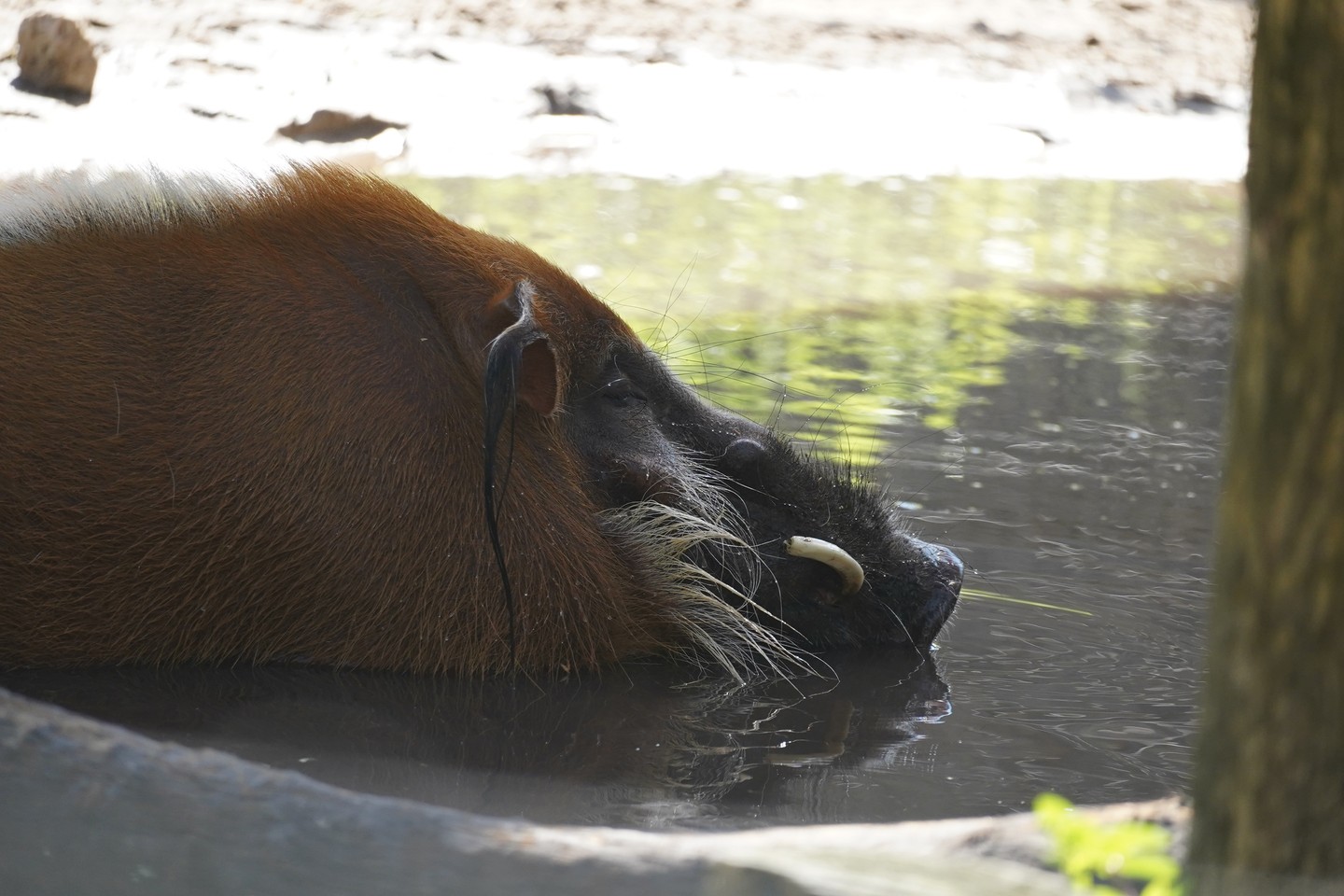
Maverick, a resident at ZooTampa, exemplifies the adaptability and charm of Red River Hogs. Observing him as he cools off in the water illustrates the species’ affinity for swimming. Maverick’s engaging personality enchants visitors, and his frequent dips highlight the significance of aquatic habitats for the well-being of these animals. At ZooTampa, both staff and visitors can witness firsthand how such habitats enhance the quality of life for Maverick and his companions. This interaction fosters a connection between the public and wildlife, promoting awareness about the needs of these animals.
In an ideal setting, access to water should not only be abundant but also clean and safe. At Zoos and wildlife parks, keeping water features in good condition is vital. Daily water quality assessments ensure that swimming areas are free from harmful pollutants that could impact the health of aquatic life, including Red River Hogs. Furthermore, these habitats should be designed to allow animals to exhibit natural behaviors such as swimming, diving, and exploring, which contributes to their mental and physical health.
Wildlife conservation is another critical component in understanding Red River Hogs and their needs. These animals face threats primarily due to habitat loss from agricultural expansion, logging, and poaching. Conservationists emphasize habitat protection as a key strategy to secure a future for these creatures. Organizations dedicated to preserving wildlife work to create and manage protected areas in various ecosystems. Awareness campaigns also play a role in underscoring the significance of protecting water sources and natural habitats for the survival of Red River Hogs, among other species.
Additionally, education and outreach help bridge the gap between human activity and wildlife conservation. Zoos like ZooTampa serve as important platforms for promoting these messages. Engaging community programs inform the public about the importance of biodiversity and the specific needs of species like the Red River Hog. Through education initiatives, zoos combine entertainment with information, motivating visitors to take an active role in wildlife protection.
Visitors to ZooTampa can further appreciate Maverick and his companions by observing their behavior. The sheer joy that Red River Hogs exhibit while swimming captures another aspect of their character. These animals are sociable and often live in groups, capable of displaying a range of emotions. They communicate through a series of vocalizations, ranging from grunts to squeals. Understanding these social structures adds depth to how we view the lives of Red River Hogs in captivity compared to their wild counterparts.
The dietary habits of Red River Hogs also tie in with their environment. In both their natural habitat and at the zoo, these animals primarily consume plant material. Rooting in the soil helps them find food and contributes to soil health as they aerate it. In captivity, zoo nutritionists design feeding programs that mimic their natural diet, ensuring that Red River Hogs receive the right nutrients. This balance is crucial for maintaining their health and vitality, particularly in a controlled environment where they may lack the natural diversity of their wild foraging.
Additionally, breeding programs in captivity aim to maintain genetic diversity within the Red River Hog population. Zoo-based breeding initiatives help support not only the species within zoos but also contribute to global conservation efforts. Establishing stable populations in captivity can provide a safeguard against extinction, particularly for animals facing habitat loss. Genetic studies ensure that breeding combinations promote healthy offspring, vital for long-term survival strategies.
As the climate continues to change, adapting conservation strategies to address new challenges becomes critical. Temperature extremes can disrupt the habitats of Red River Hogs, affecting their access to food and water. Researchers track these trends to anticipate changes in animal behavior, health, and population dynamics. By studying the adaptability of species like the Red River Hog, conservationists can develop informed strategies for habitat preservation and restoration.
In summary, the plight and lifestyle of the Red River Hog shed light on broader environmental issues. Observers at zoos such as ZooTampa are fortunate to witness these fascinating animals up close. Maverick serves as an ambassador for his species, and by highlighting his behaviors, visitors gain insight into the importance of water access and habitat preservation. Every detail helps to paint a fuller picture of not only the Red River Hog’s life but also the interconnectedness of ecosystems and wildlife conservation.
An informed public is a powerful ally in the effort to protect wildlife. By understanding the habits, social structures, and needs of Red River Hogs, people become more equipped to advocate for conservation initiatives. Whether it’s through direct donations to wildlife protection organizations or simply sharing knowledge gained from visits to zoos, every action contributes to safeguarding the future of these remarkable animals. Through education, awareness, and active participation in conservation efforts, individuals can become stewards of the natural world, ensuring that creatures like Maverick thrive for generations to come.
*****
Source Description
With how hot it’s been, wallowing in the water sounds pretty perfect, and Maverick seems to agree! 🐗
Red river hogs like Maverick are excellent swimmers and can even dive underwater, catching their breath every 15 seconds! They get their name from their reddish-brown fur and their habit of wading through rivers and streams. Next time you visit ZooTampa, keep an eye out for Maverick cooling off with a refreshing dip!
