
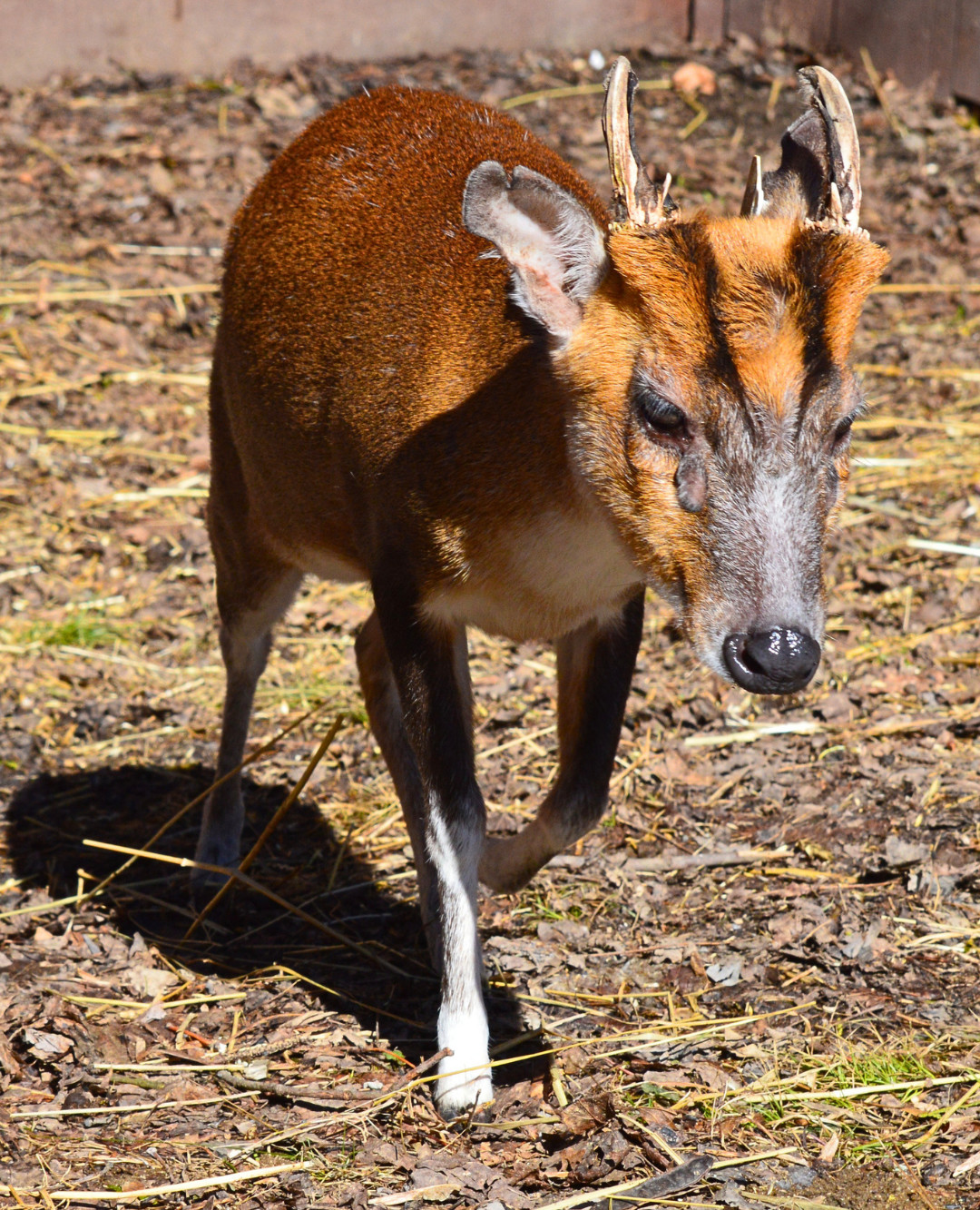
- Reeves’s Muntjacs possess facial scent glands which aid in communication.
- These scent glands play a critical role in social interactions among the species.
- Understanding the anatomy and function of these glands can deepen our appreciation for animal behavior.
- Reeves’s Muntjacs are an important species for conservation efforts.
- The behavior of scent-marking provides insight into their natural habitat preferences.
Reeves’s Muntjac (Muntiacus reevesi), commonly known as the barking deer, is a fascinating species characterized not only by its unique appearance but also by its complex social behavior. One of the most interesting aspects of this small deer is its facial scent glands. Males have two prominent scent glands located on their foreheads and one under each eye, referred to as the frontal and preorbital glands. These glands are essential for communication and establishing social bonds within the species.
These scented bumps may appear simple, but they serve as vital signaling tools among munjacs. The significance of scent communication in animal behavior cannot be overstated. While humans rely on verbal language, animals like Reeves’s Muntjacs use scent to convey a range of messages. When a male, such as Xiao at your local zoo, rubs his head against trees or structures in his environment, he is not merely engaging in a common deer behavior; he is marking territory and communicating with other muntjacs.
The use of scent glands can initiate various social interactions. By marking their environment with scents, muntjacs can inform others about their presence, reproductive status, or territorial boundaries. This method of communication can reduce conflict among individuals, helping to maintain a stable social structure. The information contained in the scent can also play a role in attracting potential mates during the breeding season, making it essential for reproductive success.
Understanding the function of these glands requires a look into the anatomy of Reeves’s Muntjac. The preorbital glands, located beneath their eyes, produce specific odor compounds that are released into the environment. The frontal scent glands, positioned on the forehead, emit scents used primarily during social interactions. These glands are different from other scent glands found in various animal species, which demonstrate just how specialized Reeves’s Muntjacs are in their social communication methods.
The ability to communicate through scent could enhance the species’ survival. For example, social bonding facilitated by these scent marks can help form groups that are vital for foraging and predator protection. Animals that bond through scent-marking are more likely to cooperate, increasing their chances of survival. This instinctual behavior shapes their relationships, fostering a cohesive social structure.
Additionally, studying these methods of communication in Reeves’s Muntjacs reveals important insights into their habitat preferences. These deer thrive in mixed habitats, including woodlands, scrublands, and grasslands, where they can easily find places to mark their territory. A rich environment with diverse vegetation not only offers food sources but also provides an area for effective scent marking. The connection between habitat and social communication warrants further research, which could be beneficial for conservation efforts.
As an important highlight, Reeves’s Muntjacs are often regarded as vulnerable due to habitat loss and poaching. Conservation efforts are crucial to ensure their survival in the wild. Initiatives to protect their habitats and mitigate human impact are vital to their ongoing existence. Understanding their social structures and communication methods can help conservationists design effective strategies to balance human activities with wildlife needs.
In terms of practicality, knowing how Reeves’s Muntjacs use their scent glands can benefit zoo management and educational programs. When presenting these animals to the public, zoos and wildlife centers can emphasize the unique aspects of their behavior. Educating visitors about the significance of scent marking can foster a greater appreciation for the species and the importance of conservation.
Creating exhibits that mimic their natural environment can also enhance well-being in zoo settings. Providing structures for scent-marking behaviors encourages mental stimulation and reduces stress for the animals. Understanding the social dynamics among Reeves’s Muntjacs can help caretakers promote positive interactions while ensuring the animals’ needs are met. This awareness allows them to monitor behaviors, identify potential issues, and create a more welcoming environment.
Moreover, scientific studies focusing on the chemical composition of the scents produced by Reeves’s Muntjacs can yield intriguing findings. Different pheromones and compounds could serve specific functions, from warning signals to mating calls. Unlocking this information not only enriches our understanding of deer behavior but also contributes to broader ecological research.
Furthermore, the research conducted on Reeves’s Muntjacs and their scent communication models could have implications beyond zoos and conservation. Insights gained from their social dynamics and communication strategies can resonate within the fields of ecology and behavioral biology, enhancing our understanding of social behaviors among mammals.
In the context of conservation, a multi-faceted approach incorporating robust field studies and ecological monitoring is essential. This ensures that wildlife populations, including Reeves’s Muntjacs, can thrive. Collaboration with local communities helps address environmental impacts while promoting sustainable practices that preserve natural habitats.
With the aid of modern technology, scientists can track and analyze the behaviors of these animals in their natural habitats. Such data can provide invaluable insights into their foraging habits, social dynamics, and the influence of environmental stressors. Longitudinal studies will inform future conservation strategies, guiding effective policies for the preservation of Reeves’s Muntjacs and their ecosystems.
Ultimately, the multifaceted communication methods of the Reeves’s Muntjac stand as a testament to the complexity of animal behavior. The intricate balance among scent marking, social dynamics, and habitat preference further emphasizes the need for ongoing research and dedicated conservation efforts. Understanding these characteristics can lead to improved management practices for this vulnerable species, ensuring that future generations will have the opportunity to appreciate these remarkable animals.
The ongoing quest to understand Reeves’s Muntjacs invites both scientists and enthusiasts to engage with their unique behavioral patterns. As we continue to learn about the significance of scent glands and their role in communication, it becomes increasingly clear that preserving these remarkable creatures requires a commitment to environmental stewardship. Through education, research, and conservation, we can play a role in ensuring that Reeves’s Muntjacs thrive in their natural habitats for years to come.
*****
Source Description
Did you know Reeves’s Muntjacs have scent glands…on their face? This species of deer has two glands on their forehead and one under each eye. These are called frontal and preorbital scent glands.
To us, they may seem like just a bump under their eyes, but to other muntjacs, these scent glands can be used for communication and bonding.
If you ever see our male Reeves’s Muntjac, Xiao, rubbing his head on a nearby tree or along the ground, he’s most likely using the scent glands on his face to mark the area!
Have you heard this weird animal fact before? Thanks to First Source Federal Credit Union for sponsoring it!
