
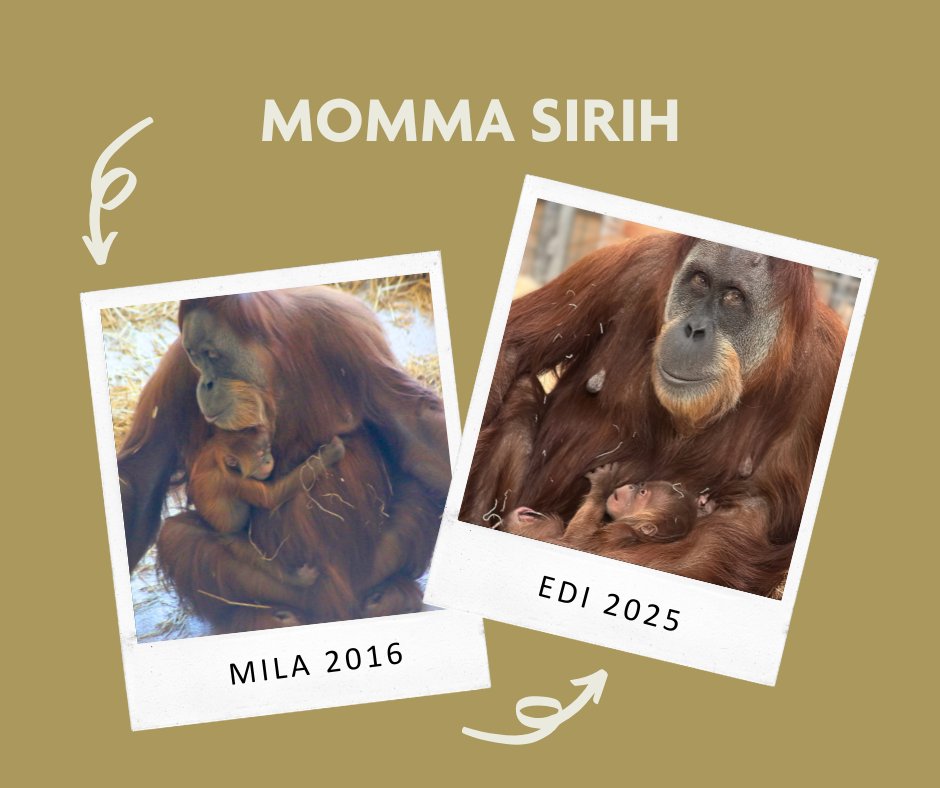
- Exploring the emotional connections between baby animals and their siblings and mothers.
- The impact of familial bonds on animal behavior and development.
- Zoological practices in capturing and sharing family moments.
- The role of such intimate glimpses in wildlife conservation and public engagement.
- Understanding the scientific basis for family structures in various animal species.
Observing the familial bonds among animals can offer profound insights into their behavior, emotional capacity, and developmental processes. The captivating images of baby Mila with mom Sirih, alongside their siblings, serve as a window into understanding these complex relationships. By examining these connections, we can appreciate how they influence an animal’s life and interactions within their group or species.
Emotional connections between siblings and their mother are pivotal in the animal kingdom. These attachments are not only heartwarming to observe but play critical roles in the survival and learning of young animals. In numerous species, the mother is the primary caregiver, providing nourishment, protection, and guidance. The presence of siblings often adds another layer of socialization, helping young animals develop skills necessary for adulthood.
Scientific studies indicate that such familial interactions are key drivers in behavioral development. The experiences young animals have with their mothers and siblings can impact their social skills, foraging habits, and even survival instincts. For example, the social play observed among young mammals, such as in wolf pups or lion cubs, is integral to developing hunting strategies and social hierarchies.
In zoological settings, capturing images of animal families, like baby Mila with mom Sirih, is a practice that combines science and public engagement. These photos serve not only as valuable research tools to document growth and interactions but also play a crucial role in storytelling. They provide an emotional connection for the public, fostering a sense of empathy and understanding towards wildlife conservation.
The practice of sharing these moments can significantly boost public interest and involvement in conservation efforts. When people see the familial bonds among animals, it resonates on a personal level, encouraging support for conservation initiatives. This emotional engagement is an effective tool in public education, as it personalizes the narrative of wildlife protection and habitat preservation.
Delving into the science of family structures in different species, we discover diverse organizational models. For instance, elephant herds are matriarchal, with mothers and female relatives collaboratively raising the young. In contrast, many bird species exhibit biparental care, where both parents are involved in nurturing the chicks, demonstrating the evolutionary advantages of shared parental duties.
By understanding these structures, zoologists and conservationists can better manage and support animal populations, particularly in controlled environments like zoos. Insights into natural family dynamics help inform breeding programs, habitat design, and enrichment activities that mirror the animals’ natural environments.
In conclusion, images like those of baby Mila with mom Sirih and her siblings contribute significantly to our understanding of animal families and their importance in behavioral development. These snapshots of life remind us of our connection to the animal world and the shared evolutionary traits that bind us as living beings. They underscore the critical role of family in nurturing life, across species and ecosystems, and inspire continued efforts in wildlife preservation and education.
*****
Source Description
We found some old photos of baby Mila with mom Sirih. Look at those brother and sister side by side photos with mom. 🥰
