
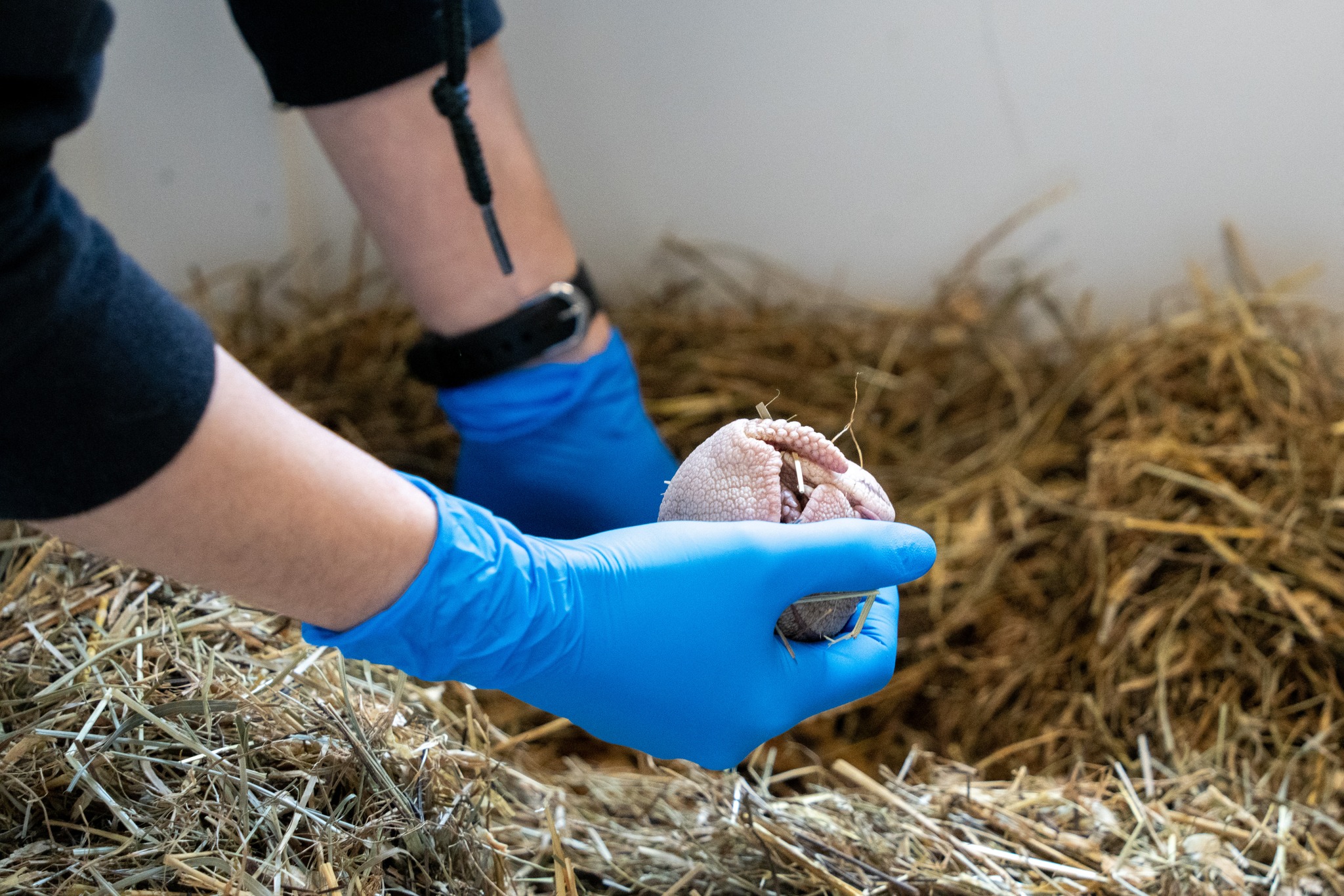
- Introduction to the Birth of a Baby Three-Banded Armadillo: A Special Event in Wildlife Conservation
- Unique Physical and Behavioral Traits of Three-Banded Armadillos Compared to Their Nine-Banded Relatives
- The Role of Zoos in Breeding and Conservation of Endangered Armadillo Species
- Detailed Examination of Armadillo Parental Care and Offspring Development
- Importance of Conservation Efforts for Protecting Armadillo Habitats and Populations
Introduction to the Birth of a Baby Three-Banded Armadillo: A Special Event in Wildlife Conservation
The birth of a baby three-banded armadillo, fondly referred to as a “little pokeball,” is a remarkable event in zoos and wildlife management. This specific birth took place behind the scenes, with parents Ross and Rachel. Rachel, an experienced mother, has been nurturing her newborn pup for the past two weeks, and the pup is thriving. This diminutive creature is more than just a newcomer; it represents a triumph in the ongoing effort to protect vulnerable species.
These fascinating mammals, known for their armored appearance, belong to the family Dasypodidae and are native to South America. Their ability to curl into a near-perfect sphere distinguishes them from their nine-banded cousins found in the US and Mexico. The temporary refuge offered by their rounded form is crucial for evading predators.
Unique Physical and Behavioral Traits of Three-Banded Armadillos Compared to Their Nine-Banded Relatives
Three-banded armadillos have a distinctive defensive strategy. Their ability to completely roll into a ball provides them with a unique survival advantage. This characteristic is absent in the nine-banded armadillos, which cannot fully enclose themselves. The protective shell of the three-banded armadillo is composed of keratin plates, allowing flexibility and robust protective armor.
The contrast between these two types of armadillos extends beyond physical differences. The three-banded armadillo is smaller, with adults weighing up to 3 pounds and measuring around 12 inches in length. In contrast, their nine-banded relatives can reach up to 20 pounds and are more widespread geographically.
These adaptations allow the three-banded armadillo to thrive in specific ecological niches, primarily inhabiting dry forests and grasslands. Their specialized claws and strong legs facilitate digging and foraging for insects, a primary food source. The biological adaptations, both physical and behavioral, underscore the evolutionary specialization within the armadillo family.
The Role of Zoos in Breeding and Conservation of Endangered Armadillo Species
Zoos play a critical role in the conservation and breeding programs of armadillos, focusing on increasing population numbers and genetic diversity. Captive breeding programs are integral to maintaining healthy populations of endangered species like the three-banded armadillo. By creating secure environments that mimic natural habitats, zoos facilitate successful breeding and rearing of offspring.
These institutions also contribute to research efforts, examining breeding patterns, dietary needs, and genetic health. The birth of the three-banded armadillo pup to Ross and Rachel shows the success of controlled breeding programs, emphasizing the importance of institutional collaboration in species conservation. Educating the public about these animals’ unique biology and conservation status is part of zoos’ broader mission to foster awareness and respect for wildlife.
Detailed Examination of Armadillo Parental Care and Offspring Development
The nurturing behavior exhibited by female three-banded armadillos like Rachel is an essential factor in the pup’s survival. Mothers invest significant time and energy in raising their young. The pup remains with its mother for several months, during which it learns essential survival skills, such as foraging and defensive postures.
The pup’s early growth phase is critical. Typically, newborns are blind and feature soft armor, which gradually hardens as they mature. During this period, the mother is the primary source of protection and nourishment, exemplifying a strong maternal bond within the species. Understanding maternal behaviors and pup development in captivity contributes valuable insights into the species’ life cycle, directly benefiting conservation and management strategies.
Importance of Conservation Efforts for Protecting Armadillo Habitats and Populations
Conservation efforts for armadillos extend beyond breeding programs; they encompass the preservation and restoration of natural habitats. Habitat destruction, climate change, and human encroachment pose significant threats to armadillo populations. Conservationists advocate for creating protected areas and sustainable land-use practices to mitigate these impacts.
Public outreach and education about the ecological role of armadillos provide additional layers of protection. By engaging local communities and promoting coexistence strategies, conservation initiatives aim to reduce human-wildlife conflicts. With an increasing emphasis on habitat conservation and research, the survival outlook for armadillos, including our remarkable baby three-banded armadillo, can improve.
Collectively, the efforts to understand and protect armadillos highlight the intricate relationship between species preservation and ecosystem health. This dedication ensures that future generations will continue to encounter the unique wonders of creatures like the three-banded armadillo.
*****
Source Description
Check out this little pokeball! We had a baby three-banded armadillo born two weeks ago behind the scenes to parents Ross and Rachel. Rachel is an experienced mother, and the pup seems to be healthy!
Three-banded armadillos are related to nine-banded armadillos you might have seen in the United States or Mexico, but they’re smaller. Also, as the pup is demonstrating, they can completely roll up into a tight ball (which nine-banded armadillos can’t do).
