
- Identifying Hamadryas Baboons: A Skillful Observation Exercise
- The Social Structure of Hamadryas Baboons
- The Conservation Status and Challenges Facing Hamadryas Baboons
- The Role of Zoos in Hamadryas Baboon Conservation
- Enhancing Public Engagement with Wildlife through Visual Learning
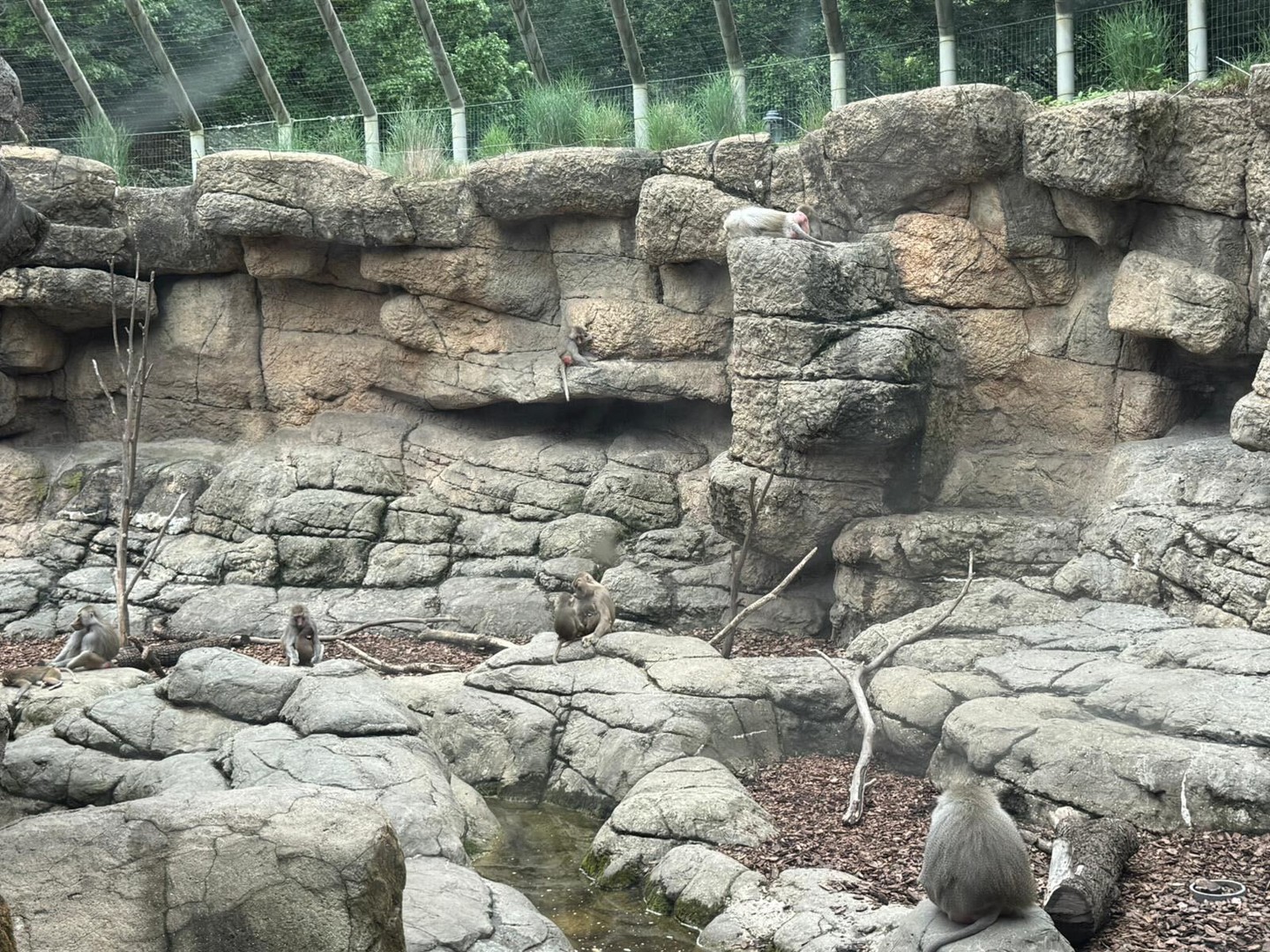
Identifying Hamadryas baboons can be an engaging exercise in keen observation skills. In a photo featuring these primates, one might be surprised to discover that all eleven baboons can be seen if one knows where to look. Colored dots can assist in spotting each baboon, allowing viewers to discern their positions in an often-crowded scene. This observation activity demonstrates a broader concept in wildlife studies: the ability to detect individual species within a group, which is crucial for both research and conservation efforts.
Hamadryas baboons are unique in their complex social structure. Living in groups called troops, these baboons exhibit a multi-tiered hierarchy. Troops consist of primary males, several females, and their offspring, with the dominant male often leading and protecting the troop. This structure influences their behavior and social interactions. Observing how these baboons relate to one another can reveal much about their social bonds, hierarchies, and communication methods. They use a range of vocalizations and body language to establish and maintain these relationships. Understanding their social dynamics can enhance our knowledge of primate behavior and contribute to effective conservation strategies.
The conservation status of Hamadryas baboons raises important concerns. These species currently face threats such as habitat loss and hunting. While they are classified as Least Concern by the IUCN Red List, localized populations are experiencing significant reductions due to human activity. Understanding these challenges is essential for creating conservation programs tailored to their needs. Data collection on population size, habitat requirements, and social structure is integral to addressing the issues that threaten their survival in the wild.
Zoos play a vital role in the conservation of Hamadryas baboons and other wildlife. Modern zoological facilities not only provide a temporary home for these animals but also engage in important research and breeding programs that contribute to maintaining genetic diversity. These programs can be crucial for species that are struggling in the wild. Additionally, zoos serve as educational platforms, raising awareness about the challenges faced by these animals in their natural habitats. Informative displays and activities encourage visitors to broaden their understanding of wildlife conservation.
Public engagement through visual learning has emerged as a significant aspect of wildlife education. Using images is an effective way to draw attention to species like Hamadryas baboons and promote awareness of their circumstances. The simple act of spotting individual baboons in a photo can lead to deeper conversations about their behavior, habitat needs, and conservation status. This interactive method of learning fosters an appreciation for wildlife and encourages individuals to advocate for the preservation of these species and their natural environments.
Spotting individual Hamadryas baboons in a crowded photo can be more than just a fun activity; it’s a pathway to understanding their biology and role in ecosystems. Observing their distinctive features, including their long, flowing manes and pronounced facial profiles, allows for a deeper appreciation of these primates. They have a rich and complex existence that reflects the interplay between evolution and environment.
In summary, the exercise of identifying Hamadryas baboons in a photograph is far-reaching. It touches on social structures, conservation status, the role of zoos, and public engagement strategies. Each element is interconnected, creating a tapestry that emphasizes the significance of Hamadryas baboons in the natural world and the urgent necessity of their conservation. Expanding knowledge and increasing public interest in these animals can lead to more effective conservation efforts, ensuring their future in both captivity and the wild.
*****
Source Description
How many Hamadryas baboons can you see in this photo? Would you believe us if we told you that all eleven of our baboons appear in it? If you’re having trouble spotting them, we added a key to help. Each green dot represents one of the baboons.
📸: Keeper Megan
