
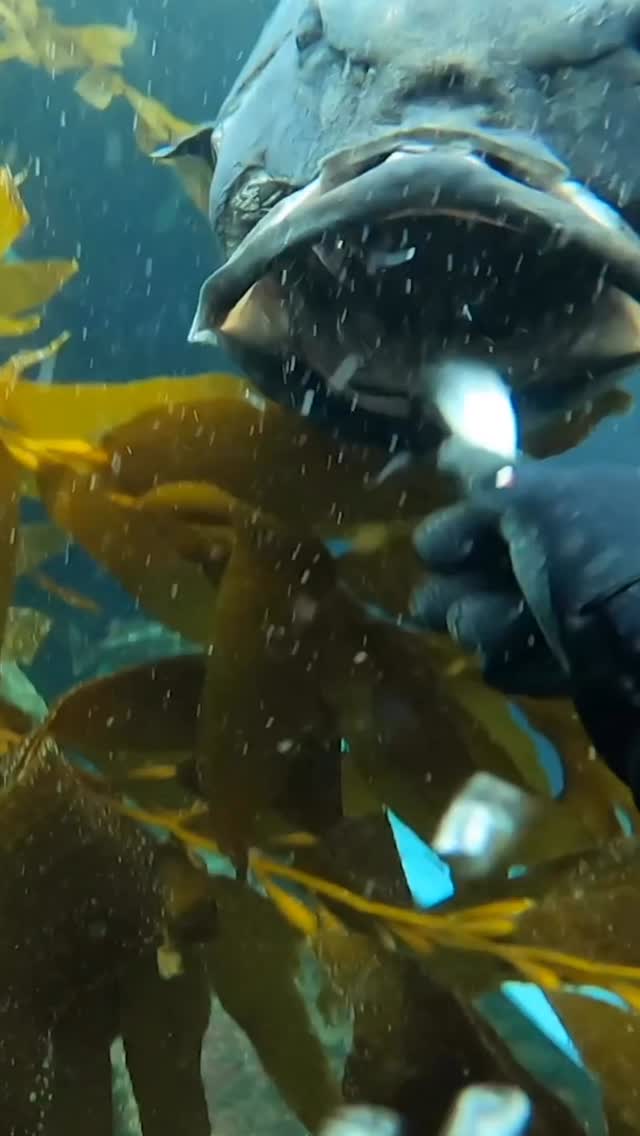
- The biological characteristics of the Giant Sea Bass
- The ecological significance of the Giant Sea Bass
- Conservation efforts and challenges faced by Giant Sea Bass populations
- Kelp forests as critical habitats for the Giant Sea Bass and other marine life
- Engagement opportunities for learning about marine conservation
The Giant Sea Bass (Stereolepis gigas) is an impressive species recognized for its size, with adult individuals reaching lengths of up to 8 feet and weighing over 500 pounds. This formidable fish has a robust body and a relatively flat, broad head with large eyes that provide excellent vision in the dimly lit environments of its natural habitat. Typically found along the rocky reefs and kelp forests of the eastern Pacific Ocean, mainly from California to Baja California, this species exhibits a dark, mottled coloration that helps it blend seamlessly into its surroundings. Not only does its size and coloration contribute to its striking appearance, but these biological characteristics also enhance its ability to thrive in diverse marine environments.
The Giant Sea Bass is a carnivorous fish that primarily feeds on smaller fish, invertebrates, and occasionally kelp. Its predatory nature complements the structure of the kelp forest ecosystem, where it plays a key role in maintaining a balanced food web. Within these underwater forests, various marine species coexist, contributing to the rich biodiversity intrinsic to this habitat. This iconic fish is not merely a significant component of the marine community but also serves as an indicator species; its presence signals the health of the ecosystem.
The ecological significance of the Giant Sea Bass extends beyond its predatory role. By controlling populations of smaller fish, this species helps manage the dynamics of the marine environment. This balance is essential for the overall health of the kelp forest, which in turn supports a plethora of other species, including seals, sea otters, and countless invertebrates. The intricate relationships among these organisms illustrate the complexity of marine ecosystems, where each species has a stake in the survivability of others.
Despite the pivotal role of the Giant Sea Bass in its ecosystem, its populations have seen dramatic declines over the years. Once abundant, the species is now classified as vulnerable, with factors such as overfishing and habitat degradation leading to its precarious status. Historically, the species was heavily targeted for its meat and was sought after by sports fishermen. The combination of unsustainable fishing practices and habitat loss, primarily due to coastal development and pollution, has severely impacted Giant Sea Bass numbers.
In response to these alarming trends, conservation efforts have been initiated to rehabilitate Giant Sea Bass populations. These strategies typically include the establishment of marine protected areas (MPAs), which restrict fishing in critical habitats to provide a sanctuary where marine life can thrive. Research and monitoring programs also play a crucial role in understanding the dynamics of fish populations, enabling scientists to evaluate the effectiveness of conservation measures.
Additionally, public awareness and community engagement are vital to successful conservation initiatives. Educational programs highlighting the importance of marine ecosystems and species like the Giant Sea Bass inform visitors and local communities alike. Engaging with the public through guided dives and discussions about these magnificent creatures encourages a sense of stewardship and responsibility for their preservation. The towering kelp forests where these fish reside further emphasize the importance of marine conservation efforts.
The kelp forest is an ecological treasure that serves as a vital habitat not only for the Giant Sea Bass but also for a myriad of marine organisms. Spanning from the coastline down to depths of around 120 feet, these underwater forests are rich in nutrients and biodiversity. The massive kelp plants, which can grow several feet per day, form dense canopies that provide shelter and breeding grounds for various species, including crabs, snails, and numerous fish.
Giant Sea Bass often inhabit the deeper waters of the kelp forest, where they can hunt prey while remaining concealed among the swaying kelp. Their size enables them to navigate through the dense vegetation, making them formidable predators. Moreover, their presence contributes to the overall health and vitality of the kelp forest. The vegetation creates a microhabitat that serves not just the Giant Sea Bass but an entire ecosystem teeming with life.
As potential visitors prepare for a memorable experience, participation in a Kelp Forest Dive offers a chance to observe these magnificent creatures firsthand and learn about marine stewardship. These dives provide intimate encounters with the diverse marine life that call the kelp forest home. During the dive, participants can witness the majestic movements of the Giant Sea Bass, as well as explore the various species that thrive in this underwater habitat. This experience allows individuals to appreciate the ecological complexity of the kelp forest while fostering a personal connection to marine conservation efforts.
Caring for the Morgan Eels and Horn Sharks, which share this environment with the Giant Sea Bass, adds another dimension to marine management. Both species are integral players in their own right. Moray Eels are known for their sleek, serpentine bodies and are often found hiding in crevices, waiting to ambush unsuspecting prey. Horn Sharks, on the other hand, are bottom-dwelling species characterized by their distinctive curled horns and spiny dorsal fins. Both contribute to the unique interactions and energy flow within the marine ecosystem, similar to the Giant Sea Bass.
Education within these marine management paradigms emphasizes the importance of species interconnectivity. Each creature, from the smallest invertebrate to the largest predator, plays a significant part in the health of marine ecosystems. Programs that explore these relationships equip us with the knowledge necessary to advocate for effective conservation measures. By prioritizing educational outreach, marine facilities can inspire future generations to become active participants in underwater conservation initiatives.
In summary, the Giant Sea Bass is more than just a large fish; it is a crucial component of the marine ecosystem that deserves our attention and protection. Its role in the kelp forests illustrates the intricate relationships within underwater communities. The continuing decline of its populations acts as a wake-up call for all stakeholders involved in marine conservation. The combination of targeted conservation strategies and public engagement can lead to meaningful changes in preserving this extraordinary species.
As marine enthusiasts seek connections to the worlds beneath the waves, opportunities abound to learn more about the Giant Sea Bass and its habitat. Educational programs, like the Kelp Forest Dive, open doors to exploration and understanding of marine life. Participants emerge not just with knowledge but also with a renewed commitment to the oceans and the health of their ecosystems. Observing the Giant Sea Bass alongside other creatures in their habitat enhances appreciation of the delicate balance that sustains life beneath the surface. Everyone has the chance to be advocates for conservation, for both the Giant Sea Bass and the rich ecosystems they inhabit.
*****
Source Description
It’s called a GIANT sea bass for a reason… 👀
Curious about the creatures home to our Don’t miss a Kelp Forest Dive on your next visit!
During this talk you’ll learn how we care for Moray Eels, Horn Sharks — and yes, that massive Giant Sea Bass.
Click the link in bio for times and details!
