
Summary of Honk, Honk: Meet Webby and Dewey:
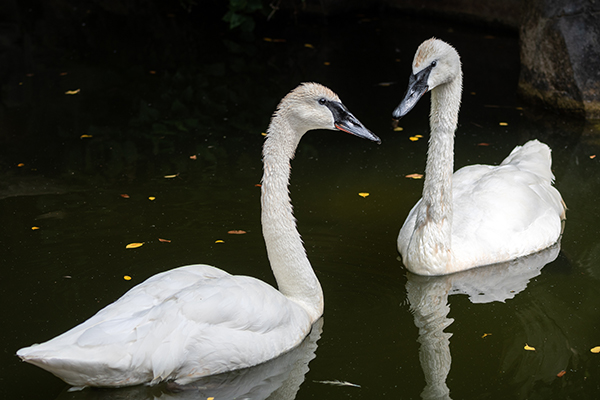
Webby and Dewey, the trumpeter swans at the Zoo, have been together for seven years. These swans are the largest waterfowl in North America, known for their trumpet-like calls. Webby came from a rehabilitation center, while Dewey came from an aviary. They are recognized by distinct physical traits and share a strong bond with their keepers. Trumpeter swans were once nearly extinct due to hunting but have rebounded thanks to conservation efforts, with populations now around 60,000. Webby and Dewey enjoy a diet of bugs and plants and are cared for in a newly renovated habitat. Their home includes a pond with a water wheel and bridge, providing a comfortable environment for this personable pair.
- The life and history of trumpeter swans, focusing on the journey of Webby and Dewey.
- The behavior and intelligence of trumpeter swans, highlighting their interactions with zookeepers.
- Conservation efforts and historical challenges faced by trumpeter swans, touching on their near extinction and recovery.
- The dietary habits and feeding behaviors of trumpeter swans in captivity and the wild.
- The habitat and daily life of Webby and Dewey at the zoo, emphasizing their living environment and enrichment activities.
Trumpeter swans, majestic and fascinating creatures, hold the title of the largest waterfowl in North America. Their presence is marked by a distinct call, a resonant “trumpet” that echoes across their habitat. This vocal characteristic sets them apart, providing a unique auditory identifier. The journey of Webby and Dewey, two trumpeter swans residing at the zoo, serves as an illustrative narrative of these birds‘ lives and highlights essential aspects of their species.
Webby and Dewey have shared a bond for seven years, engaging with their keepers in ways that reveal deep intelligence and recognition. Adam Fessinger, a dedicated keeper, attests to the swans’ perceptiveness, noting how they approach familiar faces with curiosity and familiarity. Such interactions underscore the swans’ capacity for social bonding and memory, traits not typically attributed to avian species.
This pair came together from disparate beginnings—Webby arriving from a rehabilitation center and Dewey from an aviary. Now aged 10 and 13 respectively, they could thrive into their mid-thirties. Their keepers distinguish them by subtleties, such as Webby’s lighter feet and distinctive beak markings. These defining features not only aid in identification but also indicate their individual personalities.
A century ago, the existence of trumpeter swans was jeopardized due to relentless hunting. Their striking white feathers were coveted for fashion and utility, leading to their near extinction. Conservation initiatives have since played a crucial role in reviving their populations. Zoos, along with other organizations, have contributed significantly to restoration efforts, boosting their numbers to approximately 60,000 today.
The resurgent population is a testament to conservation’s impact and highlights the critical role such efforts play in preserving biodiversity. The dedication of zoological institutions showcases a commitment to wildlife conservation, allowing species like the trumpeter swan to reclaim their place in the natural world.
Feeding behavior is a fascinating aspect of trumpeter swans’ lives. Webby and Dewey enjoy a varied diet that includes insects and plants. In the wild, they would use their bills to extract vegetation from lake bottoms, employing a similar feeding strategy in their zoo habitat. Their fondness for mealworms, which they “vacuum” from the pond floor, demonstrates their adaptability and refined feeding techniques.
These swans function as adept filter feeders, utilizing their bills to sieve food particles from the water. This method of feeding mirrors their natural behavior in the wild, highlighting the importance of replicating authentic environments within zoological settings to fulfill their natural inclinations.
Webby and Dewey’s living environment at the zoo is both functional and enriching. It features a well-designed pond with a rustic bridge and a working water wheel, creating a sanctuary for the swans. This meticulously crafted habitat is the result of years of planning and development, ensuring that their environment fosters well-being and stimulation.
An essential component of their habitat includes nesting materials. Papyrus and other resources are provided, enabling the swans to build nests as they would in the wild. This provision is crucial should the pair decide to breed, as trumpeter swans share parenting duties. Such family dynamics are crucial for maintaining social bonds and teaching navigation skills critical to survival in the wild.
Migration, a hallmark of trumpeter swan behavior, involves daytime flights in impressive “V” formations, where swans achieve speeds up to 60 mph. These migrations are integral to their lifecycle, emphasizing the necessity of migratory patterns in species conservation.
Webby and Dewey, content in their serene environment, add vibrant life and personality to the zoo. The stories of these swans, intertwined with their zookeepers, reflect the symbiotic relationship between humans and animals in conservation contexts. Their presence serves as a reminder of the resilience of nature and the ongoing efforts required to protect our planet’s biodiversity.
In conclusion, the lives of Webby and Dewey provide invaluable insights into trumpeter swans and the broader implications of wildlife conservation. Their narrative is a beacon of hope and a call to action for continued stewardship. By understanding and cherishing such species, we contribute to a legacy of conservation, ensuring a sustainable future for generations to come.
