
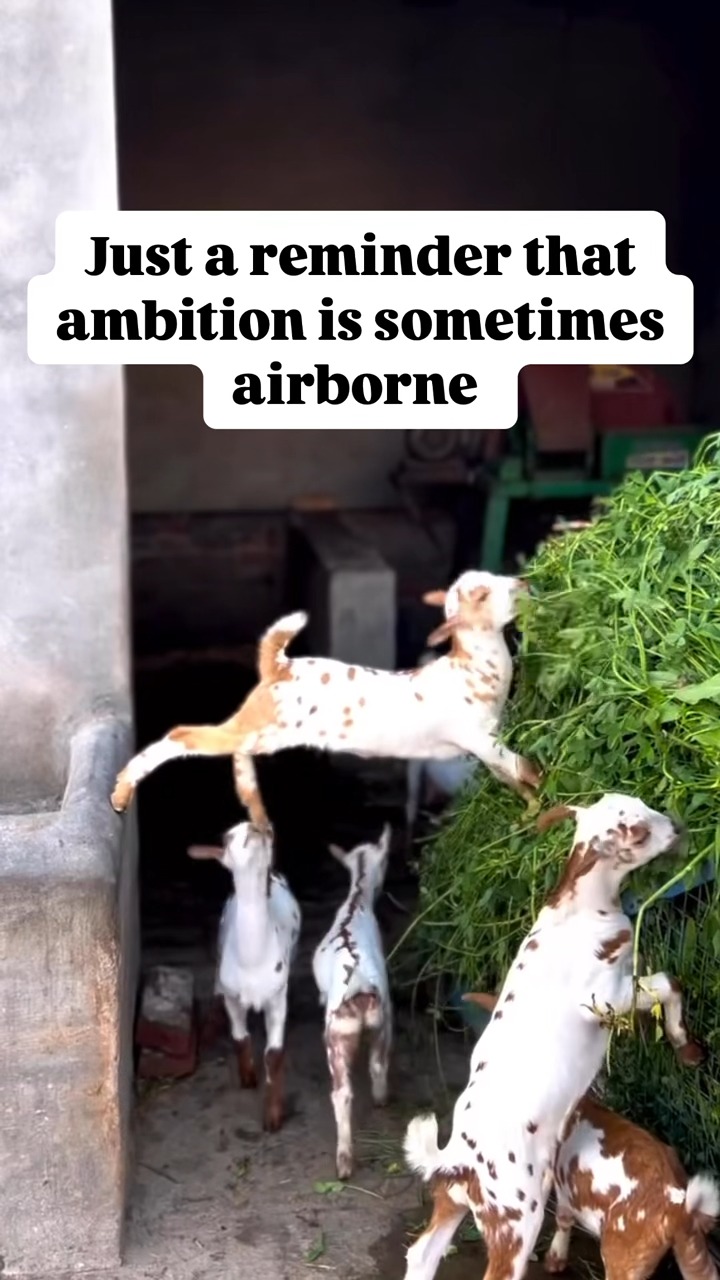
- LaMancha goats: Characteristics and origins
- The behavior of LaMancha goats and their airborne antics
- The significance of dairy goats in agricultural history
- Animal behavior and its implications for barnyard dynamics
- Understanding ambition in animals through observation and humor
LaMancha goats possess a distinct appearance characterized by their short, rounded ears, giving them an adorably unique look. But beyond their physical traits lies a rich history. This breed originates from the La Mancha region in Spain and was developed primarily for dairy production. These goats are recognized as one of the most prolific dairy breeds, contributing a significant amount of milk relative to their size. Their friendly demeanor and hardy nature make them popular among farmers and livestock enthusiasts alike.
Beyond their dairy capabilities, LaMancha goats are fascinating for their behavior. Observers often notice their fearless disposition, which can lead them to jump surprisingly high. This jumping behavior is not merely for fun. It often stems from their diet and exploratory instincts. When browsing for food, LaMancha goats will leap onto elevated surfaces or even perform impressive jumps. This can be seen as a manifestation of ambition—they instinctively know where the best foraging spots lie and will stretch their physical limits to reach delicious treats.
In exploring the significance of dairy goats in agriculture, one must understand the vital role they play in ensuring food security. Dairy goats like the LaMancha provide essential nutrients to communities worldwide, especially in regions where larger livestock may not be viable due to space and resource constraints. They are efficient converters of feed into milk, meaning they can thrive on less than what is needed for larger cattle. Each LaMancha goat can produce a significant amount of milk, making them an economical choice for dairy farming. Their milk is not only rich in nutrients but can also be transformed into a variety of products, including cheese and yogurt, further expanding the benefits they offer to agricultural systems.
The behavior of barnyard animals like the LaMancha goat is often both endearing and informative. Observing their interactions provides insights into animal communication and social structures. LaManchas are known to be quite vocal, using a variety of bleats to convey their needs or alert others in their herd. This vocalization plays a crucial role in establishing social hierarchies within the herd, as more dominant individuals tend to assert themselves through louder calls. The ability to communicate effectively is essential for maintaining a cohesive group. It enables individuals to thrive within their environment while minimizing conflicts.
Ambition, especially in the animal kingdom, is an intriguing concept. When LaMancha goats leap gracefully into the air to snag a snack, it embodies a primal quest for nourishment. This behavior is not simply a display of exuberance; it reflects a survival instinct rooted deep within their biology. Their impressive agility serves as a testament to the necessity for animals to adapt to their surroundings, ensuring they can access the resources critical for survival.
Humor often arises in the interaction between humans and animals. Videos of LaMancha goats jumping for treats often circulate on social media platforms, showcasing their personalities and antics. These comical moments provide an opportunity for individuals to connect with the animals on a deeper level. The laughter generated through these clips invites viewers not just to enjoy a lighthearted moment but to appreciate the extraordinary capabilities of these creatures. The whimsical narrative surrounding their leaps highlights the importance of viewing animal behavior through a lens of admiration rather than mere entertainment.
Understanding the ambition displayed by LaMancha goats enhances our appreciation for their roles in both agricultural and social contexts. Their capacity to take risks for food reflects an intrinsic drive to secure what they need to thrive. This ambition can inspire and remind us of our goals, no matter how lofty or out of reach they may seem. Just as LaMancha goats leap for the tantalizing morsels dangling before them, aiming for success requires stretching beyond perceived limitations.
On a broader scale, exploring goat behavior also invites reflection on the emotional lives of domestic animals. Research indicates that many barnyard animals experience a range of emotions, including excitement, fear, and even joy. Such emotional depth points towards a more complicated understanding of animal welfare. Ensuring that animals have the opportunity to express natural behavior, like jumping and exploring their environment, is essential. These activities contribute to their well-being and can reduce stress levels within the herd.
In recent years, the conversation surrounding animal rights and welfare has gained traction. Understanding the behaviors and needs of agricultural animals like LaMancha goats informs practices that foster ethical treatment. By recognizing their ambition and capacity for humor, stakeholders in the agricultural community can advocate for environments that allow for natural behaviors. This approach is not merely about meeting functional needs; it promotes a holistic view of animal welfare, one that respects the individuality of each creature.
As more individuals become aware of these dynamics, the call for responsible farming practices grows louder. Strategies that prioritize the health and well-being of livestock directly impact agricultural sustainability. When farmers create suitable habitats where animals can express themselves, the benefits extend beyond the animals themselves. Healthier goats generally yield more milk, are more resilient to disease, and improve farm productivity.
As we reflect on the amusing antics of LaMancha goats, we should address the complexities surrounding animal cognition. Studies show that goats possess advanced problem-solving abilities and can even form friendships with humans and other animals. They engage in play, solve puzzles, and exhibit preferences. Recognizing an animal’s intelligence boosts the significance of their interactions with humans and their environment.
The cultural significance of goats also cannot be understated. For centuries, goats have been symbols of resourcefulness and determination in various cultures worldwide. The LaMancha, with its stunning leaps and friendly disposition, epitomizes these traits. As they navigate their environment, they inspire admiration, reminding us of the dreams inherent in even the smallest of creatures. As such, observing these goats can encourage us to harness determination and ambition in our personal lives.
Within the context of agriculture, LaMancha goats serve as a reminder of how ambition can manifest in unexpected ways. Their boundless energy and eagerness to leap for food not only highlights their extraordinary physical capabilities but also emphasizes the broader narratives of challenge and opportunity. Each leap encapsulates not just the ambition for food, but a broader aspiration for survival.
The interplay between ambition and behavior in LaMancha goats offers profound insights into the nature of domestic animals. The desire for food and the instinct to reach for it showcase the competitive spirit found in many animal species. This behavior can serve as an engaging lens through which to view larger issues such as food security, ethical farming, and emotional intelligence in animals.
In an age where the connection between humans and animals can sometimes feel distant, appreciating the ambitious spirit of LaMancha goats can bridge that gap. Their charm and antics serve as reminders that every creature has its narrative, one that contributes to the tapestry of life on Earth. By fostering an understanding of their ambitions and behaviors, we can build a foundation for better practices within the agricultural landscape, ultimately benefiting both animals and humans in the long run.
*****
Source Description
Just a reminder: ambition is sometimes airborne.
LaMancha goats may have adorably tiny ears, but their dreams? Absolutely Olympic. Originally bred for dairy domination, these goats are known for being friendly, hardy, and apparently willing to launch themselves through the air for a snack. Respect.
This leap? It’s not just about alfalfa. It’s about legacy. Hunger. And possibly delusion. But mostly hunger.
🐐 Follow @animals_az for more goat drama, LaMancha goat facts, and moments that prove barnyard animals are just stunt doubles for your inner overachiever.
.
.
.
.
.
[LaMancha goat breed, goat jumping behavior, dairy goat facts, Capra aegagrus hircus, funny goat videos, barnyard animal behavior, ambitious animals, LaMancha goat personality, domestic goat species, animal humor] source: brar_barbari_farm_
