
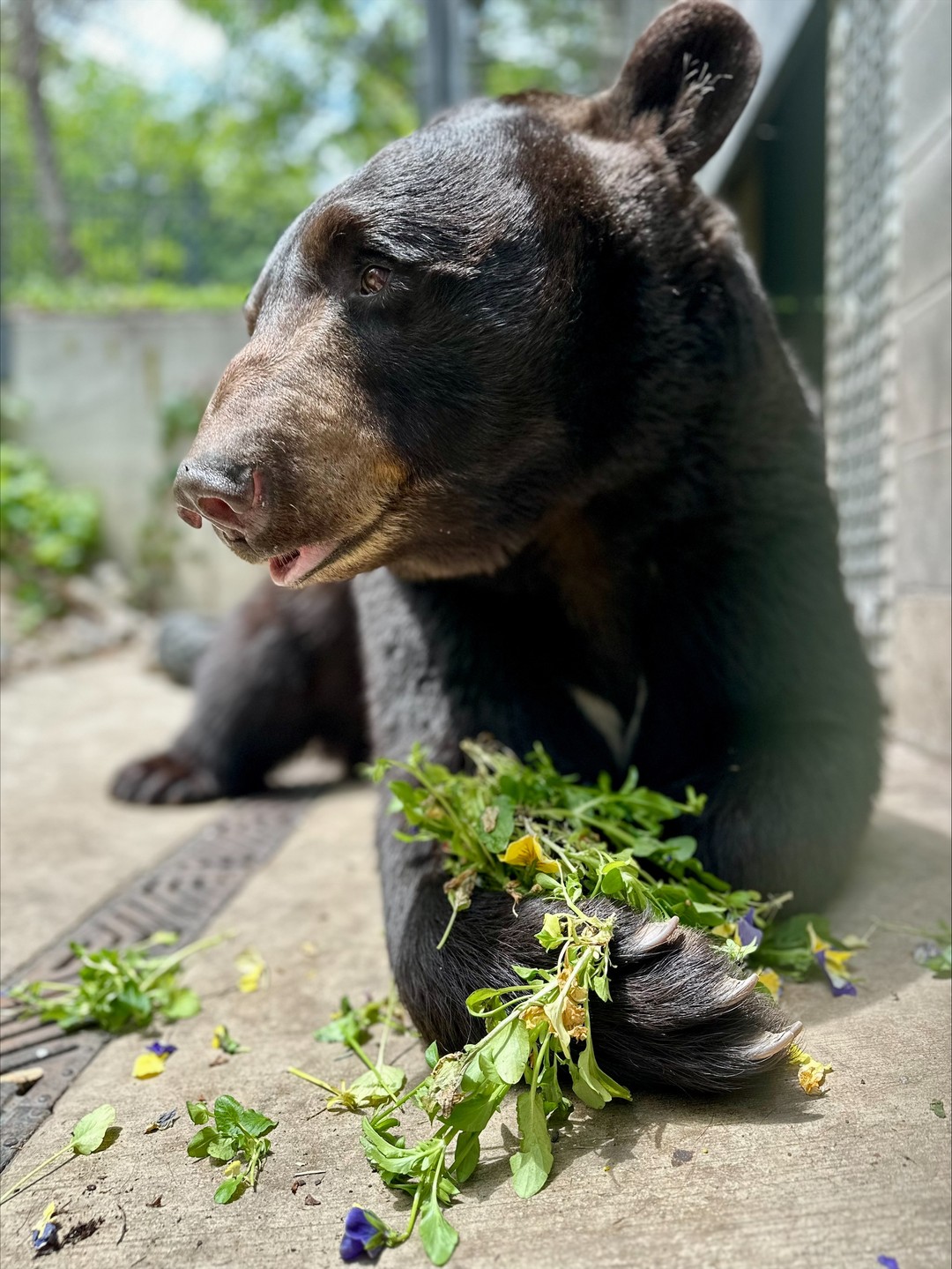
- Understanding black bear dietary habits and the role of vegetation in their diet.
- Exploration of the relationship between black bears and their environment.
- The importance of enrichment activities for captive black bears.
- The significance of floral consumption for black bears’ health and wellbeing.
- Conservation efforts and the role of zoos in protecting black bear populations.
Black bears are fascinating creatures, often found meandering through the forests of North America. One might encounter the sight of a black bear savoring a pansy and ponder the implications of such a simple pleasure. This seemingly trivial act brings to the forefront the intricate dietary habits of black bears and underscores their bond with the environment.
Black bears are omnivorous animals, whose diet largely consists of vegetation. While they have a taste for fruits and nuts, they also consume flowers like pansies, reflecting their adaptability and the richness of their diet in the wild. Consuming a variety of plant-based foods is essential for black bears, facilitating their nutritional and caloric intake crucial for their survival. This diverse diet helps them thrive in various habitats, from dense forests to woodland edges. It’s a testament to their resilience and ability to occupy a wide range of ecosystems across North America.
The interaction between black bears and their environment is an intricate dance of survival and adaptation. Black bears play a crucial role in their ecosystems, affecting vegetation and the broader ecological community. As they forage, they disperse seeds, contributing to the propagation of various plant species. Bears, by their very nature, promote biodiversity, fostering the health of their habitat.
In managed care settings like zoos, enriching a black bear’s environment is vital for their welfare. Enrichment activities can include offering black bears items they would encounter in the wild, such as flowers. This not only keeps them mentally engaged but also allows them to exhibit natural foraging behaviors. Such enrichment contributes significantly to their psychological and physical wellbeing, mitigating stress and enhancing their quality of life.
The nutritional value of flowers, particularly pansies, provides more than just a flavorful snack for black bears. Flowers are a source of vitamins and minerals that are essential for maintaining their health. The consumption of various plants helps balance their diet, offering essential nutrients that might be scarce in other food sources. Ensuring a varied diet in captivity mimics their natural foraging patterns, supporting overall health and aiding in the prevention of nutritional deficiencies.
Zoos play a pivotal role in black bear conservation, providing a sanctuary for these creatures while educating the public on the importance of maintaining biodiversity. They engage in breeding programs and various conservation projects that aim to protect and sustain black bear populations. Through research and collaboration, zoos contribute invaluable knowledge and resources dedicated to conserving wild black bears, whose habitats face increasing threats from human activities.
Exploring the dynamics of black bear diets and their enrichment in captivity reveals broader themes of ecological interdependence and conservation responsibility. By observing and understanding black bears’ behaviors and needs, we can foster a more sustainable relationship with our environment. This nurturing of ecosystems is crucial for our mutual survival and underscores the importance of conservation efforts in today’s world.
*****
Source Description
If you give a black bear a pansy…
Turn up your volume and enjoy this sweet video of black bear Birch munching on a special snack! Black bears eat flowers and other vegetation in the wild, so these pansies were a perfect summer treat for them, courtesy of the Horticulture team. 💐
📸 Lauren C.
