
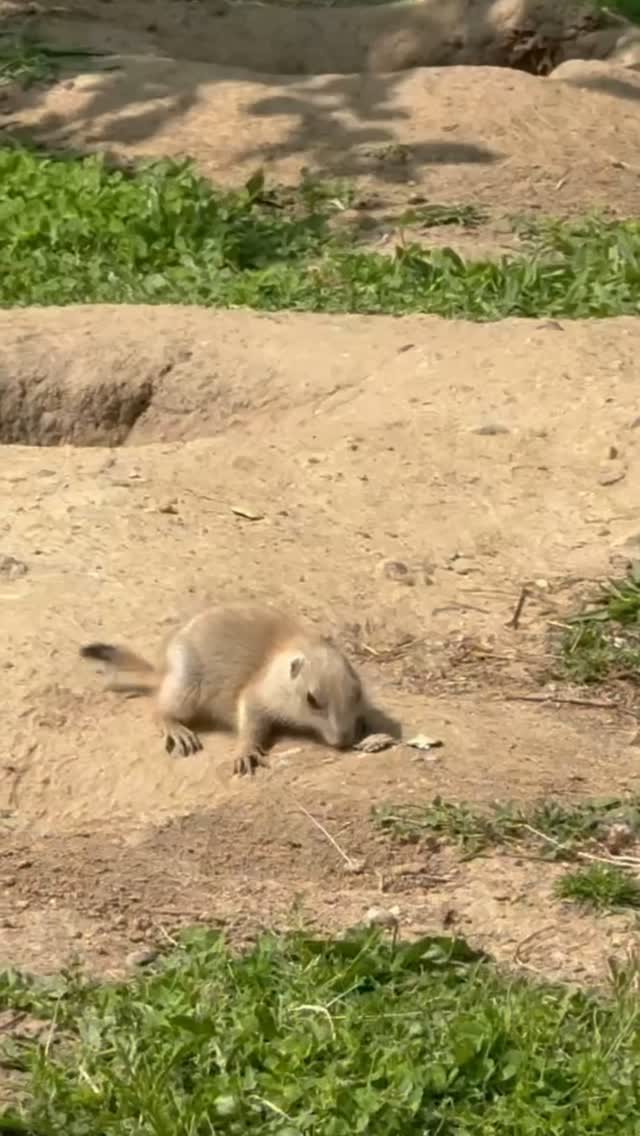
- Introduction to baby prairie dogs and their early life stages.
- The underground life of prairie dog pups and their emergence.
- The role of zoo management in caring for prairie dogs.
- Significance of wildlife conservation for prairie dogs.
- The impact of public engagement and technology in wildlife observation.
Prairie dogs, those charming and social rodents, are an integral part of North America’s grasslands. Among the various species, the black-tailed prairie dog is particularly notable. Recently, captivating footage of baby prairie dogs, or pups, emerging from their burrows has drawn considerable attention. These young creatures embark on a fascinating journey from underground dwellers to active participants in their ecosystem.
In the first weeks of their lives, prairie dog pups reside underground in complex burrow systems. These intricate tunnels provide safety and a nurturing environment essential for the pups’ growth and survival. For about six weeks, the pups rely entirely on their mothers for nourishment. This period is critical as they develop the skills needed to navigate the world above.
When temperatures rise and conditions become more favorable, the pups make their grand entrance above ground. This transition is a significant milestone. It marks the beginning of their contribution to the colony’s social dynamics and ecological interactions. Their emergence is not just a spectacle for human observers but also an important event for the grassland ecosystem.
The role of zoo management in caring for prairie dogs is multifaceted. Facilities involved in the conservation and exhibition of these animals must replicate their natural habitat as closely as possible. This involves maintaining appropriate soil conditions for digging, ensuring enriched environments, and monitoring their health.
Zoo professionals also educate the public about the ecological importance of prairie dogs. These animals serve as a keystone species. Their presence supports a wide range of other wildlife, from predators like hawks and eagles to other burrowing animals that share their habitat.
In the broader context of wildlife conservation, prairie dogs face significant threats from habitat loss, disease, and climate change. Conservation efforts focus on habitat preservation and restoration, disease management, and public education. Successful conservation requires collaboration between zoos, governmental bodies, and local communities.
Public engagement is a crucial element of wildlife preservation. Video footage, like the one captured by visitor Carrie, plays a vital role in connecting people with wildlife. Such media helps raise awareness and inspires action towards conservation. It also underscores the importance of technology in observing and understanding animal behavior.
By engaging with and supporting wildlife conservation efforts, individuals can contribute to the well-being of prairie dogs and their habitats. This involvement ensures that future generations can enjoy these remarkable creatures and the vibrant ecosystems they support.
*****
Source Description
Looks like we’ve got baby prairie dogs! One, at least. Baby prairie dogs, called pups, live the first six weeks of life underground and then emerge when it warms up.
Thanks to eagle-eyed visitor Carrie for the video.
