
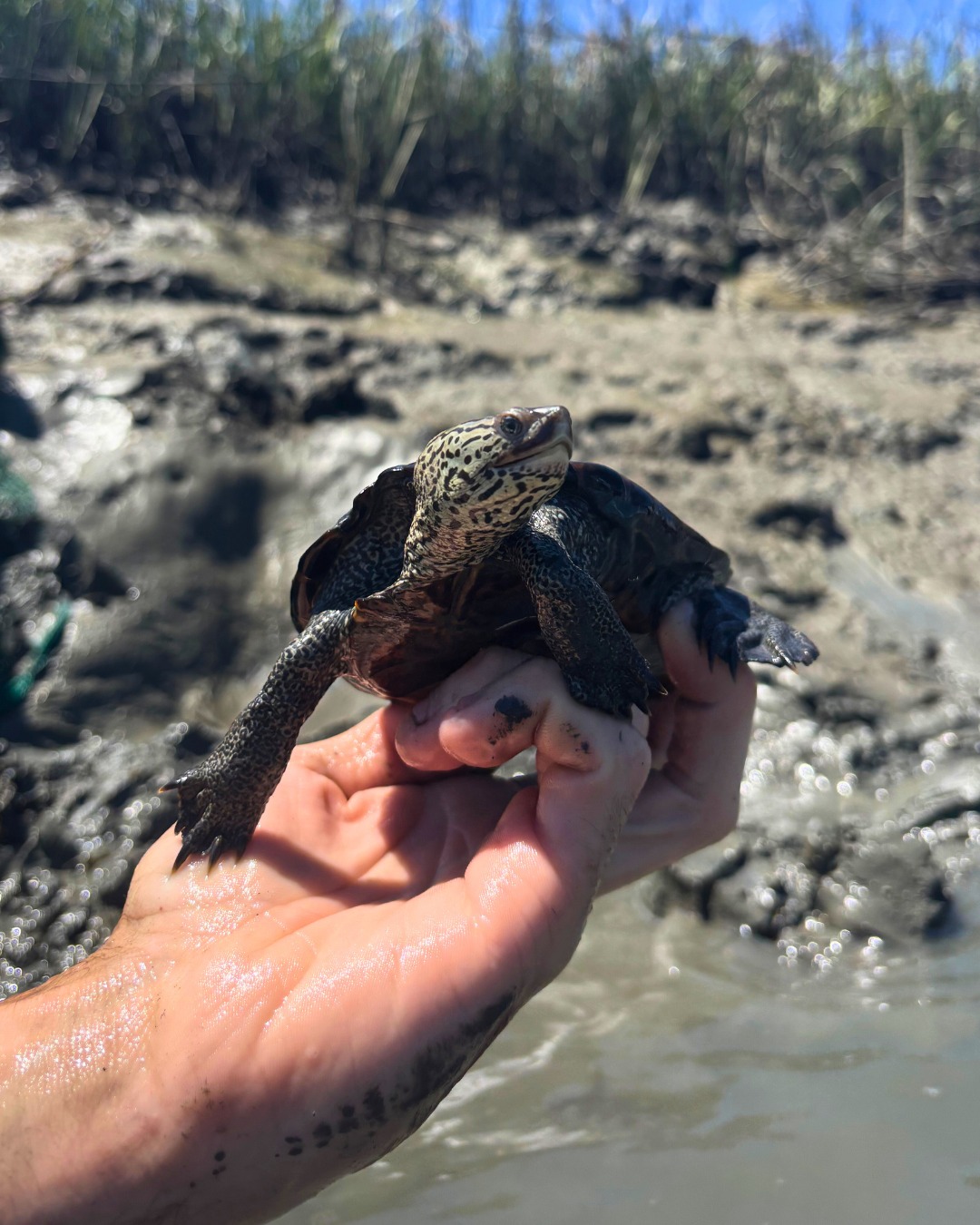
- Overview of the biannual survey for Diamondback Terrapins on Kiawah Island, South Carolina.
- Importance of tracking and recapturing the Diamondback Terrapins to gather essential data.
- Contributions of various organizations and volunteers in the survey process.
- Conservation status and challenges faced by the Diamondback Terrapins.
- Insights from recent survey results, including notable turtle recaptures.
The biannual survey of Diamondback Terrapins on Kiawah Island, South Carolina, is a cornerstone of reptile conservation efforts, allowing scientists to monitor this vulnerable species for over four decades. Initiated by Dr. Whit Gibbons of the Savannah River Ecology Laboratory, this survey provides invaluable insights into the health and trends of Diamondback Terrapin populations. Participation by @sewanee_univofthesouth, Kiawah Island’s own terrapin group, and numerous dedicated volunteers ensures a comprehensive study that bolsters our understanding of these turtles’ ecological roles.
The biannual event, enthusiastically named “It’s Terrapin Tuesday!” unites experts and enthusiasts in their mission. Tracking and recapturing these turtles allows scientists to evaluate growth rates, health metrics, and population dynamics over time. This year’s survey alone captured 11 terrapins across three critical locations. Astonishingly, one turtle, first documented in 2003 and unseen since 2011, was rediscovered, highlighting the longevity and resilience of these turtles.
Each capture provides a snapshot of the terrapins’ life history, but recaptured individuals enrich the narrative. Of the 11 terrapins captured in May, five were previously catalogued, adding layers to the existing database. Such recaptures are vital, painting a detailed picture of individual movement patterns and habitat use. For instance, an individual missing a limb, first encountered six years ago, was one of the notable recaptures, underscoring the importance of continuous monitoring.
The contributions of staff and volunteers cannot be overstated. Volunteers work tirelessly to collect data essential to understanding the complexities of Diamondback Terrapin ecology. This collaboration amplifies the impact of research, enabling a more thorough examination of population trends and conservation needs.
Conservation of the Diamondback Terrapin, classified as vulnerable by the IUCN Red List, faces numerous challenges, including habitat loss and predation. Coastal development disrupts their nesting sites, while road mortality continues to be a significant threat. By conducting regular surveys, researchers aim to identify and mitigate these pressures.
The surveys have also advanced legislative and public awareness efforts, leading to protective measures such as terrapin-safe crab traps and road-crossing interventions. This comprehensive approach is vital to reversing negative population trends and supporting the species’ long-term survival.
Engagement with these activities underscores the importance of community involvement in conservation. Supported by imagery from talented photographers like Elena Duran and others, these efforts are documented and shared widely to foster advocacy and education.
The data gathered not only serves scientific purposes but also inspires a broader commitment to preserving biodiversity. As researchers analyze annual trends and anomalies, each survey contributes incrementally to a grander vision of conservation, rooted in rigorous science and community partnership.
Ultimately, It’s Terrapin Tuesday! exemplifies how dedicated fieldwork and community involvement can lead to meaningful outcomes for species conservation, offering hope and direction for future generations.
*****
Source Description
It’s Terrapin Tuesday!
The biannual survey for Diamondback Terrapins on Kiawah Island in South Carolina has been going strong for over 40 years, first started by Dr. Whit Gibbons of the Savannah River Ecology Laboratory. We support @sewanee_univofthesouth staff, alongside @kiawah_terrapins, to conduct these surveys, where we gather valuable information on the local populations of this vulnerable species.
This May, we captured and released 11 Diamondback Terrapins at three locations. Five of these turtles were recaptures, and six had never been previously captured, adding essential data to the study. We caught one turtle that was first captured in 2003 and hadn’t been seen since 2011. We even recaptured a familiar turtle, which is missing a leg, that we first caught six years ago.
Thanks to the dedicated staff and volunteers, this information enables us to expand the scope of research for this species in need.
Pictured: Diamondback Terrapin (Malaclemys terrapin)
IUCN Red List Status: Vulnerable
📸: Elena Duran (1-2, 4), Davis Peltier @davisp_herpetology (3), Mike Gibbons (5)
