
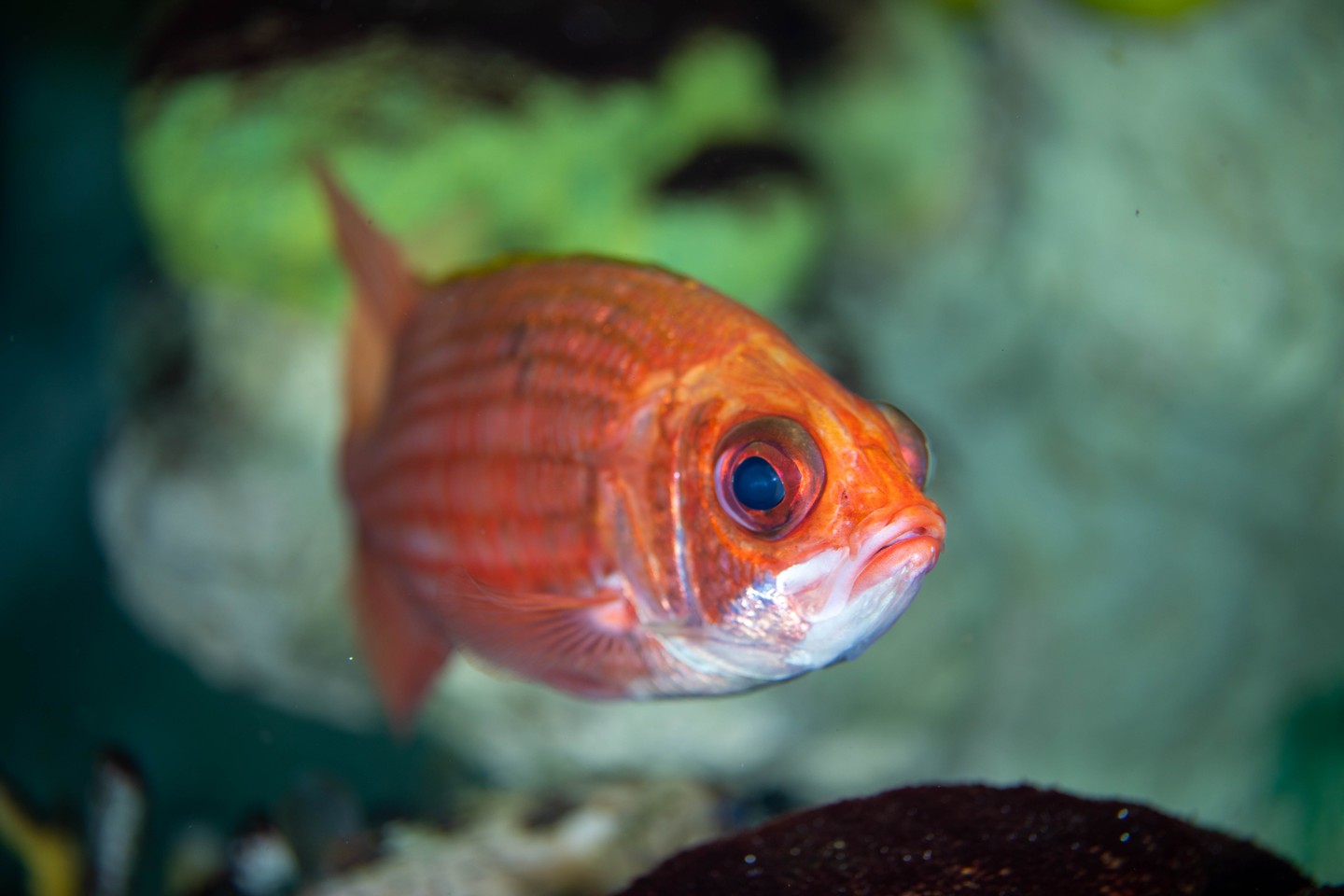
- The resemblance between squirrelfish and squirrels, highlighting key physical and behavioral features.
- The squirrelfish’s habitat, adaptations, and nocturnal lifestyle.
- The significance of the squirrelfish’s genus name and its anatomy.
- The role of squirrelfish in marine ecosystems and their conservation status.
- The importance of educational exhibits like aquariums in promoting marine conservation.
The curious comparison between squirrelfish and terrestrial squirrels reveals fascinating insights into evolutionary adaptations. Squirrelfish are a captivating example of how marine life can echo characteristics found in terrestrial species. Their most striking resemblance to squirrels lies in their disproportionately large eyes. These eyes are not just an aesthetic feature but a vital adaptation that enables them to thrive in low-light environments. The similarity extends further to their size, as squirrelfish can grow up to 20 inches long, comparable to many squirrel species.
In their natural habitat, squirrelfish use these large eyes to hunt and navigate the dimly lit coral reefs at night. They are primarily nocturnal, spending the day hiding in crevices and emerging under the cover of darkness to explore and feed. The nocturnal lifestyle has profound benefits, reducing competition and predation risks. This behavior illustrates a sophisticated evolutionary strategy to capitalize on available niches within their ecosystem.
The squirrelfish belongs to the genus Holocentrus. This name, derived from Greek meaning “complete sting,” highlights a notable feature—their spiny dorsal fin. This anatomical detail serves a dual purpose: it acts as a deterrent against predators and supports their movement through the water. The spiny fin is a critical component of their defense mechanism, allowing them to maneuver swiftly and safely among the sharp coral structures.
Additionally, squirrelfish possess another fascinating ability: they can produce sound using their swim bladder. This sound production is believed to play a role in communication, especially during the night when visibility is reduced. It’s an excellent example of the diverse communication methods marine species have developed.
Squirrelfish inhabit tropical and subtropical ocean depths ranging from 20 to 300 feet. They are particularly abundant in coral reefs, where they contribute significantly to the biodiversity of these ecosystems. By preying on various small marine organisms, they help to maintain ecological balance within the reef community. Their role as both predator and prey makes them an integral part of the marine food web.
Understanding the squirrelfish’s conservation status is crucial as their habitats face increasing threats from human activities such as overfishing, pollution, and climate change. The destruction of coral reefs due to bleaching and other environmental stressors further exacerbates these challenges. Conservation efforts focused on habitat preservation and sustainable practices are vital to ensure the survival of these intriguing fish.
Public education and awareness programs, such as those offered by modern aquariums, play a pivotal role in promoting marine conservation. By showcasing the squirrelfish in exhibits like the Giant Ocean Tank, aquariums provide visitors with a direct encounter with marine biodiversity. Such experiences foster a deeper understanding and appreciation of ocean life, inspiring conservation action.
Introducing people to the squirrelfish and its environment can spark curiosity and concern for marine ecosystems. These educational exhibits also serve as a platform for disseminating essential information about the challenges facing our oceans and the importance of conservation efforts.
Overall, understanding the resemblance and differences between seemingly unrelated species like squirrelfish and squirrels offers valuable insights into the adaptive strategies employed by animals. Both marine and terrestrial, these strategies underscore the interconnectedness of life on Earth and the importance of preserving biodiversity for future generations.
*****
Source Description
Can you see the resemblance between these two? (Swipe to see the second photo!)🐿️🐠
The squirrelfish was named for its big, squirrel-like eyes, which help it see in the dark. That’s especially useful since these fish are nocturnal, spending their days sheltering in crevices and their nights exploring reef life. They can grow up to 20 inches long—making them a similar size to many actual squirrels!
Its genus name Holocentrus (Greek for “complete sting”), is a nod to the squirrelfish’s spiny dorsal fin, and they have the ability to communicate using a sound produced by their swim bladder.
You can find them at ocean depths from 20 to 300 feet—and right here in the Aquarium’s Giant Ocean Tank. 🙂
