
- The importance of enrichment in promoting natural behaviors in animals, from millipedes to giraffes.
- How enrichment helps zookeepers understand individual animal preferences and personalities.
- The role of enrichment in wildlife conservation and zoo management.
- Examples of enrichment activities for various species and their impact on animal well-being.
- A closer look at the behaviors of Willow and Grace, two Black-Tailed prairie dogs, emphasizing their enrichment activities.
Enrichment is an essential strategy employed by zoos worldwide to enhance the lives of their animal inhabitants. Its primary goal is to encourage animals to express natural behaviors and cultivate individual preferences. From the smallest millipede to the towering giraffe, enrichment activities are not just add-ons; they are integral to the daily routines that support animal welfare and exhibit well-being in a managed environment.
In a controlled setting like a zoo, animals might not experience the diverse stimuli they would encounter in the wild. Here, enrichment plays a critical role. By simulating the challenges and variety found in natural habitats, these activities help maintain both the physical and mental health of animals. This practice isn’t just about providing fun; it directly contributes to conserving species by allowing animals to live fuller, more natural lives, even in captivity.
A key benefit of enrichment is its ability to reveal individual animal preferences and personalities. Every animal, like people, has unique likes and dislikes. Understanding these preferences helps caretakers adjust enrichment activities to suit individual needs better. It enables zookeepers to offer enrichment that is both stimulating and suited to the animal’s intrinsic interests and instincts. By observing how animals interact with different forms of enrichment, caretakers learn more about their charges, refining their care and maximizing the animals’ quality of life.
In the context of wildlife conservation and management, enrichment extends beyond immediate welfare. It becomes a tool for educating the public about animals’ natural behaviors, promoting conservation messages. When visitors see animals engaged and active, they are more likely to connect emotionally and intellectually with conservation efforts. Effective enrichment can foster this connection, inspiring support for conservation and habitat preservation.
Various enrichment activities can be tailored to meet the needs of diverse species. For herbivores like giraffes, enrichment could involve challenging feeders that require the animal to manipulate objects to reach food, mimicking the browsing behavior they’d display in the wild. Carnivores might receive scents or hidden food that require them to use their senses and hunting skills. Even simple tasks like navigating unfamiliar terrains created with logs, ropes, or different substrates can provide a stimulating environment, promoting exploration and physical activity.
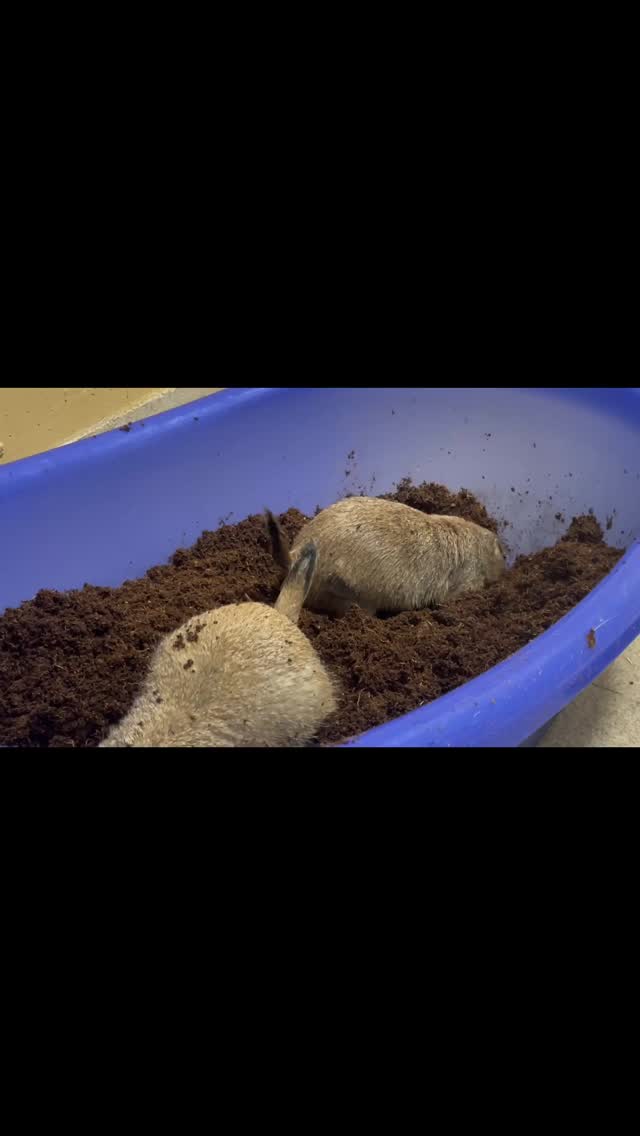
Consider Willow and Grace, two Black-Tailed prairie dogs. These social creatures benefit immensely from environmental enrichment. In their enclosure, zookeepers have introduced digging activities using a long blue tub filled with dirt. This setup encourages their natural digging instincts, essential for their physical and mental well-being. As Grace energetically digs, occasionally flicking dirt toward her sister, we see these behaviors providing not only a workout but also enjoyment and mental stimulation.
Watching Willow and Grace engage with their enrichment offers insight into their personalities. Grace, the more energetic one, seems to delight in the digging process, while Willow demonstrates curiosity and perhaps a bit more caution. Such observations help zookeepers cater to both animals’ emotional and physical needs more effectively, tailoring future enrichment strategies accordingly.
Animal enrichment is not a one-size-fits-all model. It’s a dynamic process that benefits from continuous research and adaptation. As zoologists and zoo managers learn more about the needs and behaviors of various species, enrichment strategies evolve. Incorporating behavioral studies and feedback from animal interactions is crucial for designing activities that are both challenging and rewarding for the animals.
Enrichment is not just an add-on in zoo management; it is fundamental to advancing animal welfare and conservation goals. By promoting natural behaviors, engaging the animals mentally and physically, and revealing individual preferences, enrichment helps zookeepers prepare animals for potential reintroduction programs. It ensures animals retain necessary survival skills, contributing to broader conservation efforts.
In essence, fostering wildlife through enrichment activities culminates in a more profound understanding and appreciation of our natural world. By witnessing animals’ responses to carefully designed enrichment programs, we gain a clearer picture of their complex behaviors and needs. Ultimately, these insights enhance our ability to conserve wildlife and educate the public, ensuring that future generations can continue to appreciate the biodiversity of our planet.
*****
Source Description
From millipedes to giraffe, enrichment is a critical component to how keepers encourage natural behaviors and an individual’s preferences. Creating enrichment is a two-way street: by giving each animal a framework to show their natural behaviors, we can learn more about their personality and the things they enjoy (or don’t). For Willow and Grace, two Black-Tailed prairie dogs, they enjoy the classic breakfast time of leafy greens and veggies. Check out this video of our dynamic duo in action!
In this video: Willow and Grace, two tan prairie dogs are digging in a long blue tub filled with dirt. Grace kicks dirt at her sister Willow, who looks at the camera and then jumps out of the blue tub. Grace continues digging.
