
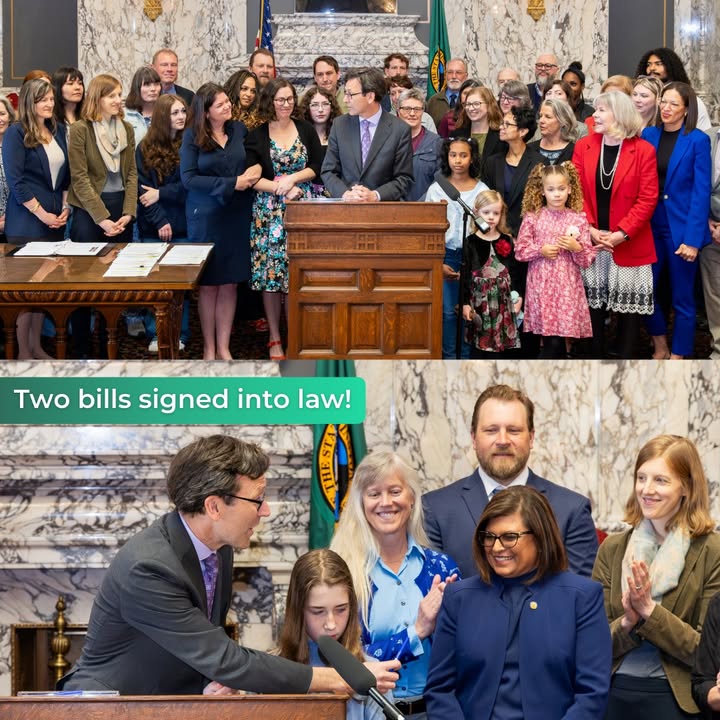
- Overview of the recently signed Recycling Reform Act and its impact on waste management.
- Details and implications of the Sewage Spill Right-to-Know Act for public health and environmental safety.
- Role of key legislators and partners in advancing these bills.
- Importance of public awareness and education in conservation efforts.
- The involvement of conservation organizations in legislative processes.
The recent signing of two pivotal bills marks a significant step in environmental legislation, catalyzing progress in recycling and water protection within Washington State. These legislative efforts are integral to enhancing sustainable practices and protecting human health. This article delves into the details of the Recycling Reform Act and the Sewage Spill Right-to-Know Act, illustrating their transformative impact on environmental stewardship.
The Recycling Reform Act, after years of advocacy and refinement, introduces crucial changes to waste management practices. It effectively establishes a producer responsibility program where manufacturers are tasked with minimizing unnecessary packaging. By mandating financial responsibility for the collection and recycling processes, this legislation drives manufacturers to innovate in creating eco-friendly packaging solutions. This represents a shift from traditional recycling practices, enabling a more efficient and transparent system that promises to reduce environmental burdens.
The importance of the Recycling Reform Act extends beyond policy. It encourages technological advancements and infrastructure improvements within recycling operations. By supporting statewide collection services, the act prioritizes a cohesive approach that synchronizes efforts across municipalities, enhancing resource allocation and recycling rates. These changes contribute significantly to reducing landfill usage and promoting circular economy principles, where resources are continuously reused, leading to a more sustainable future.
Conversely, the Sewage Spill Right-to-Know Act focuses on transparency and public health protection. This legislation mandates the timely disclosure of sewage spills into waterways, ensuring that residents are informed about potential health risks. The act is critical for both human health and marine ecosystems, notably in areas like Puget Sound, where water quality directly affects biodiversity and residents’ well-being.
By integrating real-time data dissemination, the Sewage Spill Right-to-Know Act strengthens public trust and involvement. Awareness and quick response mechanisms allow communities to engage proactively in safeguarding their health and the environment. This engagement fosters a collaborative relationship between citizens, government agencies, and environmental organizations, working collectively to maintain ecological integrity.
The passage of these bills was not achieved single-handedly. Legislators like Rep. Liz Berry, Sen. Liz Lovelett, Rep. Hunt, and Sen. Vandana Slatter played pivotal roles in championing these causes. Their dedication underscores the importance of political support in advancing environmental policy. The collaborative efforts with conservationists and industry stakeholders highlight the necessity of diverse partnerships in legislative success.
Organizations like aquariums and conservation groups also play a vital role in this legislative process. Their involvement is crucial in bridging the gap between scientific research and public policy. By providing valuable data and advocating for evidence-based decisions, these organizations help shape policies that reflect environmental realities.
Public awareness and education are paramount in supporting such transformative laws. By educating communities about the benefits and responsibilities associated with these new regulations, individuals are empowered to contribute meaningfully to conservation efforts. Informative campaigns and outreach programs are essential in fostering a culture of sustainability and environmental stewardship.
The roles played by entities driven by conservation and wildlife understanding are crucial to the success of these laws. Through their active participation and advocacy, they ensure that environmental legislation not only addresses immediate concerns but also lays the groundwork for future sustainability.
These legislative advancements encapsulate a significant stride towards sustainable development. They exemplify how informed policy-making, coupled with community engagement and cross-sector collaboration, can lead to meaningful environmental progress. As these bills come to life, they promise to pave the way for more innovative solutions and robust environmental protection measures, ultimately contributing to a healthier planet and populace.
*****
Source Description
We are happy to share that last Saturday, @GovFerguson signed two very exciting bills! 🌟
♻ After more than five years of collaboration with partners and legislators, the Recycling Reform Act has finally been signed into law! The bill modernizes the state’s recycling system by creating a producer responsibility program that requires manufacturers to reduce unnecessary packaging, fund statewide collection services, and ensure materials put in curbside bins are recycled. Thank you to Rep. @LizBerryWA and @SenLizLovelett who continually championed this bill!
🚰 The sewage spill right-to-know act was also signed into law! This bill will help ensure that the public can access timely information about sewage spills that occur in waterways across the state, like Puget Sound, to better protect Washingtonians and their health. Thank you to Rep. Hunt and @SenVandanaSlatter for championing this bill!
✍ The Aquarium’s VP of Conservation Programs and Partnerships Nora Nickum attended the bill signings as seen above. 📸: Photo courtesy of Washington State Legislative Support Services.
