
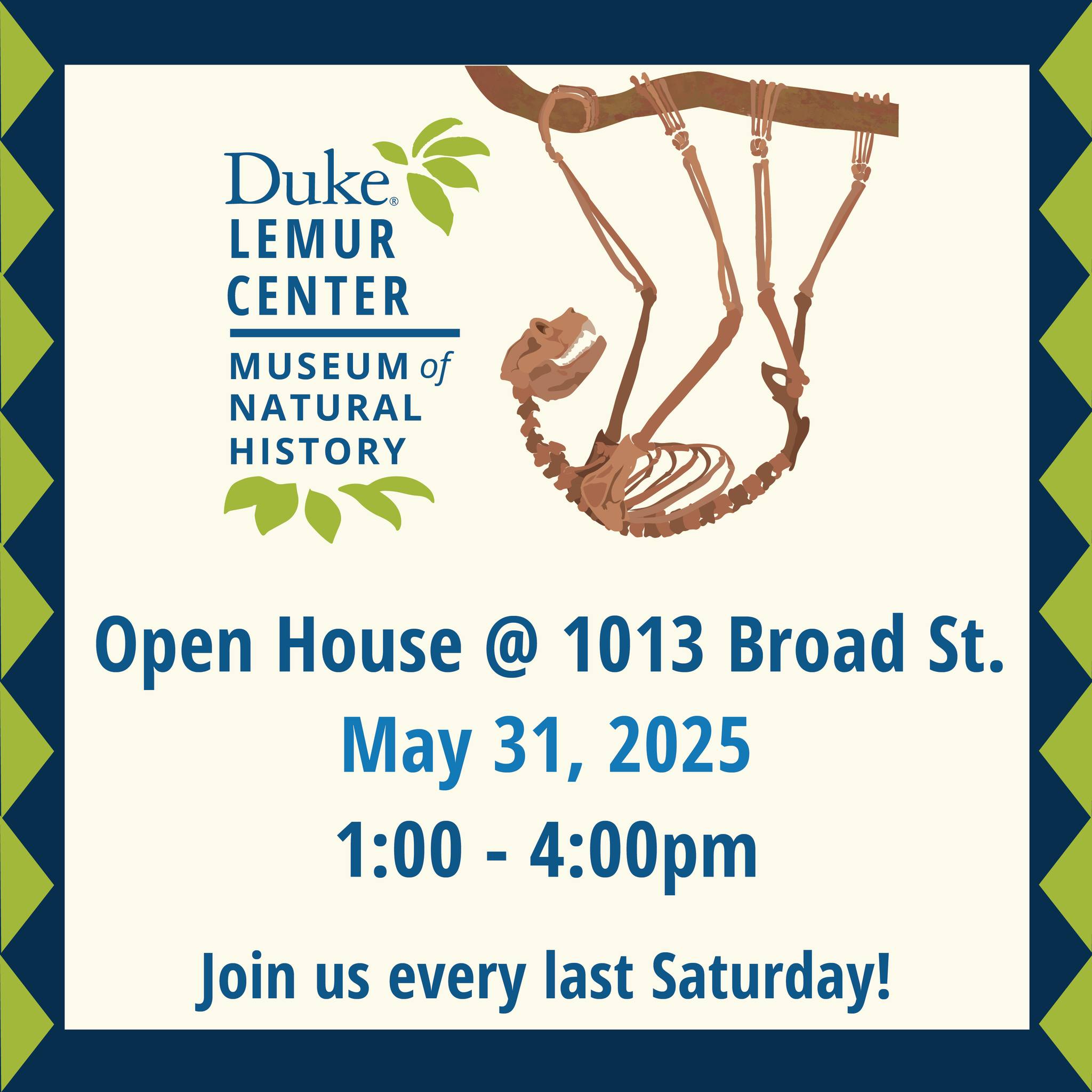
- Overview of the Duke Lemur Center Museum of Natural History’s monthly open house
- Exploration of the fossil collection and its educational significance
- Insights into the evolutionary journey of lemurs and humans
- The role of the Duke Lemur Center in wildlife conservation
- Opportunities for public engagement and education
The Duke Lemur Center Museum of Natural History offers an intriguing opportunity for those interested in wildlife and evolution. This article will explore the free monthly open house event set to occur at 1013 Broad Street, distinct from the main Duke Lemur Center (DLC) campus. Scheduled for Saturday, 5/31 from 1-4 pm, this event invites participants to delve into the fascinating aspects of zoology and environmental conservation.
The event centers around the museum’s expansive fossil collection. These fossils provide a window into the past, showcasing how lemurs and humans have traversed their evolutionary pathways. Attendees will have the chance to study fossils of extinct giant lemurs, once inhabitants of Madagascar. This collection is not merely a display of ancient artifacts but an educational resource that helps bring to light the interconnectedness of life forms through vast epochs.
Understanding the evolutionary journey of lemurs and humans involves uncovering the primate origin story. Lemurs, with their rich evolutionary history, serve as a critical part of this narrative. They offer clues about adaptive traits and survival strategies in changing environments. The fossil collection at the Duke Lemur Center Museum underscores these evolutionary themes, providing insights into how species adapt over millennia.
The Duke Lemur Center is renowned for more than its fossils. It plays a crucial role in wildlife conservation, particularly in the preservation of lemurs and their habitats. Madagascar, the sole natural habitat for lemurs, faces numerous environmental threats, making initiatives by the DLC vital for these primates’ survival. Through collaborative efforts and dedicated research, the center fosters a deeper understanding of biodiversity and ecological balance.
Events like this monthly open house not only engage the public but also educate them about the importance of wildlife conservation. By interacting with exhibits, attendees cultivate a deeper appreciation for nature’s intricacies and the urgent need for preservation efforts. This approach helps bridge the gap between scientific research and public awareness, fostering a more informed and conservation-minded community.
Ultimately, the Duke Lemur Center Museum of Natural History offers a unique blend of education, engagement, and conservation. By inviting visitors to explore the museum’s fossil collection and learn about the evolutionary story of lemurs and humans, the open house serves as a catalyst for sparking curiosity and inspiring action in wildlife conservation.
*****
Source Description
Happy Looking for something fun to do tomorrow afternoon? Visit our FREE monthly open house at the Duke Lemur Center Museum of Natural History! 😱
✅ Where: 1013 Broad Street (NOT the main DLC campus!)
✅ When: Saturday 5/31 from 1-4pm
✅ What: Take a look at the DLC’s expansive fossil collection and our exhibit showcasing the evolutionary journey of lemurs and humans. Uncover the primate origin story and view fossils of extinct giant lemurs that roamed the island of Madagascar in the not-too-distant past!
✅ How much: FREE!!!!!
Want to learn more? Visit lemur.duke.edu/fossil 🔍
