
- The notion of alternate universes and their ecological implications
- The physiological and behavioral differences in fauna
- Insights into zoo management practices across various environments
- Conservation strategies adapted for different realities
- The role of public engagement in supporting wildlife efforts
The concept of alternate universes often leads to intriguing discussions about what life could be like in various realms. These discussions frequently touch upon ecological systems that differ vastly from our known environment. The existence of different universes prompts inquiries into how creatures would adapt biologically and behaviorally to distinct conditions. In a parallel universe, ecosystems may face challenges unlike those we confront, and understanding these variations can influence our approach to conservation.
In one alternate universe, the atmospheric composition might be primarily nitrogen, rendering life forms there unable to survive without significant adaptations. For example, creatures might develop larger lungs or gills to process the available oxygen, exhibiting physiological traits divergent from terrestrial fauna. In another scenario, ecosystems could lack a stable climate, leading to organisms that live a nomadic lifestyle and display exceptional migratory adaptations. Such physiological evolutions would inspire new theories in zoology and evolutionary biology.
The behavioral patterns of animals in these alternate settings would also deviate dramatically, shaped by their unique habitats. Animals might form different social structures to handle environmental pressures. In a universe with scarce resources, opportunistic behaviors could become common as creatures vie for survival. Alternatively, in a thriving ecosystem, cooperative behaviors might emerge, driven by an abundance of food sources and safe spaces. Understanding how behavioral adaptations differ in varied conditions can significantly contribute to our understanding of animal psychology and social organization.
Zoo management practices need to evolve too when navigating these alternate realities. Managers in one universe may have to contend with fluctuating ecosystems that shift seasonally, requiring intricate planning that deviates from our current practices. They might need to implement more dynamic feeding programs that adapt to resource availability and animal behavior in real time. Incorporating advanced tracking technology can aid these managers in understanding animal movements and health needs under variable conditions. The skills of zoologists and wildlife managers must expand to include knowledge from fields such as climatology and geology to understand and mitigate ecological challenges.
Conservation strategies would also vary depending on the unique challenges presented in different universes. Initiating conservation efforts in an ecosystem with limited biodiversity can necessitate sophisticated breeding programs aimed at reestablishing population numbers. Conversely, in a biologically rich universe, selected conservation efforts may need to focus on habitat preservation rather than species revival. The proactive identification of invasive species would also become crucial when ecosystems coexist with a radically different set of flora and fauna. Wildlife conservationists must adopt versatile strategies that are adaptable to the environmental conditions unique to each alternate universe.
Public engagement plays a critical role in supporting wildlife conservation efforts across any universe. In ecosystems characterized by fragility, fostering a sense of stewardship among local populations can be essential. Educational programs about sustainable practices and biodiversity can encourage communities to protect their surrounding environment. In more plentiful ecosystems, community-driven initiatives can focus on creating spaces where humans and wildlife coexist, reinforcing the importance of preserving habitats that support both. Engaging the public ensures that conservation initiatives receive the necessary backing and promotes a culture of awareness and responsibility towards wildlife.
Understanding these fundamental aspects of alternate universes fosters a richer perspective on wildlife science. The physiological and behavioral differences in fauna, zoo management practices, conservation strategies, and the importance of public engagement all intertwine to create a complex tapestry of ecological interaction. Grasping these elements not only enriches our scientific knowledge but also bolsters our commitment to the preservation of life on Earth.
*****
Source Description
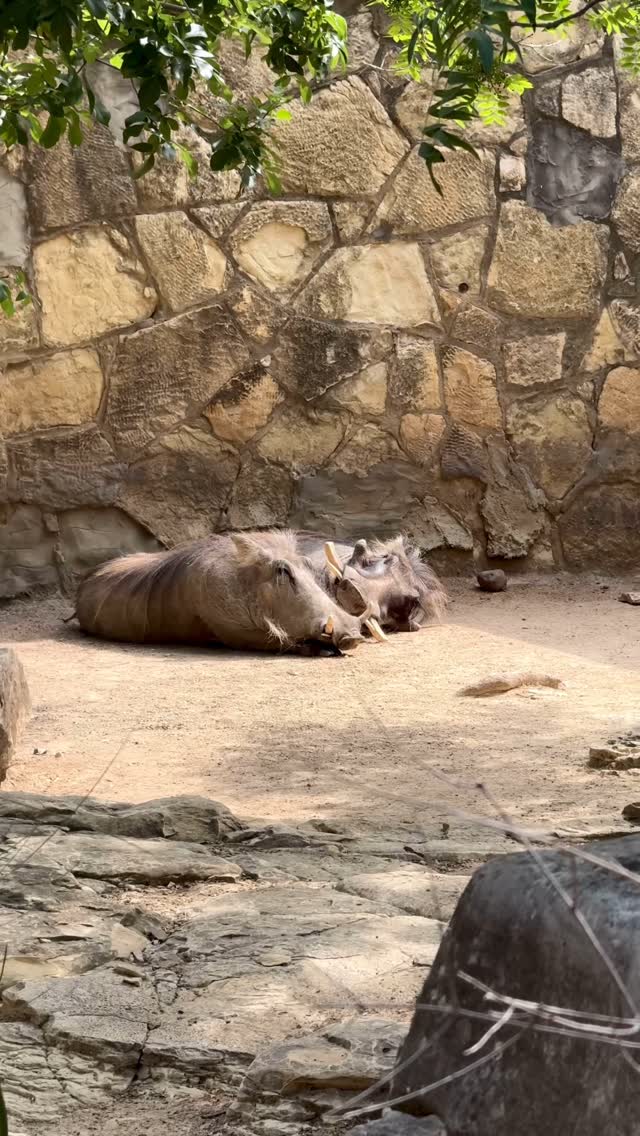
Us in a different universe 🐗❤️
.
.
.
