
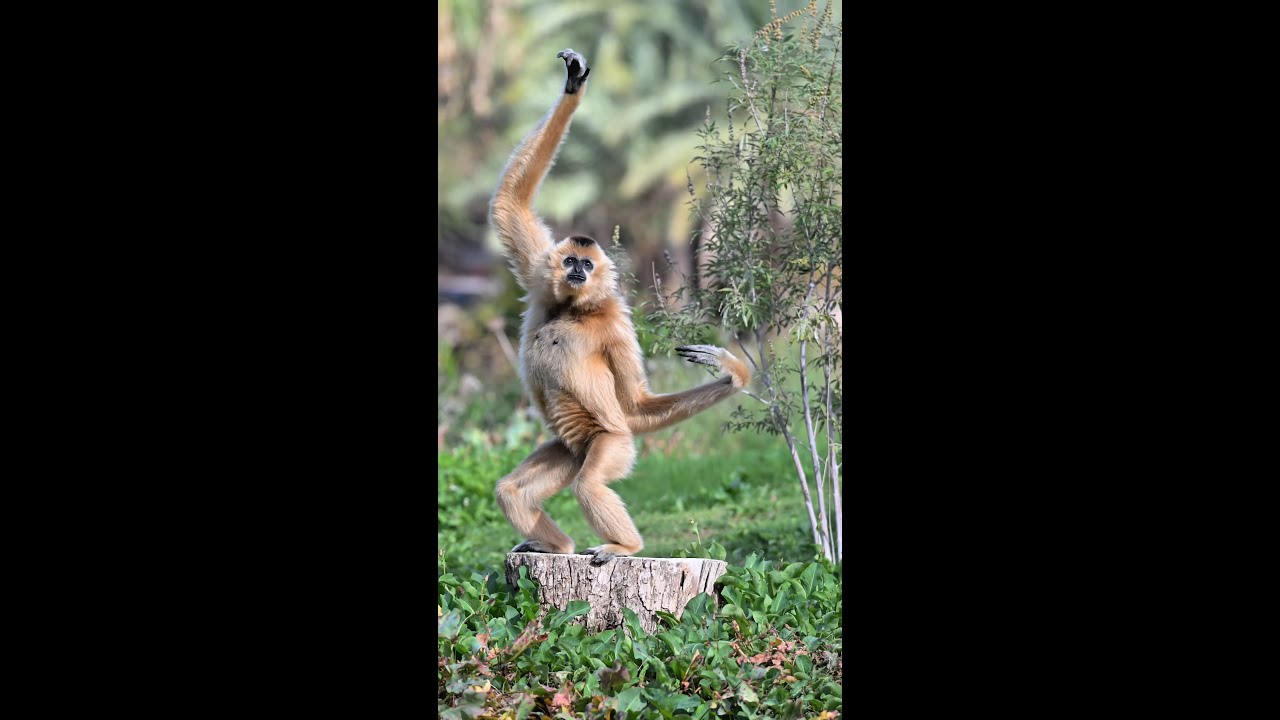
- Behavioral insights into gibbons’ ability to catch grapes and its implications for understanding primate cognition and dexterity.
- The significance of enrichment activities like grape-catching for gibbon welfare in zoos and conservation efforts.
- The role of zoo management in facilitating such behavioral studies and enhancing the well-being of captive primates.
- Conservation strategies for gibbons and the impact of public engagement through viral activities.
- Technological advancements in video documentation and its value in wildlife education and research.
Understanding primate cognition and dexterity through behavioral insights into gibbons can offer fascinating revelations about our closest animal relatives. These insights are particularly illustrated through what might seem a simple activity: gibbons catching grapes. This behavior provides valuable information about their cognitive abilities, dexterity, and problem-solving skills.
Gibbons, often considered the acrobats of the forest, possess impressive agility. This is rooted in their anatomical and neurological complexity. Their limbs are adapted for swinging through trees, and their fingers and thumbs are well-suited for grasping. When engaged in grape-catching, gibbons display coordination and precision indicative of higher cognitive processes. This activity challenges their motor skills and tests their ability to anticipate and react swiftly. Studying such behaviors allows scientists to draw parallels between primate and human cognition, enriching our understanding of evolutionary processes.
Enrichment activities, like grape-catching, play a critical role in enhancing the welfare of gibbons in captivity. These activities are not merely pastimes; they serve essential functions in stimulating the animals mentally and physically. Enrichment encourages natural behaviors that prevent boredom and reduce stress, contributing to better overall health. Carefully designed challenges engage gibbons’ problem-solving skills and social interactions. This is vital because these factors can significantly affect psychological well-being, ensuring gibbons lead fulfilling lives even outside their natural habitats.
Zoo management plays a pivotal role in facilitating such behavioral studies and activities. Creating environments that mimic natural habitats requires thoughtful planning and an understanding of species-specific needs. Enrichment must be varied and adaptable, providing new experiences to keep the animals engaged. Collaboration with researchers enables zoos to gather data that can inform improved care protocols and contribute to broader scientific knowledge. Well-managed zoos leverage their resources to combine conservation, education, and recreation, ensuring that their animal residents thrive while also educating the public about environmental stewardship.
Conserving gibbons and their habitats is an urgent priority. Gibbons face threats from habitat destruction, illegal wildlife trade, and poaching. Engaging the public with activities like grape-catching videos can raise awareness and inspire action. When people witness the intelligence and charm of gibbons, they are more likely to support conservation initiatives. Educational programs and campaigns can harness this interest, channeling it into effective conservation strategies. Encouraging responsible tourism and supporting habitat preservation are crucial steps in ensuring the survival of these incredible primates.
Technological advancements in video documentation have revolutionized how we study and appreciate wildlife. Detailed recordings of gibbon behaviors like grape-catching offer valuable data for researchers. High-quality videos allow for close examination of subtle movements and interactions, providing insights that might be missed in real-time observation. This growing repository of visual data supports educational efforts, making scientific findings accessible to a broader audience. Such documentation is vital for fostering a connection between people and wildlife, ultimately driving conservation efforts forward.
*****
Source Description
Today is International Gibbon Day!
Did you know that gibbons hold their long arms up while they walk and run to avoid dragging their knuckles? Drop your favorite gibbon facts or moments in the comments below! ⬇️
