
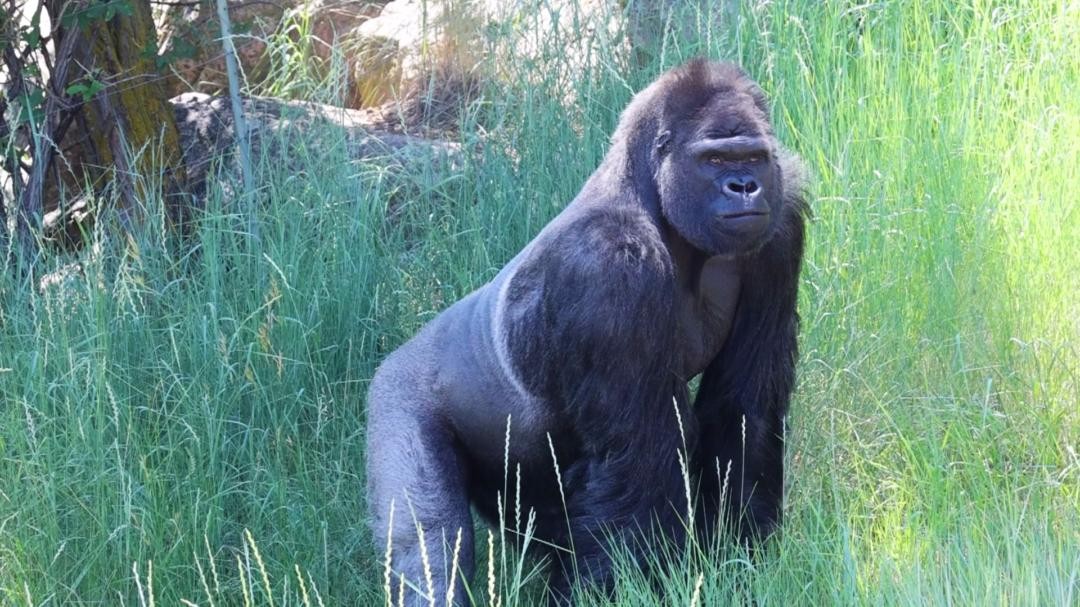
- The journey of Goma: from bachelor group to breeding success at CMZoo
- The role of breeding recommendations in wildlife conservation
- Social integration and troop dynamics in Western Lowland Gorillas
- Importance of the Species Survival Plan in zoo management
- Goma’s contributions as a first-time father and what it means for his species
Goma, a thirty-four-year-old Western Lowland Gorilla, made his way to the Cheyenne Mountain Zoo (CMZoo) in 2016, driven by a breeding recommendation from the Species Survival Plan (SSP) for his species. The SSP, an initiative supported by accredited organizations within the Association of Zoos and Aquariums (AZA), plays a critical role in maintaining the genetic diversity and sustainability of zoo populations. Goma’s relocation marked a significant point in his life and in the broader context of gorilla conservation.
Upon arriving at CMZoo, Goma transitioned from a bachelor group environment to a tightly bonded troop of females. Bachelor groups, often composed of young males, lack the social structure found in a mixed-gender group. This change was both a challenge and a blessing for him. At first, Goma faced uncertainty as he adapted to a new social setting, one filled with established relationships and hierarchies. Over time, however, he formed strong social bonds with the females in the troop, a critical aspect of zoo management aimed at promoting species-typical behaviors and fostering a harmonious living environment.
Social integration in gorillas is a complex process that involves communication and behavioral cues. Goma relied on body language, vocalizations, and gestures to navigate his new social landscape. Successful introductions required careful observation and behavioral studies conducted by zookeepers, focusing on ensuring comfort and safety for all animals involved. As Goma built relationships with his new companions, he transformed from an isolated bachelor into a valued troop member, embodying a cornerstone of social cohesion.
The backdrop to Goma’s journey is the significant role of breeding recommendations in wildlife conservation. The SSP aims to enhance the genetic diversity of populations within accredited zoos. It selects breeding pairs based on genetic analyses, demographic data, and the overall health of individual animals. This scientific approach combats the risks of inbreeding and helps maintain a viable population of Western Lowland Gorillas, which face serious threats in the wild, including habitat loss and poaching.
The SSP does not only focus on breeding but also emphasizes the education and well-being of animals in captivity. For Goma, success in breeding was not merely a personal achievement; it contributed to the overall conservation efforts for his species. After a period of adjustment and social learning, Goma became a father on July 21, 2025. The birth of his offspring represents a vital addition to the genetic pool of Western Lowland Gorillas in North American zoos.
The significance of this birth extends beyond the individual animal and reflects sound zoo management principles. Goma’s transition to fatherhood illustrates how accredited zoos actively participate in the broader conservation narrative. These organizations aim to educate the public about the challenges faced by wildlife and the critical importance of preserving habitats and populations.
Breeding programs must adhere to ethical standards, ensuring the mental and physical well-being of animals involved. In Goma’s case, the mother, Asha, played a key role in nurturing her offspring. As an experienced female, Asha facilitated Goma’s introduction to fatherhood. While initially inexperienced, Goma learned the necessary parenting skills by observing Asha. Their interactions demonstrated how cooperative breeding can enhance the survival rates of young animals.
The success of Goma’s integration and subsequent fatherhood speaks to the intricate dynamics present in gorilla troops. Western Lowland Gorillas rely heavily on social structures to thrive, requiring robust interactions for emotional and psychological well-being. Such environments are crucial as they mimic natural habitats where social orders guide the behaviors and development of young gorillas. Zookeepers monitor these interactions to ensure that Goma’s journey continues to be in alignment with the well-being of the troop.
Moreover, Goma’s case underscores the role of modern zoos in wildlife conservation. They serve not only as places for education and public engagement but also as critical sanctuaries for endangered species. The Western Lowland Gorilla, classified as Critically Endangered by the International Union for Conservation of Nature (IUCN), faces immense challenges from poaching and habitat destruction. Zoos like CMZoo contribute to conservation efforts through breeding programs, habitat restoration projects, and advocacy campaigns.
Efforts to conserve Western Lowland Gorillas are more urgent than ever. Deforestation in central Africa—largely driven by logging and agriculture—remains a primary threat to their habitat. Zoos have a part in raising awareness about these issues. They engage in community outreach and educational programs, aiming to inspire visitors to act on behalf of gorillas. Their work assists in fostering a sense of responsibility towards environmental stewardship.
Goma’s journey from a bachelor group to becoming a father illustrates the significance of zoo management techniques that prioritize social bonding, ethical breeding practices, and animal welfare. The evolutionary advantages of living in cohesive groups are observed in many primate species, including gorillas. Goma’s adaptability not only reflects his personal growth but also signifies the essence of social learning, which is crucial for the balance of gorilla populations.
As Goma continues to thrive at CMZoo, his contributions extend beyond the immediate habitat. By participating in educational programs, he engages with countless guests, raising awareness about conservation and what is at stake. The offspring he has fathered will serve as ambassadors for their species, helping to educate future generations about the importance of preserving biodiversity. Each interaction with visitors creates ripple effects, emphasizing the urgency of wildlife conservation.
In addition to his role as a father, Goma acts as an example of the dedicated efforts taken by zoological institutions to maintain ethical standards in animal care. The practices at CMZoo are aligned with global best practices in animal husbandry, ensuring that each animal lives in an enriching environment. This holistic approach prioritizes not just breeding but overall health, making animals like Goma key players in a much larger conservation narrative.
Ultimately, Goma’s transition to breeding success at CMZoo is a profound story of adaptation, training, and commitment to species preservation. His journey, one marked by social integration and eventual fatherhood, provides invaluable insights into the complexities of conservation strategy. The successful implementation of these strategies demands collaboration between institutions, fostering a global effort towards sustainable management of wildlife. Goma’s story is a significant chapter in the ongoing saga of gorilla conservation, highlighting the essential role that ethical zoo management plays in preserving not just species, but the ecosystems that support them.
*****
Source Description
Thirty-four-year-old Goma moved to CMZoo, in 2016, on a breeding recommendation from the Western Lowland Gorilla Species Survival Plan, supported by Association of Zoos and Aquariums-accredited organizations, including CMZoo.
Goma joined a tightly bonded group of females after coming from a bachelor group, and with time, introductions, and strong social bonds, the troop became a cohesive group. Though inexperienced, Asha helped Goma learn how to breed and he became a first-time dad on July 21, 2025. It’s exciting to see how far Goma has come and the important contributions he continues to make to his species.
