
- Exploring Gusti’s new enrichment and its role in stimulating natural behaviors.
- Understanding the significance of environmental enrichment for captive tigers.
- Delving into Gusti’s specific dietary regimen and its importance in his overall health.
- Examining the scientific basis for enrichment activities and their benefits for big cats.
- Highlighting the broader goals of wildlife conservation and zoo management.
Captive tigers, like Gusti, require environments that stimulate their natural behaviors and instincts, crucial for their physical and mental well-being. This is where enrichment plays an essential role. The new enrichment setup for Gusti, a majestic male tiger, offers an intriguing glimpse into how zoos strive to maintain the health and ecological needs of their residents.
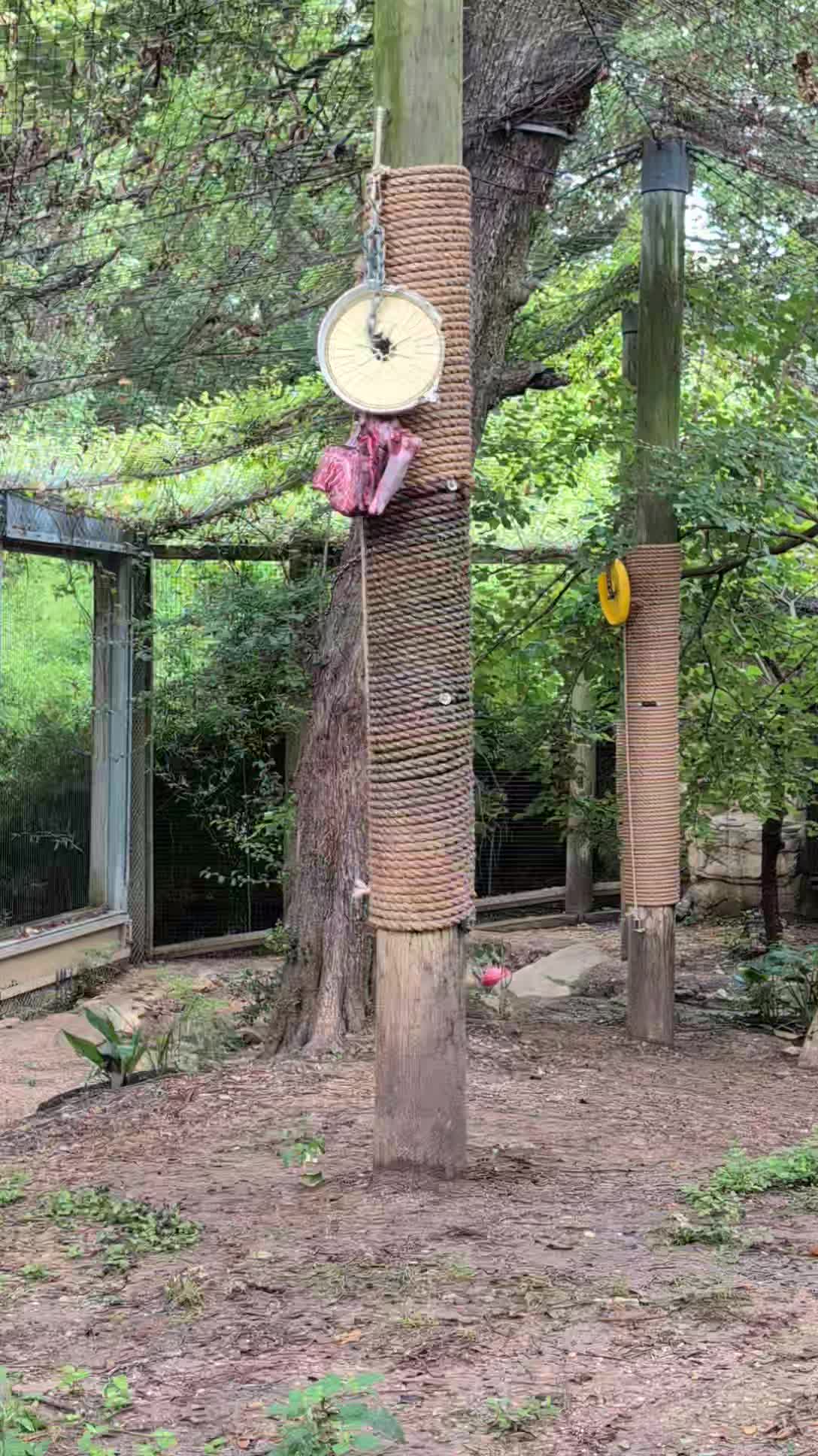
Incorporating elements like poles wrapped in rope and pulley systems taps into tigers’ innate climbing abilities. This setup is not random; it is designed to challenge and engage Gusti by mimicking the conditions he would encounter in the wild. Climbing allows him to exercise muscles, improves coordination, and provides an outlet for instincts that might otherwise lie dormant within a controlled environment. Enrichment serves as both a physical and psychological boon, nurturing the holistic development of captive animals.
The significance of environmental enrichment extends beyond mere entertainment for the animals. It addresses the complex needs of tigers by providing mental stimulation and reducing stress. When Gusti inspects changes in his habitat, it reflects a psychological engagement crucial for his cognitive health. Engaging with his environment allows Gusti to exhibit behaviors such as exploration, problem-solving, and curiosity, which are vital aspects of a predator’s life.
Gusti’s diet also plays a pivotal role in his enrichment. On this particular day, goat meat was strategically hung to inspire his climbing and retrieval skills. This approach not only serves as a means to feed him but also encourages him to hone his hunting instincts. In the wild, tigers hunt for their prey, and replicating this activity in captivity keeps those vital skills sharp. The dietary component is crafted in alignment with his nutritional requirements, ensuring he receives the proper balance of proteins and nutrients necessary for robust health and vitality.
Supporting the natural behaviors of zoo animals requires an in-depth understanding of their biology and ecology. Gusti’s new enrichment initiative is grounded in scientific research on animal welfare. Studies have shown that such activities decrease behaviors indicating boredom or distress, such as pacing or aggression. Instead, they promote positive states like contentment and relaxation, key indicators of well-being in captive animals.
Beyond the immediate benefits for Gusti, the implementation of sophisticated enrichment strategies aligns with broader wildlife conservation goals. Zoos play a critical role in the conservation of endangered species like tigers by providing safe environments where they can thrive and reproduce without the threats posed by habitat destruction and poaching.
Furthermore, these initiatives help raise public awareness and contribute to educational programs about wildlife conservation. By observing animals like Gusti engaging with their environments in dynamic ways, visitors can gain a deeper understanding of tiger behavior and the efforts needed to preserve these majestic creatures in the wild.
Zoo management also plays a pivotal role in the effective implementation of enrichment strategies. Staff must regularly assess and adapt enrichment plans to suit the individual needs of each animal. These efforts require collaboration between animal care professionals, researchers, and veterinarians to develop and implement programs that best support animal welfare.
As stewards of animal care, zoos have the responsibility of fostering environments where animals can express natural behaviors and maintain a quality of life that mirrors the evolutionary roles they have played for millennia. Gusti’s engagement with his new enrichment is a testament to the zoo’s commitment to providing an environment that prioritizes his well-being.
The presence of environmental enrichment in zoos marks a significant advancement in understanding the needs of captive tigers. By stimulating natural behaviors and ensuring that animals like Gusti have the opportunity to explore and engage with their surroundings, zoos can create richer, more meaningful experiences for both their animals and visitors. This, in turn, strengthens efforts in global conservation, supporting the ultimate goal of a more sustainable coexistence with the animal kingdom.
*****
Source Description
Gusti, one of our male tigers, tried out their brand new enrichment!
The poles were wrapped in rope and a pulley was installed to encourage the natural climbing abilities the cats have.
Gusti’s diet today, had goat meat, so it was hung up to elicit that climbing. And if you see, at the beginning of the video, he was quickly inspecting the changes to the habitat and finding his “prey”
