
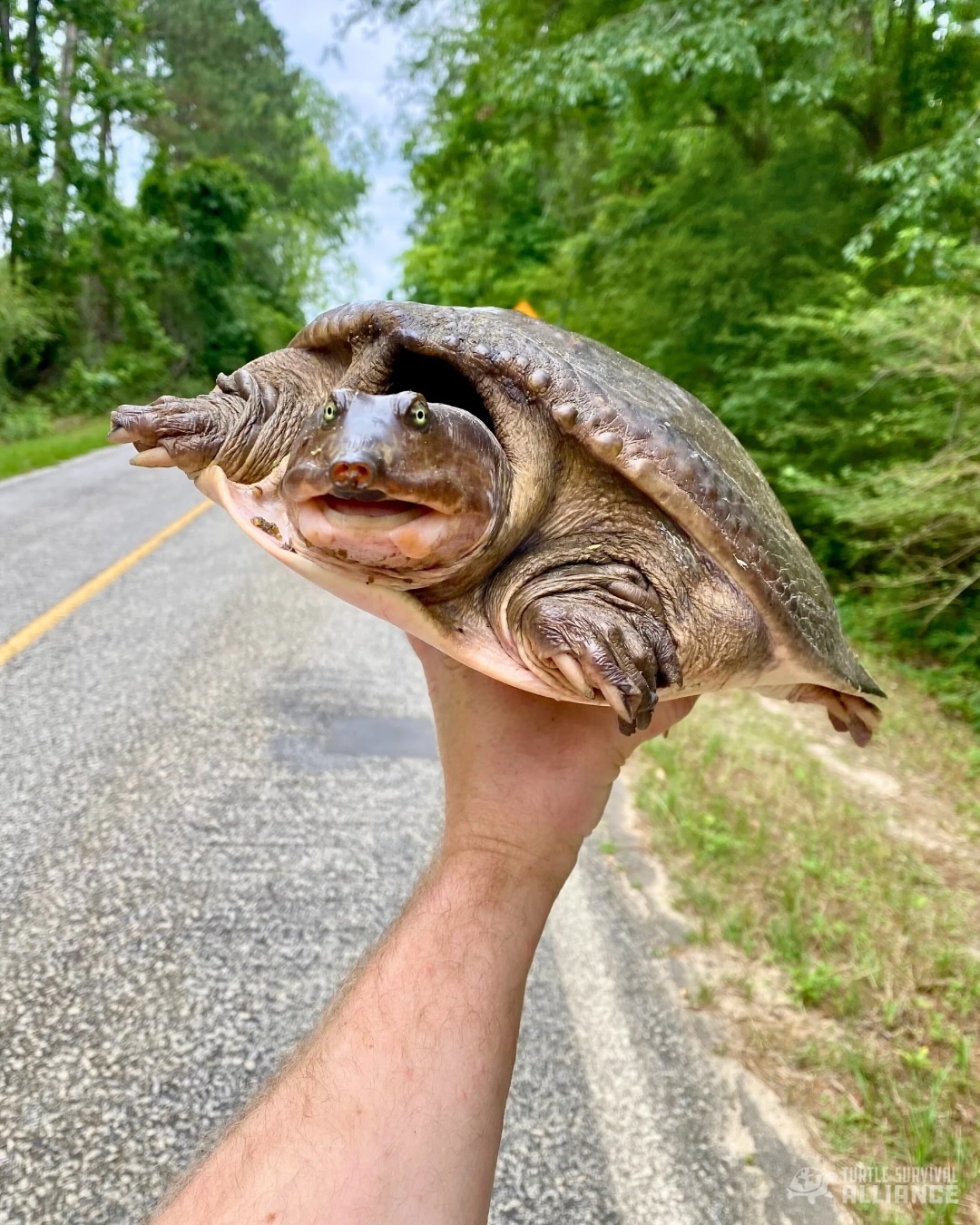
- The importance of Florida Softshell Turtles and their nesting habits
- The hazards faced by turtles during nesting, particularly road mortality
- Practical tips for safely assisting turtles crossing roads
- How individual actions can lead to larger conservation efforts
- The role of community awareness in turtle conservation
The Florida Softshell Turtle (Apalone ferox) plays an essential role in its ecosystem. These turtles are primarily found in the southeastern United States, especially in Florida’s wetlands. Their long life expectancy can surpass twenty-five years, and they reach sexual maturity anywhere from 6 to 15 years of age. The crucial aspect of their life cycle is their nesting behavior, which occurs in spring and summer. During this period, female turtles seek safe and suitable locations to lay their eggs, often venturing across roads to find them.
However, this journey is fraught with danger. Roads are hazardous, and the risk of road mortality increases significantly. Gravid females, which carry eggs, are particularly vulnerable when attempting to return to their aquatic habitats after nesting. For many, this journey may result in serious injury or death, wiping out the future generations they carry. When you see a turtle attempting to cross a road, you are witnessing a critical moment—one where your intervention could mean the difference between life and death for both the turtle and its future hatchlings.
Turtle populations are already under pressure from habitat destruction and poaching. The loss of even a small number of adult females can have a significant impact on these populations. Therefore, every effort to help these animals, especially when they are crossing roads, is essential. Simple actions, like being cautious while driving or stopping to help turtles, contribute to the broader conservation of these reptiles.
If you encounter a turtle on the road, it’s vital to pull over safely. Ensure you do not place yourself or others in danger while making this maneuver. After you’ve stopped safely, approach the turtle gently and assess its species. For snapping turtles, it is recommended to pick them up by the rear of their shell. This method allows you to avoid their heads, which can be quite aggressive. If the turtle is not a snapping turtle, you may collect it gently.
Moving the turtle in the direction it was heading is crucial for two main reasons. First, it prevents further confusion, allowing the turtle to continue its journey. Second, placing it on the side opposite to which it was facing could compel it to turn back onto the road, increasing its risk of being hit by vehicles.
Once you’ve safely assisted the turtle off the road, place it at least 10 feet from the roadside. This distance helps ensure the turtle is out of immediate danger as it resumes its journey. It’s important to avoid putting it directly into a pond or body of water. Typically, turtles possess excellent navigation skills and can find their way to water on their own if given a chance.
Individual actions make a substantial impact on local ecosystems. By helping turtles cross roads, you become a part of their conservation narrative. Every adult turtle you assist has the potential to lay dozens of eggs, which could become many hatchlings. In this way, one small act can create ripples in wildlife populations.
Community awareness is essential for the conservation of Florida Softshell Turtles and other wildlife. Local campaigns focusing on road safety and wildlife conservation can foster greater respect for these creatures. It’s beneficial to share your experiences with others and encourage them to act similarly when seeing turtles on the road. Social media can amplify such messages, acting as a platform for sharing tips, photos, and encouraging others to be highway heroes.
Conservation measures can extend beyond just road safety. Awareness initiatives can educate the public on the broader ecological roles these turtles play. By maintaining balanced ecosystems, turtles contribute to water quality, plant community composition, and prey-predator dynamics.
Advocacy efforts should also focus on the preservation of natural habitats. As urban development continues to expand, creating wildlife corridors and ensuring the protection of wetlands becomes crucial. These habitats not only provide nesting sites but also serve as critical places for survival.
Turtle conservation is a shared responsibility. As stewards of the environment, communities can work together in both small and large ways. Whether through educational programs in schools, local nature walks, or community clean-up events, every effort counts. These initiatives encourage connection between people and wildlife, fostering a sense of responsibility toward preservation.
Moreover, volunteers can participate in citizen science projects aimed at monitoring turtle populations and nesting sites. By gathering data, they contribute valuable insights to scientists studying these species. Data collection helps inform conservation strategies, making them more effective and focused.
Supporting local wildlife organizations can also strengthen conservation efforts. Donations, volunteering, or participating in fundraising events contribute to the maintenance and expansion of projects dedicated to the protection of vulnerable species, including the Florida Softshell Turtle.
In addition to individual and community actions, legislation plays a pivotal role. Laws protecting turtles and their habitats can create frameworks for sustainability. Stricter regulations against poaching and habitat destruction help give vulnerable turtle populations a fighting chance.
Lastly, education is paramount. Knowledge about the species, their ecological significance, and the challenges they face can foster a culture of respect and protection. Understanding the intimate relationship between human activity and wildlife is key to developing environmentally conscious behaviors.
Turtles serve as important indicators of the health of their aquatic ecosystems. When you think about their plight, consider not just the individual turtle crossing the road, but the larger narrative of conservation intertwined with community awareness, education, and advocacy. By making conscious choices and being mindful of their journey, we can all be a part of a solution that leads to healthier turtle populations for future generations.
Whether you find yourself driving down a rural road or strolling near a wetland, be on the lookout for the vulnerable turtles making their way home. It’s a simple act but carries immense weight; your intervention can mean the difference between death and life—not just for an individual turtle, but also for future generations yet to emerge from their eggs.
*****
Source Description
She’s just trying to get home. Be the reason she makes it.
Today for we want to spotlight why especially for turtles looking to nest, helping to amplify their populations in the wild.
This Florida Softshell Turtle (Apalone ferox) was spotted by TSA’s Jordan Gray as she tried to cross a rural road back to her home wetland, likely after nesting. For gravid, or egg-carrying, females, road hazards can mean injury or death—and the loss of a future for their hatchlings.
After safely moving her in the direction she was headed, she was released at the edge of the body of water she was seeking—where she zipped away.
Due to the long life expectancy of turtles, it can take years until female turtles are able to reproduce. Even then, they are at risk of road mortality when searching for a safe place to nest—or returning from one. Be a highway hero: the next time you save a turtle crossing the road, just know you might have also saved dozens of hatchlings too.
Turtle tips for successful road saves:
🐢If you see a turtle on the road, be sure it is safe to pull over
🐢If it’s a snapping turtle, pick the turtle up by the very back of its shell, or move it onto something carriable, avoiding its head
🐢Move the turtle in the direction it was headed
🐢Place the turtle at least 10 feet from the road
A few things to avoid:
❌Don’t endanger yourself or others when pulling over or crossing the road
❌Don’t place the turtle on the side of the road opposite to which it was facing, it may just turn right back around and cross the road again
❌Don’t place the turtle directly into a pond or body of water, it will find the water if it wants to go there
If you have pictures of your tag us! You can make a difference in a local turtle’s life.
📸: Jordan Gray
@parcconserve
