
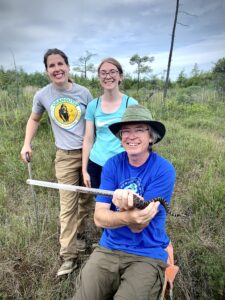
Summary of Honoring Assistant Curator John Adamski: A Legacy of Conservation Leadership:
Seneca Park Zoo bids farewell to John Adamski, its Assistant Curator, who has significantly impacted herpetological conservation for over a decade. He led efforts for the preservation of the Eastern Massasauga rattlesnake and the endangered Panamanian Golden Frog, which is extinct in the wild. His advocacy has heightened public awareness and scientific understanding of these species, including participation in the AZA’s EMR SAFE program.
John’s work extended internationally, particularly with the El Valle Amphibian Conservation Center in Panama, enhancing global conservation strategies. His initiatives, like Panamanian Golden Frog Day, have encouraged community engagement in wildlife conservation. As he transitions to new opportunities, the zoo celebrates his legacy of science and stewardship, expressing gratitude for his contributions to conservation efforts.
- Honoring John Adamski’s contributions to herpetological conservation at Seneca Park Zoo
- The significance of the Eastern Massasauga rattlesnake in conservation efforts
- The role of the Panamanian Golden Frog in global amphibian protection
- Community engagement and education initiatives led by John Adamski
- The lasting impact of John’s work on future conservation strategies
John Adamski holds a pivotal position in the world of herpetological conservation, making substantial contributions during his tenure as Assistant Curator at Seneca Park Zoo. His work has not only affected local conservation initiatives but has broadened the understanding of various species at risk on a national level. Central to his mission has been the Eastern Massasauga rattlesnake (EMR) and the Panamanian Golden Frog. Both species symbolize the challenges faced in wildlife conservation today, and John’s tireless advocacy has emphasized their importance in ecological balance.
The Eastern Massasauga rattlesnake is a small but significant native species in the United States, often overlooked in conservation discussions. This species serves as a bellwether for the health of wetland ecosystems, where it primarily resides. Various factors threaten its survival, including habitat loss due to urban development, agricultural conversion, and climate change. The understanding of these challenges is crucial for developing effective recovery strategies.
For over a decade, Adamski participated in the Association of Zoos and Aquariums’ (AZA) Eastern Massasauga SAFE (Save Animals From Extinction) program. This initiative provides a framework for coordinated conservation efforts across institutions. John has contributed to many field surveys in Michigan, gathering vital data on population numbers, habitat use, and breeding behaviors. His findings have informed local and national wildlife policy discussions, ensuring that conservation efforts are based on solid scientific research.
Fieldwork is essential in conservation biology, and John’s hands-on approach is commendable. By involving himself directly in the study of the EMR, he has built relationships with conservationists and researchers, which has amplified the impact of his work. These connections have fostered collaborative projects that aim to protect habitats while simultaneously raising public awareness about the issues surrounding rattlesnake survival. The results of John’s research offer insights that can be applied to other species facing similar threats, showcasing the transferability of knowledge in conservation practices.
In contrast, the Panamanian Golden Frog—a species now extinct in the wild—underscores the urgent need for global amphibian conservation. This vibrant yellow frog became a poster child for the amphibian decline crisis, primarily driven by habitat loss, climate change, and diseases such as chytridiomycosis. As one of the most threatened species, the Panamanian Golden Frog necessitated innovative conservation strategies to ensure its survival in assurance colonies, which are captive populations meant to preserve the genetic diversity of species at risk.
Adamski’s role in the El Valle Amphibian Conservation Center has been instrumental. For 15 years, he has traveled to Panama to collaborate with local staff and scientists, refining husbandry practices essential for the frog’s breeding program. His contributions to this international conservation effort have not only added credibility to the Zoo’s mission but have also amplified its global reach. The partnership between Seneca Park Zoo and the conservation center in Panama showcases a model of effective collaboration aimed at addressing biodiversity loss.
One of John’s notable achievements includes the establishment of engaging programming, such as “Panamanian Golden Frog Day.” This annual event draws attention to amphibian conservation and creates a platform for education and outreach. By bringing the frogs into local events, such as Hispanic Heritage Day at the Memorial Art Gallery in Rochester, John has generated excitement and interest in conservation. This community integration fosters a sense of responsibility toward wildlife and the environment among attendees.
In his efforts, John has emphasized the importance of storytelling in conservation. Through workshops, talks, and hands-on demonstrations, he has helped demystify the complexities of herpetology. His genuine enthusiasm for wildlife resonates with visitors, inspiring them to consider their roles in wildlife conservation. The impact of his outreach is evident, as many attendees leave with a newfound appreciation for the challenges faced by endangered species like the Eastern Massasauga rattlesnake and the Panamanian Golden Frog.
As John transitions to new avenues in his career, his legacy at Seneca Park Zoo serves as a testament to what dedicated conservation leadership can achieve. His work has not only bolstered species recovery efforts but has ignited a passion for wildlife conservation within the community. The scientific knowledge he has cultivated will promote continued collaborations and innovations in conservation practices.
Conservation is a collaborative endeavor involving scientists, policymakers, and the public. The multi-faceted approach that John has champions emphasizes the need for cohesive action to address ecological issues. His advocacy for Eastern Massasauga rattlesnake conservation has contributed to crucial habitat preservation efforts, directly involving communities in these initiatives. This method ensures that stakeholders are engaged and aware of their local environments.
In the grander scope of conservation, the plight of the Panamanian Golden Frog highlights the fragility of biodiversity and the human actions that threaten it. John’s commitment to refining husbandry practices and contributing to global strategies emphasizes the interconnectedness of local and international conservation efforts. His work reminds us that the loss of any species poses risks to entire ecosystems.
Moreover, John’s initiatives foster a culture of stewardship within the community. By educating the public about the importance of biodiversity and the role each species plays in ecosystem stability, he has laid the foundation for a more collaborative future in conservation. The stories of the Eastern Massasauga rattlesnake and the Panamanian Golden Frog serve as reminders of the importance of protecting nature for future generations.
The impact of John’s work extends beyond his immediate contributions to the conservation sector. His dedication to education and community engagement enriches the conversation surrounding wildlife protection. By empowering individuals with knowledge, he has transformed public perception on the importance of wildlife. This shift in attitude is essential for fostering long-term commitments to conservation.
John Adamski’s legacy is built on solid foundations: scientific research, community engagement, international cooperation, and genuine passion for wildlife conservation. These elements have culminated in a robust approach to herpetological conservation that will not only benefit current species at risk but also inspire future generations. As we reflect on his achievements, it becomes clear that every effort counts in the fight to preserve our planet’s biodiversity. The far-reaching implications of his work underscore how one dedicated individual can influence conservation practices and public sentiment.
Conservation is a critical undertaking facing pressing challenges. Human activities are reshaping natural habitats globally, resulting in unprecedented declines in wildlife populations. The models set forth by leaders like John Adamski serve as pathways for effective action against these challenges, embodying optimism and sustainable practices in wildlife management.
Honoring John is not merely about celebrating his past achievements; it is about recognizing the ongoing need for inspired conservation leadership in our communities. His legacy, built on research, collaboration, and education, carefully aligns with the need for urgent action in conservation. As new challenges arise, the principles he champions will continue to guide the way forward, ensuring that future generations inherit a world rich in biodiversity. The journey of conservation is a collective one, and the path blazed by John Adamski will undoubtedly influence many in the years to come.
