
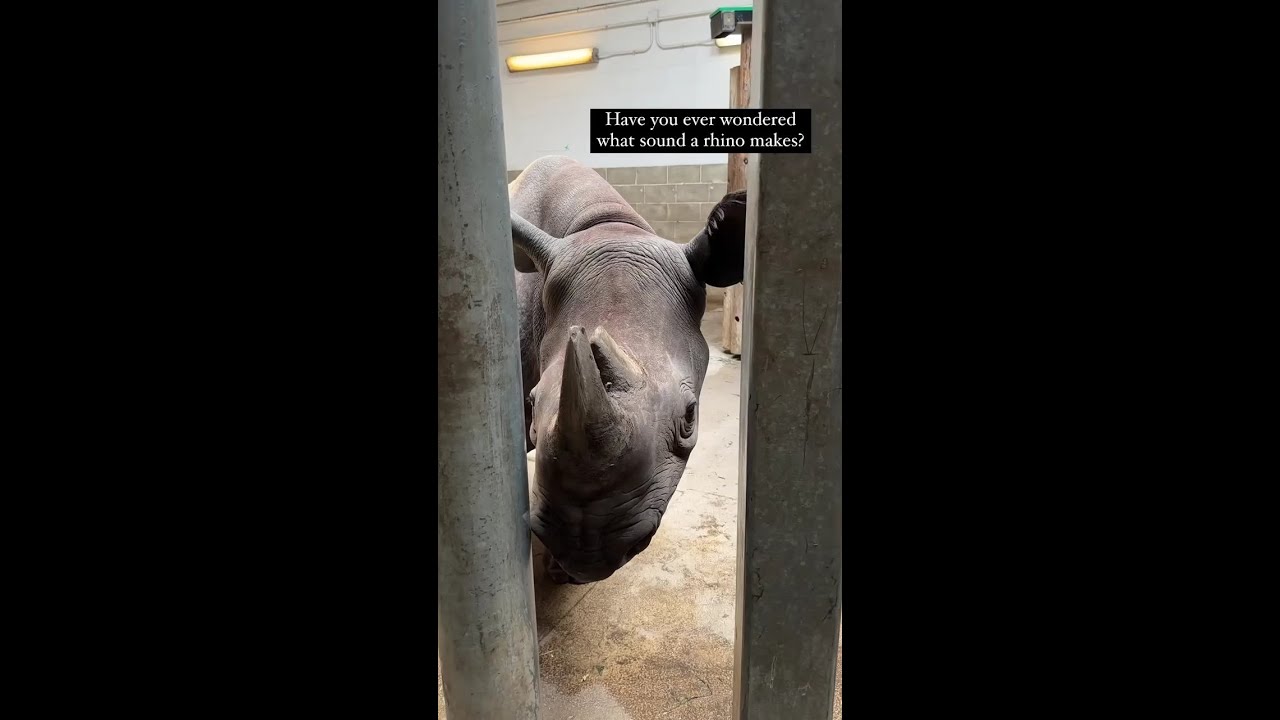
- Communication Methods of Eastern Black Rhinoceroses
- Challenges and Strategies in Zoo Management
- Importance of Sound in Wildlife Conservation
- Scientific Insights into Rhinoceros Behavior and Physiology
Eastern black rhinoceroses, like Lulu, are fascinating creatures, renowned for their robust physique and distinct communication capabilities. Their communication is not only vocal but also rich in subtle gestures and postures. Understanding these methods is pivotal to both their conservation and well-being.
Communication Methods of Eastern Black Rhinoceroses
Eastern black rhinoceroses are known for their complex vocalizations. They produce a variety of sounds, including grunts, honks, bleats, and snorts. These vocal signals serve multiple functions, from signaling distress to attracting mates. Each sound has a distinct purpose and can convey a wealth of information about the individual’s condition or intentions.
Grunts are common in daily interactions, serving as basic communication tools between individuals. Honks often signal alertness to potential danger, while bleats are softer calls used in more intimate settings, such as between a mother and her calf. Understanding these vocal patterns aids in monitoring their health and behavioral changes.
Challenges and Strategies in Zoo Management
Managing Eastern black rhinoceroses in captivity presents unique challenges. Their complex communication means zoo environments must facilitate both vocal and non-verbal interactions. Enclosures should be spacious and mimic their natural habitats, allowing them to express natural behaviors.
Breeding programs are critical for their conservation. Zoos must manage breeding carefully to maintain genetic diversity. This requires meticulous record-keeping and collaboration with other zoological institutions globally. Additionally, staff must be trained to interpret rhinoceros behavior accurately, ensuring timely and appropriate interventions when necessary.
To promote natural behaviors, environmental enrichment is crucial. This includes providing physical challenges, such as mud wallows and varied terrains, as well as social opportunities. Enrichment not only supports physical health but also encourages natural communication, essential for their psychological welfare.
Importance of Sound in Wildlife Conservation
Sound plays a vital role in wildlife conservation, particularly for species like Eastern black rhinoceroses. Acoustic monitoring is a non-invasive method that helps track and study wildlife in both captive and wild settings. By analyzing vocalizations, conservationists can infer population dynamics, stress levels, and reproductive status.
For instance, variations in vocal intensity or frequency might indicate stress or illness, signalling the need for intervention. Recording and studying these sounds enable researchers to develop more effective conservation strategies, fostering better management and protection plans for these magnificent creatures.
Scientific Insights into Rhinoceros Behavior and Physiology
Scientific research into rhinoceroses’ behavior and physiology offers critical insights for their conservation. Studies have revealed that rhinos communicate over large distances using infrasonic frequencies, which are inaudible to humans. This ability allows them to coordinate movements and maintain social bonds across vast territories.
Physiological studies have also shown that their vocal apparatus is highly specialized, enabling a wide range of sounds. Understanding these adaptations helps conservationists develop targeted approaches to preserve their habitats and ensure their survival.
Moreover, by studying these vocalizations, researchers can learn about their social structures, mating systems, and even detect changes in populations. This knowledge is crucial for developing conservation policies that align with their natural behaviors.
In summary, the communication methods of Eastern black rhinoceroses, like Lulu, are essential for their survival and well-being. Understanding these methods, along with effective zoo management and conservation strategies, is vital for preserving this incredible species for future generations. Sound not only connects these majestic animals but also serves as a powerful tool for their conservation. Through scientific research and dedicated management efforts, we can continue to support their populations and maintain the biodiversity of our planet.
*****
Source Description
