
- The role of animal keepers in enhancing wildlife habitats
- The importance of environmental enrichment for orangutans
- Keju’s unique method of exploring her new pathways
- The implications of habitat improvements on animal welfare
- Insights into orangutan behavior and conservation
The role of animal keepers in enhancing wildlife habitats cannot be overstated. These dedicated professionals are not just caretakers; they are also innovators, constantly thinking of new ways to enhance the environments where animals reside. Their work goes beyond feeding and basic care; it involves creating stimulation that fosters natural behaviors, reduces stress, and encourages physical activity. The integration of new features, like firehose pathways, exemplifies this mission.
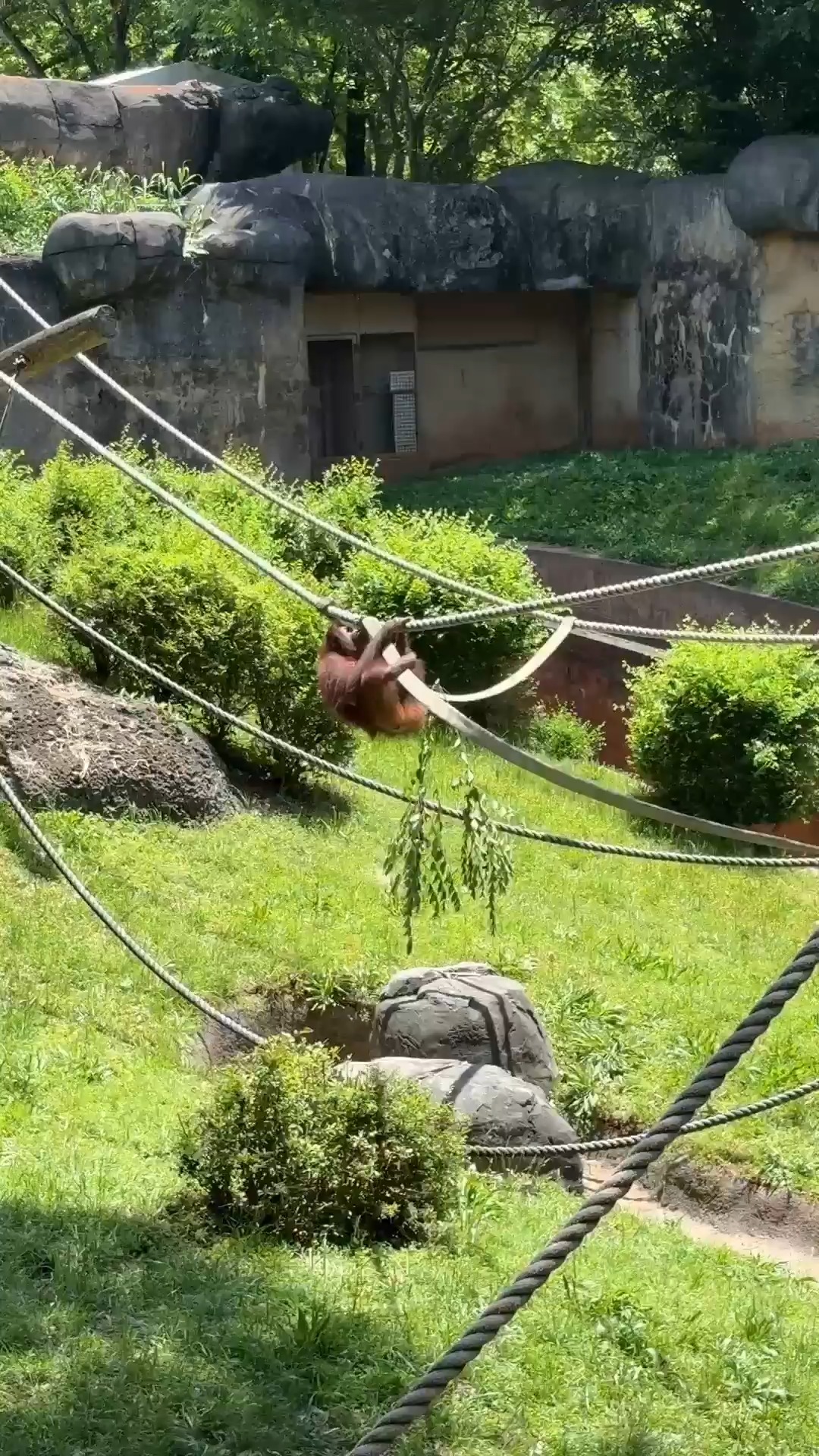
Recently, Orangutan Keeper Jake implemented a significant improvement by adding firehose pathways in Orangutan Habitat 2. These pathways are not just functional; they are thought-provoking adaptations that mimic natural environments, enabling the orangutans to express their innate behaviors. Keepers engage in continuous observation and assessment to refine these spaces, ensuring that habitat designs fulfill the animals’ psychological and physical needs.
Environmental enrichment is crucial for the well-being of many species, and orangutans are no exception. In their natural habitats, they employ various skills such as climbing, swinging, and foraging. Enrichment assists in replicating these experiences, serving to stimulate their intellect and physical abilities. The design of firehose pathways, which are durable and flexible like vines, provides orangutans with new opportunities for exploration and interaction. These pathways allow them to practice climbing and balancing, reminiscent of activities they would perform in the wild.
Keju’s first experience on the new firehose pathways demonstrated the importance of this type of environmental enrichment. As she ventured onto the pathways, observers noted her exceptional climbing ability and inventive ways of traversing the space. Her explorations showcased not only her agility but also the adaptability of these new features. This illustrates how keepers carefully monitor individual animals to create enriching scenarios that stimulate both physical exercise and cognitive engagement.
The implications of habitat improvements on animal welfare are vast. Enriching environments can significantly reduce the incidence of stress-related behaviors in captive animals. For species like the orangutan, which naturally exhibit complex social structures and advanced problem-solving skills, an environment that limits their interactions can lead to boredom and anxiety. By adding structures like firehose pathways, keepers provide opportunities for social interaction and engage the animals in activities that promote mental health.
Engagement is at the core of conservation strategies. Zoos play an essential role in educating the public about the importance of protecting wildlife and their habitats. By showcasing innovative habitat designs and the behaviors of animals like Keju, these institutions highlight how conservation efforts must adapt to address the changing conditions of animal welfare and natural ecosystems. The goal is not merely to exhibit animals; it is to contribute to a national and global dialogue on wildlife protection.
Finally, observing orangutan behavior offers valuable insights into their lives. These primates are known for their intelligence, complex social structures, and remarkable adaptability. Studies show that orangutans are one of the few species that utilize tools extensively, indicating high levels of cognitive functioning. With environmental modifications, keepers can facilitate opportunities for the animals to display these advanced skills.
In practice, monitoring animal behavior following habitat changes is crucial. Keepers document shifts in activity patterns, social interactions, and even learning processes. Each new addition, like the firehose pathways, serves as a case study for understanding how habitat enrichment influences orangutan welfare and overall behavior.
By continuously innovating and improving habitats, keepers transform animal care into a dynamic exchange of knowledge and well-being. These efforts illustrate how the thoughtful design of animal environments can lead to enhanced quality of life for the creatures in our care. Through the lens of Keju’s exploration of the new pathways, we gain an exceptional understanding of how small changes can yield transformative impacts on animal welfare.
By fostering environments that promote natural behaviors, animal keepers are not just caring for animals; they are supporting vital aspects of their physical and mental health. This ongoing commitment illustrates the intricate balance between wildlife care, education, and conservation, paving the way for more effective animal management techniques in the future.
*****
Source Description
Our wonderful keepers are always thinking of ways to improve the animals’ environments. Recently, Orangutan Keeper Jake added new firehose pathways in Orangutan Habitat 2. This video shows Keju’s first time exploring the new pathway as she learns how to successfully navigate it. Keju is very skilled at climbing and balancing and has a unique method of traveling on her pathways which is always fun to observe! (video: Jake B.)
