
- The importance of maternal care in chimpanzees and the challenges faced by first-time mothers.
- Strategies for hand-raising infants in captivity and the role of animal care teams.
- The process of reintegrating hand-raised chimpanzees back into their social troop.
- Ongoing monitoring and support for both mother and baby in a zoological setting.
- The significance of public engagement and awareness in wildlife conservation efforts.
Maternal care is fundamental to the survival and development of infant chimpanzees. Mother chimps provide not just nutrition through nursing but also emotional support and social learning experiences vital for their offspring’s growth. In the case of our new baby boy born to first-time mother JB on January 26, his early days highlighted some common challenges associated with maternal care, particularly for first-time mothers. While JB showed potential during maternal training, it became evident that she needed additional support to meet the demands of motherhood.
In primates, maternal behavior tends to be instinctual but often requires social learning from experienced mothers. The bonds and interactions within a troop give mothers insights into infant care. Those who lack exposure to such interactions may struggle. JB’s situation is a prime example; her initial childcare was inconsistent, leading to stress for the baby. Our animal care team recognized the signs of neglect and took immediate action. By stepping in to hand-raise him, we aimed to give him the best possible start in life.
Hand-raising a chimpanzee is a multi-faceted task that involves more than simply providing food. Our animal care teams have extensive training in animal behavior and nutrition. They provide round-the-clock care that includes regular feedings every three hours to simulate a natural nursing schedule. Monitoring both weight and temperature is critical to detecting any health issues. Consistent, responsive interaction plays a crucial role in bridging the gap that might have formed due to JB’s inability to care for her infant properly. This responsive care helps the baby develop necessary social and emotional skills, which are imperative for his future.
First-time mothers like JB often encounter barriers during their initial experiences with motherhood. Our teams worked closely with her prior to delivering the baby, focusing on maternal training sessions designed to help her prepare physically and psychologically. However, the transmission of maternal skills is a complex process, and it is common for new mothers to require additional assistance. While JB has made progress in her ability to care for her baby, the transition to motherhood is a learning curve that can take time.
We prioritize the well-being of both JB and her baby. By giving JB opportunities to observe and interact with her baby during the hand-raising process, we enable her to continue forming a bond. This integrated approach lays the groundwork for successful re-assimilation into the troop when the time is right. The baby will benefit greatly from being surrounded by experienced troop members, learning vital social dynamics and foraging skills. Reintegration into the troop is an essential aspect of primate development, aiding in social skill acquisition and healthy physiological growth.
Monitoring the baby’s health and development is an ongoing responsibility. Experts in zoology and veterinary care collaborate to ensure that he receives optimal support. Alongside nutrition, emotional well-being is monitored. High-stress environments can hinder growth, so creating a calm atmosphere is part of our approach. Regular assessments track progress, ensuring that both JB and her baby are on the right developmental path.
Public engagement is a crucial facet of wildlife conservation and plays a significant role in enhancing awareness of the challenges faced by species like chimpanzees. The plight of JB and her baby provides a narrative that captivates the public’s interest. Sharing their story fosters connections between the audience and wildlife, serving as a reminder of the delicate balance required for successful animal care. Engaging storytelling encourages people to take an interest in conservation efforts, urging them to support initiatives aimed at protecting these intelligent animals.
As we continue to share updates on the baby’s journey, the hope is that we not only raise awareness about maternal care in chimpanzees but also encourage involvement in broader wildlife conservation. Preservation efforts depend on public support and education, which can lead to effective change both in situ and ex situ conservation programs. It is essential to convey the importance of addressing the needs of animals in human care while maintaining their natural behaviors and social structures.
Education regarding maternal care in chimpanzees must also extend to the understanding of their social networks in the wild. Troops function as complex societies where knowledge and skills are shared. A young chimp raised within the troop learns through observation and imitation, which is vital for survival. They acquire not only foraging techniques but also intricate social skills through interaction with various troop members. This cultural transmission is critical and highlights the need to emphasize social dynamics in wildlife conservation discussions.
In cases like JB and her baby, we find a microcosm of larger conservation issues. First-time mothers face barriers that often stem from lost experiences due to habitat destruction and the illegal pet trade. By presenting stories of our chimpanzees, we bring to light the social needs and natural behaviors inherent to these animals. The narrative around JB and her baby is an opportunity to educate the public about the vital functions of maternal care, emphasizing that such skills are crucial for the survival of future generations.
Global efforts aimed at chimpanzee conservation must acknowledge the complexities of species-specific behavior. Initiatives designed to enhance conditions in both captivity and the wild should be based on rigorous research. The significance of maternal care should be at the forefront of any conservation plan. Support systems for mothers, especially first-time ones, can prevent the need for intervention, ensuring that young chimpanzees are raised in their natural family structures as much as possible.
The story of our new baby boy exemplifies the intersections of animal care, maternal behavior, and public interest in wildlife conservation. It revives the conversation about how we approach animal welfare in both zoos and natural habitats. The care and intervention provided by skilled zoologists pave the way for a healthier animal population while also promoting understanding and respect for chimpanzees as sentient beings.
As we share the journey of JB and her baby, we aim to highlight not just their individual story but the ongoing challenges faced by all animals in human care. The support provided to both the mother and child reinforces the significance of community—younger generations require all-encompassing care and attention to thrive. Through educational efforts, we pave the way for more informed future generations who will continue to advocate for the preservation of these remarkable beings.
By fostering public fascination with animals like chimpanzees, we lay the groundwork for future conservation efforts that prioritize the natural history and behavior of species. In doing so, we aim for a future where animal care practices are aligned closely with wildlife conservation methods, ensuring a holistic approach to the support and protection of these intelligent creatures. Recognizing the needs of mothers like JB will benefit not only her offspring but also contribute to healthier, more robust chimpanzee populations in the future.
*****
Source Description
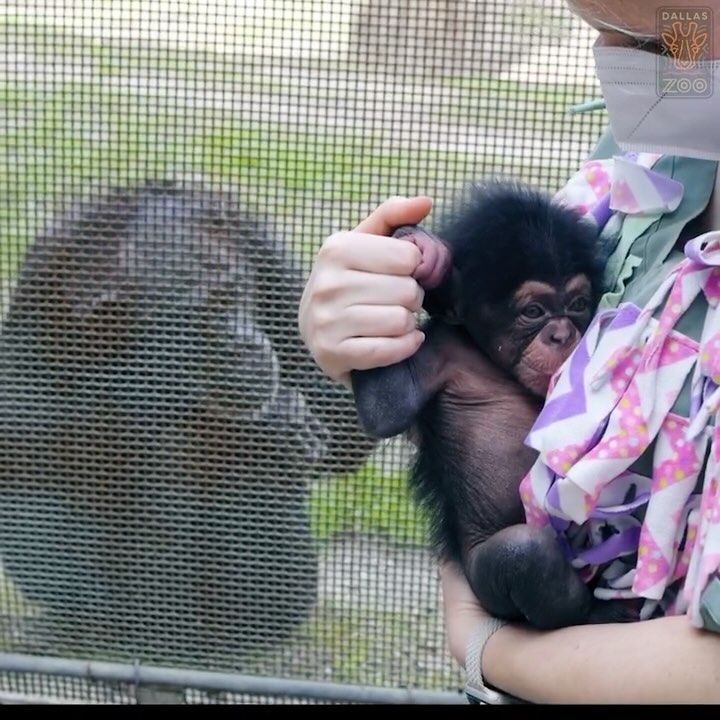
Hi baby! 😍 Meet the newest member of our chimpanzee troop – a healthy baby boy born on January 26 to first-time mom, JB. In the weeks after his birth, our animal care teams noticed that JB wasn’t consistently providing the care and nutrition the little one needed, which sometimes left him cranky and weak. After careful monitoring, the team made the decision to step in and hand-raise him to give him the support he needs.
Now receiving round-the-clock care from our zoologists, this little one is making incredible progress! He is being bottle-fed every three hours, having his weight and temperature monitored, and receiving consistent, responsive care to help him grow stronger each day. JB is given every opportunity to see and be near her baby throughout this process, as you can spot in the video!
Maternal care is a learned skill, especially for first-time moms like JB. Before birth, our teams worked closely with her on maternal training, and while she made great progress, it’s not uncommon for first-time moms to need a little extra support as they adjust to this new role. Our goal is always to support both mom and baby in every way possible while giving them the best chance to thrive together. Once the little one is old enough, we plan to reintegrate him back into our chimpanzee troop, where he will continue to grow and learn from his troop members.
We’ll be sharing more updates on this little one’s journey, so stay tuned!
