
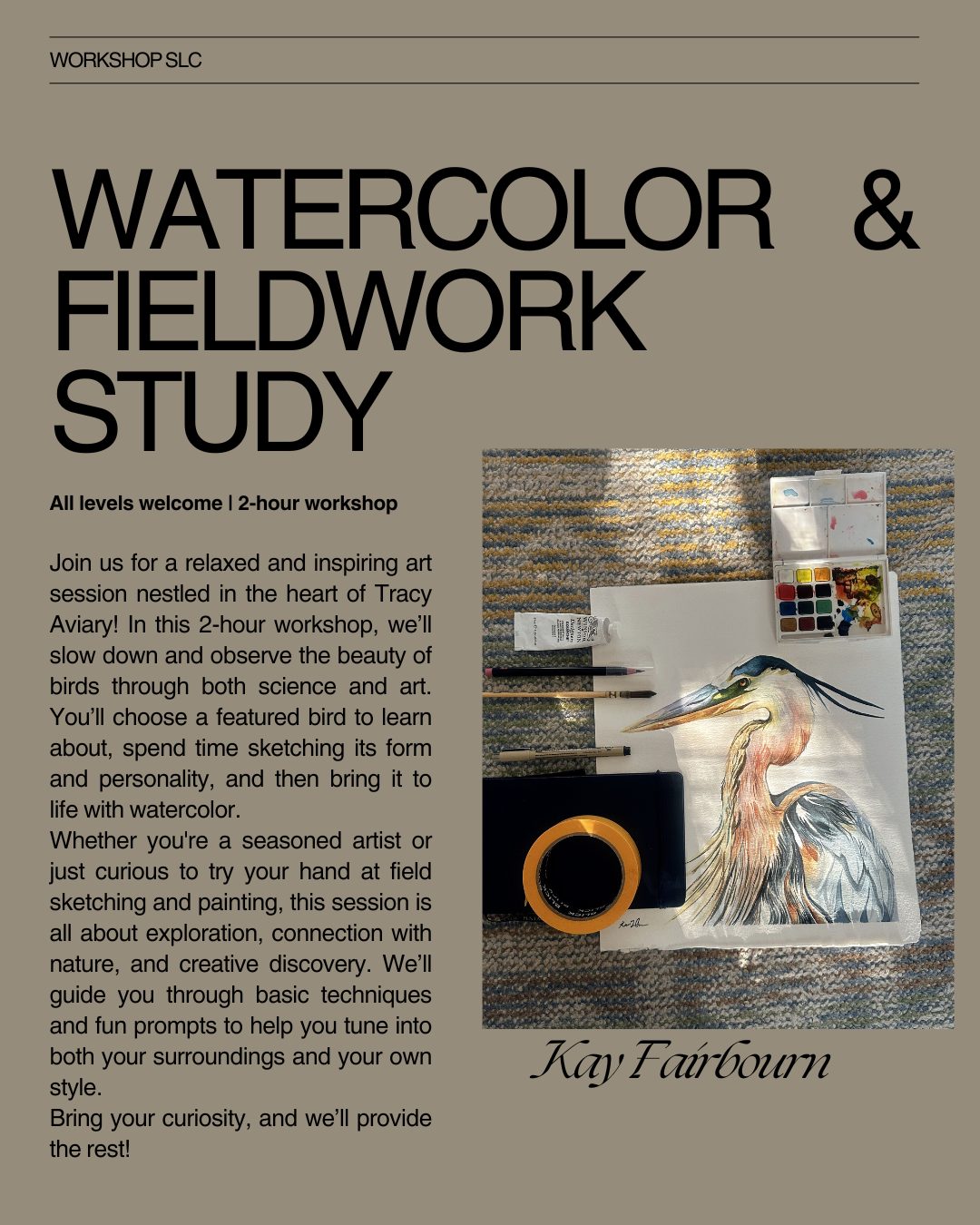
- Watercolor as a Medium for Conservation Awareness
- The Importance of Fieldwork in Wildlife Conservation
- Materials and Techniques for Painting Wildlife
- The Role of Zoos in Educational Outreach
- Engaging the Community in Conservation Efforts
Join us at Tracy Aviary on Saturday, August 2nd, for an immersive workshop titled Watercolor & Fieldwork Study. This event combines the serene practice of watercolor painting with the essential principles of wildlife observation and conservation. All materials are included with registration. Through hands-on learning, participants will discover how art can amplify advocacy and understanding of wildlife.
Art has long been recognized as an effective medium for storytelling. Watercolor, with its fluidity and vibrant potential, allows artists to convey the beauty of nature vividly. In a world facing unprecedented environmental challenges, artists play a pivotal role in conservation awareness. By portraying wildlife and natural landscapes, artists can evoke emotion and encourage viewers to engage with environmental issues. Through the Watercolor & Fieldwork workshop, participants will not only create art but also learn how to channel their creativity into informative narratives.
Fieldwork is an essential component of wildlife conservation. This practice entails direct observation and data collection in natural habitats. It provides critical insights into animal behavior, habitat needs, and ecological dynamics. Effective conservation strategies are informed by real-world observations. Participants in the workshop will learn the fundamentals of fieldwork techniques that can enhance their understanding of the subjects they choose to paint. Learning to observe details meticulously contributes to the authenticity and quality of their artwork.
Materials play a vital role in the experience of watercolor painting. High-quality papers, brushes, and pigments can significantly influence the final piece. In this workshop, participants will gain hands-on experience with a range of materials, allowing them to explore different techniques. Learning to blend colors, create textures, and capture light can transform a simple painting into a compelling representation of the natural world. Additionally, understanding the properties of various materials enhances artistic expression and technique.
Zoos serve multiple purposes beyond animal care. They are pivotal in education and outreach efforts, offering programs that engage visitors and inform them about wildlife and conservation. Tracy Aviary exemplifies this mission, providing a platform for learning through interactive experiences. Workshops like Watercolor & Fieldwork not only empower individuals to express themselves artistically but also connect them to broader environmental initiatives. By increasing public awareness about wildlife conservation, zoos can inspire lasting behavioral changes in the community.
Community engagement is fundamental in any conservation effort. Workshops like the one offered at Tracy Aviary foster connections between individuals and their local environment. Participants will leave with a deeper appreciation for wildlife and the ecosystems that support them. The combination of artistic creation and ecological awareness can lead to more informed citizens who advocate for sustainable practices. Engaging the community in such practices is crucial for long-term conservation success.
The Watercolor & Fieldwork workshop at Tracy Aviary is an opportunity to blend art and science. By participating, attendees will not only expand their artistic skills but also enhance their understanding of the importance of conservation in today’s society. Events like this are vital for nurturing a community that values and supports wildlife protection initiatives. Embracing both creativity and scientific inquiry, this workshop offers a holistic approach to learning about our environment.
Artistic endeavors can stimulate conversations around pressing issues, such as habitat loss, climate change, and species extinction. Engaging in artistic expression provides a pathway to advocate for the preservation of biodiversity. By incorporating fieldwork into this creative process, participants are equipped to make informed choices about the subject matter they explore. This blend of art and field observation allows for a richer understanding of the intricate relationships within ecosystems.
Watercolor painting can also foster mindfulness, allowing individuals to immerse themselves in the creative process. This mindful practice not only enhances artistic skills but also encourages a deeper connection to nature. As participants observe wildlife and their habitats, they develop an appreciation for ecological intricacies. This connection fosters a sense of responsibility toward conservation efforts, encouraging long-lasting change in personal and communal attitudes toward wildlife.
The materials provided in the workshop will support a well-rounded learning experience. Different types of watercolor paints, such as tube and pan colors, each have unique properties that can influence artistic outcomes. Participants will explore the importance of using quality paper, which can absorb water differently and affect color vibrancy. Brushes also play a crucial role, as their shapes and sizes can create various textures and strokes. Understanding these elements can empower artists to choose the right tools for their creative expression.
Throughout the workshop, practical demonstrations will showcase various painting techniques. For instance, wet-on-wet techniques can create soft, flowing gradients that mimic the delicate nature of feathers or flowers. Conversely, wet-on-dry techniques allow for sharper, more defined lines, ideal for creating intricate details. As participants experiment with these techniques, they will gain insights into their applications in wildlife artwork. This skill set not only enhances personal creativity but also provides tools for effectively communicating the beauty of nature.
The significance of zoos in education cannot be overstated. They serve as accessible venues for learning about wildlife and conservation practices. Workshops like Watercolor & Fieldwork, held at organizations like Tracy Aviary, embody this mission. By offering hands-on experiences that connect art and science, zoos can engage communities in meaningful dialogues about wildlife and conservation. These discussions can empower individuals to become advocates for environmental stewardship in their daily lives.
The conservation message taught during the workshop is vital. Participants will learn that art can play a significant role in promoting wildlife welfare. By sharing their artwork beyond the workshop, attendees can inspire others and foster a greater appreciation for nature. Whether through social media, community projects, or exhibitions, artistic visibility contributes to conservation advocacy. Each painting can spark curiosity and conversation about the importance of protecting our planet.
Promoting community involvement in conservation is essential for creating sustainable change. Workshops like Watercolor & Fieldwork can lead to a ripple effect, where participants bring their newfound knowledge and creativity back to their families, friends, and larger community. This can transform art into a vehicle for activism, connecting individuals with the pressing issues of habitat loss and climate change. Aside from individual creations, participants may also collaborate on community art projects that further amplify conservation messages.
The historical context of zoos and their evolution in modern society also plays a role in understanding their conservation efforts. Originally established for entertainment, zoos have shifted their focus largely toward education, rehabilitation, and species preservation. This transition marks an important evolution in the narrative surrounding wildlife. The partnership of art with science in venues like Tracy Aviary helps to further this mission. It demonstrates the possibilities that come when creativity aligns with ecological responsibility.
The Watercolor & Fieldwork workshop showcases a multifaceted approach to conservation education. By blending artistic practice with field research techniques, attendees gain invaluable skills that link science and creativity. This comprehensive approach serves to deepen participants’ understanding of wildlife and their environments. The workshop will illuminate how individuals can contribute to conservation efforts, demonstrating that everyone has a role to play in protecting wildlife.
Participants in this workshop will not only leave with beautiful artworks but also a newfound awareness of the ecological principles that influence them. They will learn about the local fauna, their habits, and the environmental factors that impact their existence. The connection between creation and observation will enhance both their artistic and scientific knowledge. This holistic experience empowers participants to continue exploring art and conservation long after the workshop concludes.
As the date approaches for the Watercolor & Fieldwork workshop at Tracy Aviary, anticipation builds around the rich learning opportunities that await participants. Those who attend will gain more than just artistic skills; they will foster a deeper appreciation for wildlife and ecosystems. Understanding the connections between art and conservation is essential. This workshop exemplifies how individuals can take an active role in wildlife conservation through creativity, advocacy, and community engagement.
Join us on August 2nd at Tracy Aviary to explore the beauty of nature through watercolor. Experience firsthand how art can serve as a powerful tool for conservation advocacy. Through education, artistic creation, and community involvement, meaningful strides can be made toward protecting wildlife for future generations.
*****
Source Description
Join @workshopslc here at Tracy Aviary on Saturday, August 2nd for a Watercolor & Fieldwork Study! All materials included with registration. 🖌️🎨
To learn more and register, click the link in our bio!
