
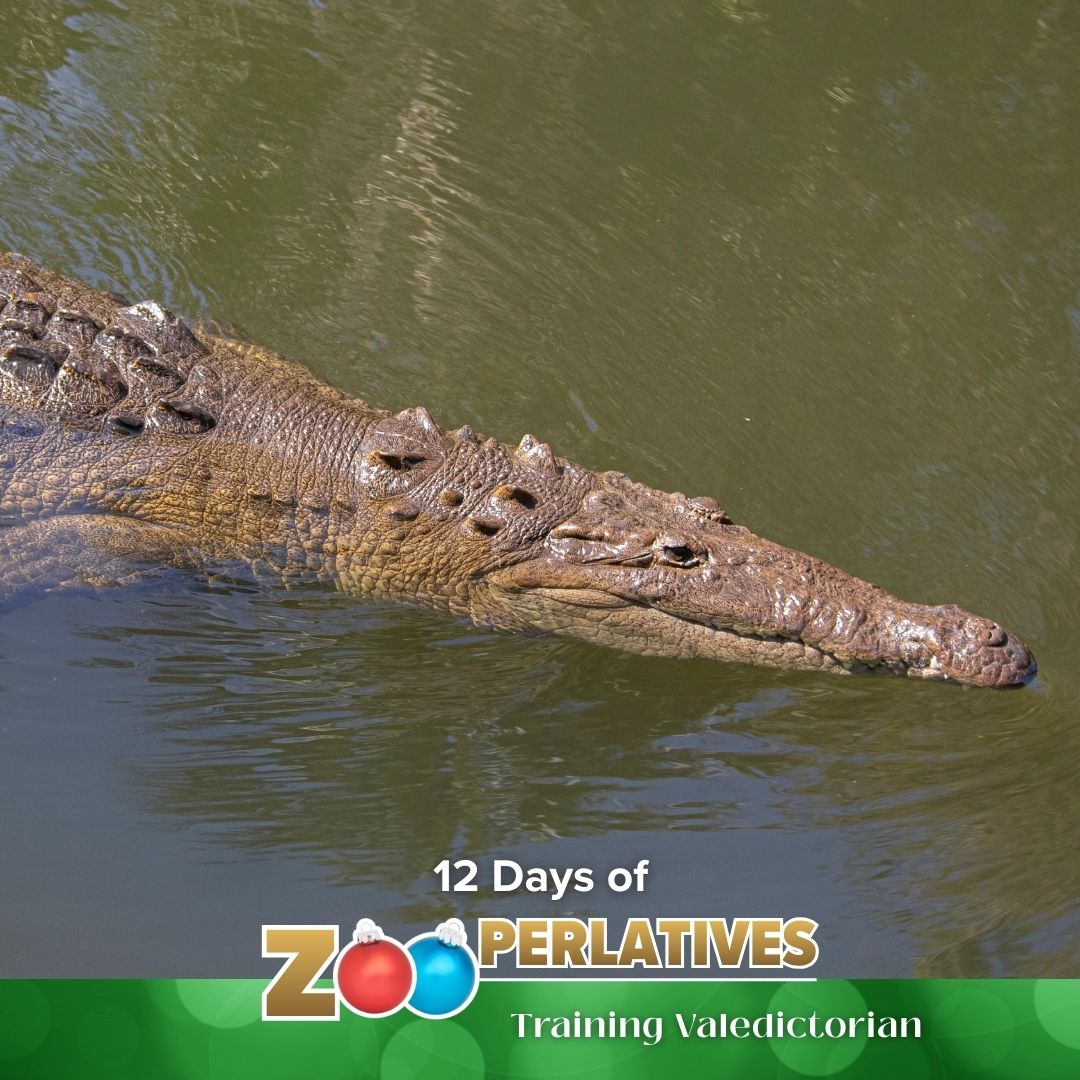
- The importance of animal training in zoo environments.
- Lilly the American crocodile: her background and role in the zoo.
- The training methods used with Lilly and their significance.
- The health benefits of comprehensive animal care and training.
- The broader implications of animal management in conservation.
Animal training plays an essential role in fostering a positive environment in zoos and aquariums. It not only enhances the welfare of the animals but also provides a safer way for caregivers to perform necessary examinations and procedures. This is particularly true in the case of large reptiles, such as the American crocodile. Their sheer size presents unique challenges when it comes to handling and care.
Lilly, our 2025 Zooperlatives “Training Valedictorian,” is a prime example of effective animal management. Weighing in at 295 pounds, she is an American crocodile that has captured the hearts of staff and visitors alike. Originating from Florida, American crocodiles are generally found in brackish and coastal waters. They are crucial for their ecosystems, as they help control other species’ populations and contribute to the ecological balance. Understanding their habits and habitats can be critical in conservation efforts.
The animal care team at the zoo undertook a comprehensive training regimen specifically for Lilly during her recent check-up. Initially, care teams focus on building trust and comfort, ensuring that animals like Lilly feel safe during interactions. Training sessions can include positive reinforcement techniques, where rewarding behavior can lead to desirable outcomes. This type of training offers animals choice and control, empowering them to participate actively in their own care.
In Lilly’s case, specialized techniques were utilized to acclimate her to the examination setting. Staff conducted repeated training sessions that included familiarization with various equipment, exhibiting behaviors like opening her mouth for an inspection. These exercises prepared her for the actual medical check-up, reducing stress and facilitating easier handling during the assessment.
Analyzing the training regimen helps demonstrate the health benefits associated with regular check-ups. Just like any other living creature, crocodiles can face a range of health issues, from dental problems to infectious diseases. Routine examinations allow caregivers to spot early signs of illness, which can significantly improve the animal’s prognosis and overall well-being. In Lilly’s specific case, her participation in her own training paved the way for a successful examination, earning her the title of “Training Valedictorian.”
The impact of such training doesn’t only affect individual animals; it has far-reaching implications for zoo management and conservation efforts. The ability to examine animals without the use of sedation is a considerable advancement. Reducing the need for tranquilizers significantly lowers the risks associated with anesthesia, especially in large reptiles like Lilly.
Moreover, the knowledge gained from the training sessions can contribute to better care strategies in captivity. Each session is an opportunity for staff members to learn more about the animals, their behaviors, and any changes in health. This firsthand knowledge is invaluable when it comes to ensuring proper environmental enrichment and stimulation, which in turn fosters a more humane environment for the animals.
Animal training is intricately tied to conservation. As we learn more about species like the American crocodile, we gain insights that inform conservation efforts both in the wild and in captivity. The education and engagement capabilities of trained animals can help raise public awareness and foster respect for wildlife. By showcasing trained animals, zoos can educate visitors about the natural habitats and behaviors that must be protected for species survival.
Zoo management is evolving. Techniques initially limited to domestic animals are being adapted for wildlife management. The frameworks in place for animal training and care are shifting toward more modern methodologies grounded in animal welfare science. This transformation not only increases the quality of life of the animals but also enhances the overall mission of zoos as conservation advocates.
Furthermore, recognizing species-specific needs can lead to unique training frameworks that support the welfare of different animals. Each species brings its own set of challenges, and this is particularly true for reptiles. Learning about the biology and behavioral characteristics of the American crocodile, for instance, allows caregivers to create targeted training protocols.
Ultimately, the attention to training and animal welfare extends beyond individual animal care. It embodies a shift in the perception of zoos and aquariums as educational hubs committed to conservation. Through engaging in practices like those employed with Lilly the American crocodile, a greater understanding of the animal kingdom is cultivated.
Our commitment to recognizing outstanding achievements within our animal community is also pivotal. Celebrating awards like the “Training Valedictorian” for animals like Lilly emphasizes the importance of animal training. This recognition encourages staff to pursue excellence and can motivate the public to appreciate the hard work of animal care teams.
As we continue counting down the days to the new year with our “12 Days of Zooperlatives” winners, it is vital to reflect on the spirit of teamwork embodied in the training of animals like Lilly. Tomorrow’s announcement, “Best Bromance,” will highlight yet another exemplary effort in fostering animal relationships and showcasing the intricate social dynamics present in the animal kingdom.
Through diligent training and comprehensive animal care, facilities can ensure the highest standards of welfare for the animals within their care. The successful examination of Lilly the American crocodile stands as a testament to what dedicated teamwork can achieve within the sphere of animal management.
The journey of training 295-pound Lilly not only illustrates the careful approach taken by her care team but also reflects a broader narrative about conservation and education. The public’s engagement through experiences like witnessing Lilly’s training can inspire action towards conservation and wildlife preservation.
In summary, Lilly’s recognition as the 2025 Zooperlatives “Training Valedictorian” serves as encouragement for continuous efforts in animal training and care that benefit not just individual animals but entire ecosystems. The importance of educated and engaged animal management cannot be understated, as it lays the foundation for conservation initiatives and fosters a deeper bond between humans and wildlife.
*****
Source Description
Please join us in congratulating our 2025 Zooperlatives “Training Valedictorian” winner: Lilly the American crocodile. 🐊
Performing an exam on a 295-pound American crocodile isn’t as easy as asking her to open her mouth to say “ahhhh.” We like to give our animals choice and control – and the tools to be a part of their own care. When check-up time came for Lilly the crocodile this year, her animal care team upped their training regimen to increase her knowledge base and make sure she was as comfortable as possible.
Lilly did such an amazing job for her actual exam, we’re naming her our “Training Valedictorian” for 2025.
We’re counting down the days to the new year with our “12 Days of Zooperlatives” winners. Stay tuned for tomorrow’s announcement: “Best Bromance.”
