
- The anatomy and adaptations of green-winged macaws.
- Natural habitat and behavioral patterns of green-winged macaws.
- Dietary needs and feeding practices in captivity.
- Conservation status and challenges faced by green-winged macaws.
- The role of zoos in macaw conservation and education.
The anatomy and adaptations of green-winged macaws are key to their survival in the wild and in captivity. These birds are characterized by their striking plumage, predominantly green with vibrant red and yellow accents. Their feathers not only play an aesthetic role; they also provide camouflage amongst the rainforest canopy, helping them evade predators. An essential anatomical feature of these macaws is their powerful beak, which can crack open tough nuts and seeds. It is adapted to their dietary needs, allowing them to exploit various food sources. The curved design of their beak enables them to manipulate food items effectively. Their zygodactyl feet, featuring two toes facing forward and two backwards, enhance their ability to grasp branches and navigate through their arboreal environment.
Natural habitat and behavioral patterns of green-winged macaws are critical components of their existence. Found primarily in the rainforests of Central and South America, these birds thrive in areas close to rivers, where food sources are abundant. They typically form monogamous pairs and are highly social creatures, often seen interacting with other birds in their flock. Their communication skills are exceptional; they use a range of vocalizations to maintain contact within their group. Additionally, these macaws are known for their playful behavior, often engaging in acrobatics while hanging from branches. This playful nature is not only a part of their social interactions but also contributes to their physical development and general well-being.
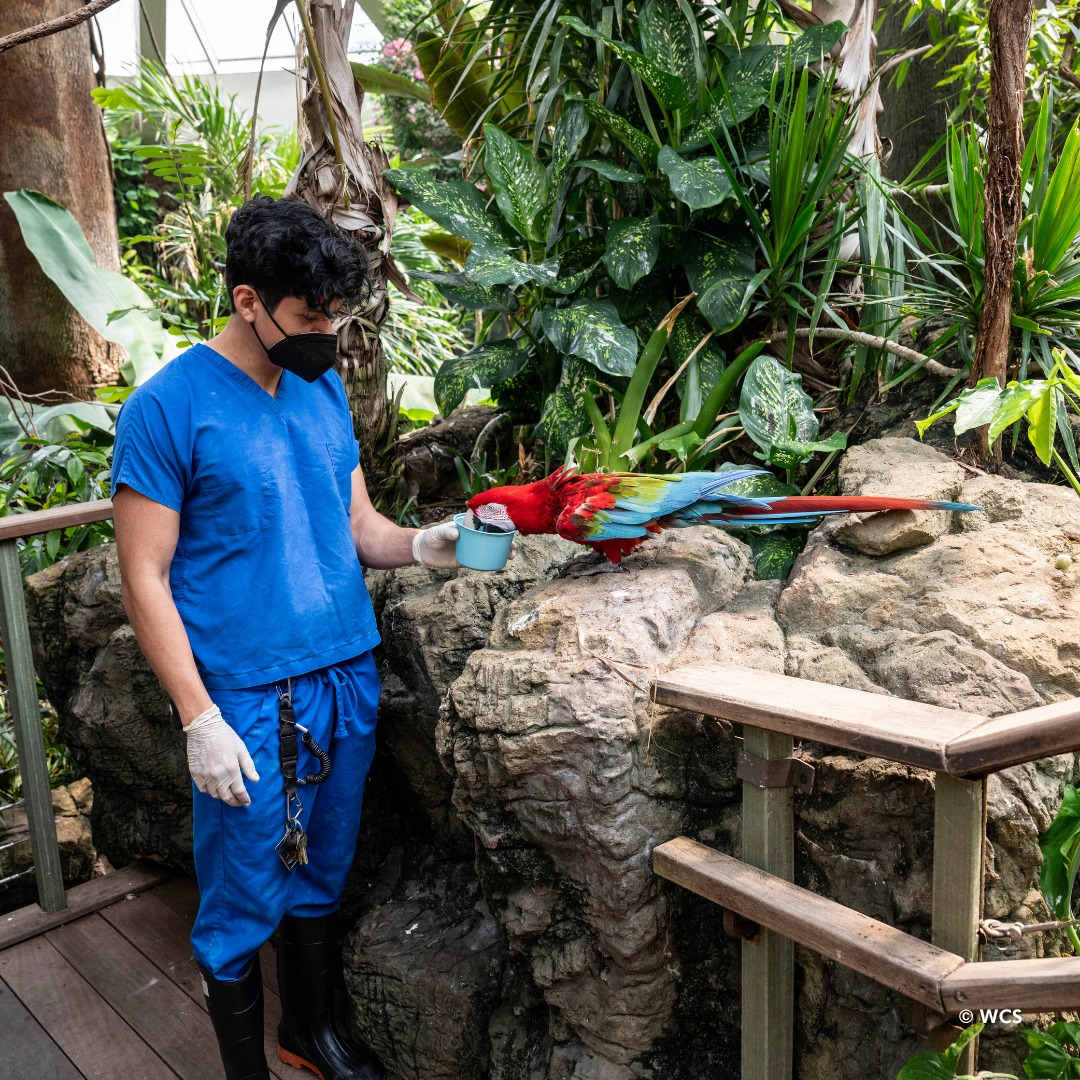
Dietary needs and feeding practices in captivity are essential for the health of green-winged macaws. In the wild, these birds consume a varied diet comprising fruits, seeds, and nuts. They often supplement their intake with clay from riverbanks, which provides minerals and helps counteract toxins found in certain foods. Understanding these dietary habits is crucial for zoo keepers. At the Central Park Zoo, caring for these macaws involves providing a balanced diet that includes fresh fruits, vegetables, nuts, and specially formulated parrot chow. This mixture is designed to mimic their natural diet while ensuring they receive all necessary nutrients. Regular feeding sessions, like the one with Keeper Jean in the photo, also serve as enrichment activities that stimulate their minds and encourage natural behaviors.
Conservation status and challenges faced by green-winged macaws are critical issues in wildlife management. Classified as “Near Threatened,” these birds face a decline in population primarily due to habitat destruction, illegal trapping, and the pet trade. Loss of habitat, particularly in rainforests, significantly reduces food availability and nesting sites. Efforts are being made to rehabilitate their populations through legislation and conservation programs, but challenges persist. The demand for exotic pets remains high, placing additional pressure on wild populations. Awareness and education about responsible pet ownership are vital components in mitigating these threats.
The role of zoos in macaw conservation and education cannot be overstated. Facilities like the Central Park Zoo act as centers for research, education, and breeding programs aimed at preserving avian species. They provide a controlled environment where these macaws can thrive while also facilitating public education through interactive displays and keeper talks. Such initiatives raise awareness about the plight of green-winged macaws and inspire people to take action for conservation. By fostering a connection between the public and these magnificent birds, zoos play a vital role in conservation efforts. The work of dedicated keepers, such as Jean, exemplifies the commitment necessary to provide proper care, ensuring that both health and well-being are prioritized in a zoo setting.
In sum, understanding green-winged macaws enriches our knowledge about avian biology, behavior, and conservation. Their impressive adaptations and social structures paint a comprehensive picture of how they thrive in their environment. In captivity, meeting their dietary requirements fosters their well-being and helps replicate some aspects of their wild lifestyle. However, the ongoing conservation challenges they face remind us of the broader implications of habitat preservation. The role of zoos is crucial, not just for the animals in their care, but for advancing conservation efforts on a global scale. Educating the public, conducting research, and developing breeding programs align seamlessly with the objective to inspire actionable change for future generations of green-winged macaws.
*****
Source Description
In this photo, you can see Keeper Jean feeding one of our green-winged macaws. These vibrant parrots don’t just stand out for their colors, they’re known for their powerful beaks and diverse diet. In the wild, green-winged macaws feed on fruits, seeds, nuts, and even clay from riverbanks, which provides essential minerals and helps neutralize toxins in their food.
Here at the Central Park Zoo, our keepers provide a nutritious mix of fruits, seeds, and nuts, and some formulated parrot chow to keep them healthy and engaged.
📸: WCS photographer, Terria Clay
