
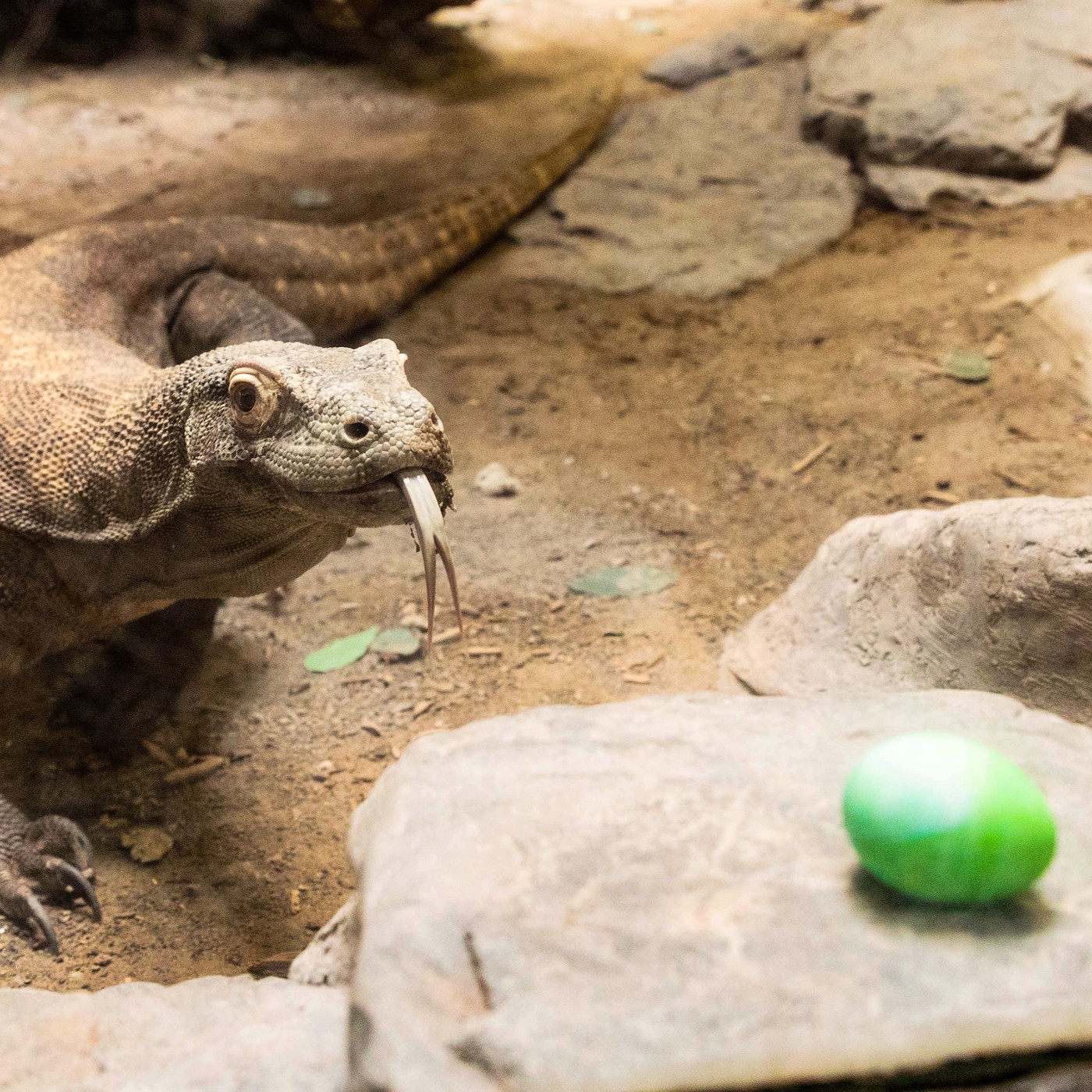
- Komodo dragons: Physical attributes and natural behavior
- Importance of enrichment activities for zoo animals
- Overview of the annual Easter egg hunt
- Role of animal caretakers in enriching animal habitats
- Conservation efforts related to Komodo dragons
The Komodo dragon, the largest living lizard species, fascinates many with its impressive size and unique adaptations. These reptiles can grow up to 10 feet in length and weigh over 150 pounds. Found primarily in Indonesia, particularly on the islands of Komodo, Rinca, Flores, and Gili Motang, their habitat ranges from dry savannas to forests. Their physical attributes, such as a powerful bite enhanced by serrated teeth and a keen sense of smell, make them proficient hunters. Komodo dragons primarily consume large prey like deer, wild boar, and smaller mammals. Understanding their natural behavior is crucial for enhancing captive management techniques.
Animal enrichment is essential for the welfare of zoo animals. Enrichment activities are designed to stimulate the animals both mentally and physically. For Komodo dragons, such activities can include hiding food or providing various types of objects to interact with. The lack of environmental stimulation can lead to boredom and stress, which negatively impacts the animals’ health. Thus, integrating enrichment activities into their daily routines can enhance their well-being and allow caretakers to monitor their behaviors more effectively.
One of the most anticipated events at our zoo is the annual Easter egg hunt, specifically tailored for our Komodo dragons—Kado, Teman, and Voltron. During this event, animal caretakers hide dyed boiled eggs throughout the dragons’ exhibits. The dragons then explore their surroundings, engaging their natural instincts as they search for these colorful treasures. The eggs are filled with tasty snacks such as meat, ensuring that the hunt serves as both a stimulating activity and a rewarding experience. Observing this playful interaction not only captivates guests but also elevates the well-being of the animals.
The role of animal caretakers is integral in orchestrating such enrichment events. They craft these experiences to align with the specific needs and preferences of our reptiles. By understanding the social dynamics and individual personalities of Kado, Teman, and Voltron, caretakers elevate the interactions that each dragon has with their environment. Tailoring activities like the Easter egg hunt allows the animals to express natural behaviors such as foraging, climbing, and exploratory movement. The caretakers work diligently to hide eggs in various locations, promoting movement and encouraging the dragons to think critically about their environment.
Beyond the enjoyment of the Easter egg hunt, these events have implications for broader conservation efforts. The Komodo dragon is classified as vulnerable due to habitat loss and poaching, among other factors. Engaging the public through events like the Easter egg hunt raises awareness about their plight. When visitors witness the dragons in a more active and stimulating environment, they deepen their appreciation of these remarkable creatures. This understanding often translates into support for conservation initiatives aimed at preserving their natural habitats and ensuring the survival of this magnificent species.
The physiological makeup of the Komodo dragon also plays a significant role in how they interact with these enrichment activities. Their exceptional sense of smell, which is approximately 40 times better than that of a human, helps them detect hidden food. Komodo dragons possess Jacobson’s organ that allows them to taste the air and interpret chemical signals. This sensory capability enriches their hunting experience, making the Easter egg hunt not only an enjoyable event but also a natural simulation of their instinctual behavior.
Moreover, observing their interactions during such activities fosters a deeper understanding of how Komodo dragons function in the wild. The hunt allows them to showcase their hunting techniques, such as stalking and ambushing. The more active they are during enrichment sessions, the easier it becomes for caretakers to monitor changes in behavior and health. Through careful observation, animal caretakers can identify potential health issues before they escalate.
It’s essential for zoos to prioritize animal welfare and enrichment, particularly for species like the Komodo dragon. By incorporating diverse activities and challenges, caretakers can help avoid stereotypic behaviors often exhibited by animals in captivity. These can include repetitive movements or lack of engagement with the environment. The Easter egg hunt serves as an excellent case study in enhancing animal welfare through enrichment.
In addition to promoting mental stimulation, physical activity is vital for maintaining the health of Komodo dragons. Regular exercise helps to prevent obesity, a common issue in reptiles kept in captivity. The hunt encourages the dragons to move around their exhibits, exploring different terrains and engaging with various objects. This not only maintains their physical condition but also contributes to their overall well-being.
The process of hiding eggs for the Easter egg hunt varies year to year and involves a strategic approach from the caretakers. They assess the dragons’ habits and preferences to determine ideal hiding spots. For instance, if a dragon tends to explore the upper parts of their exhibit, eggs may be placed in tree branches or elevated platforms, challenging the dragon to climb. This strategic placement enhances the physical demand of the hunt, making it a multifaceted experience that promotes both mental and physical health.
As we host events like the Easter egg hunt, conservation messaging is woven into the experience. Signage around the exhibit provides educational information, outlining the conservation status of Komodo dragons and the threats they face in their natural habitat. This serves as an opportunity for visitors to engage in meaningful conversations about wildlife preservation and habitat protection. The aim is to generate genuine interest and understanding that contributes to a commitment to conservation efforts.
Zoo guests often express delight during the Easter egg hunt, watching the Komodo dragons interact with their environment in such a candid manner. Observers note how the dragons use their powerful limbs and sharp claws to dig, pull, and investigate their surroundings. This spectacle encourages a connection between visitors and the animals, strengthening public empathy towards wildlife. When attendees see the animals in an enriched environment, it fosters an understanding of the commitment needed to protect these unique creatures.
In conclusion, the annual Easter egg hunt for our Komodo dragons exemplifies a well-rounded approach to animal care that prioritizes enrichment, education, and conservation. By enabling the dragons to engage in natural behaviors while providing a source of joy for the caretakers and the public, we create a compelling case for why every animal should experience the benefits of enrichment in their daily lives. Through ongoing support and education, we can all contribute to the preservation of the Komodo dragon and ensure that future generations can appreciate these remarkable reptiles.
*****
Source Description
Our Komodo dragons love their annual Easter egg hunt! Our animal caretakers put together fun enrichment sessions like this to add something unique to our animals’ daily routines, and allow them to exercise their bodies and minds as they hunt for some tasty snacks. Happy Easter! 🥚🐉
Photo Descriptions: Komodo dragons Kado, Teman, and Voltron hunting for dyed boiled Easter eggs in their exhibits, along with shots of guests watching and of their caretakers “hiding” the eggs.
