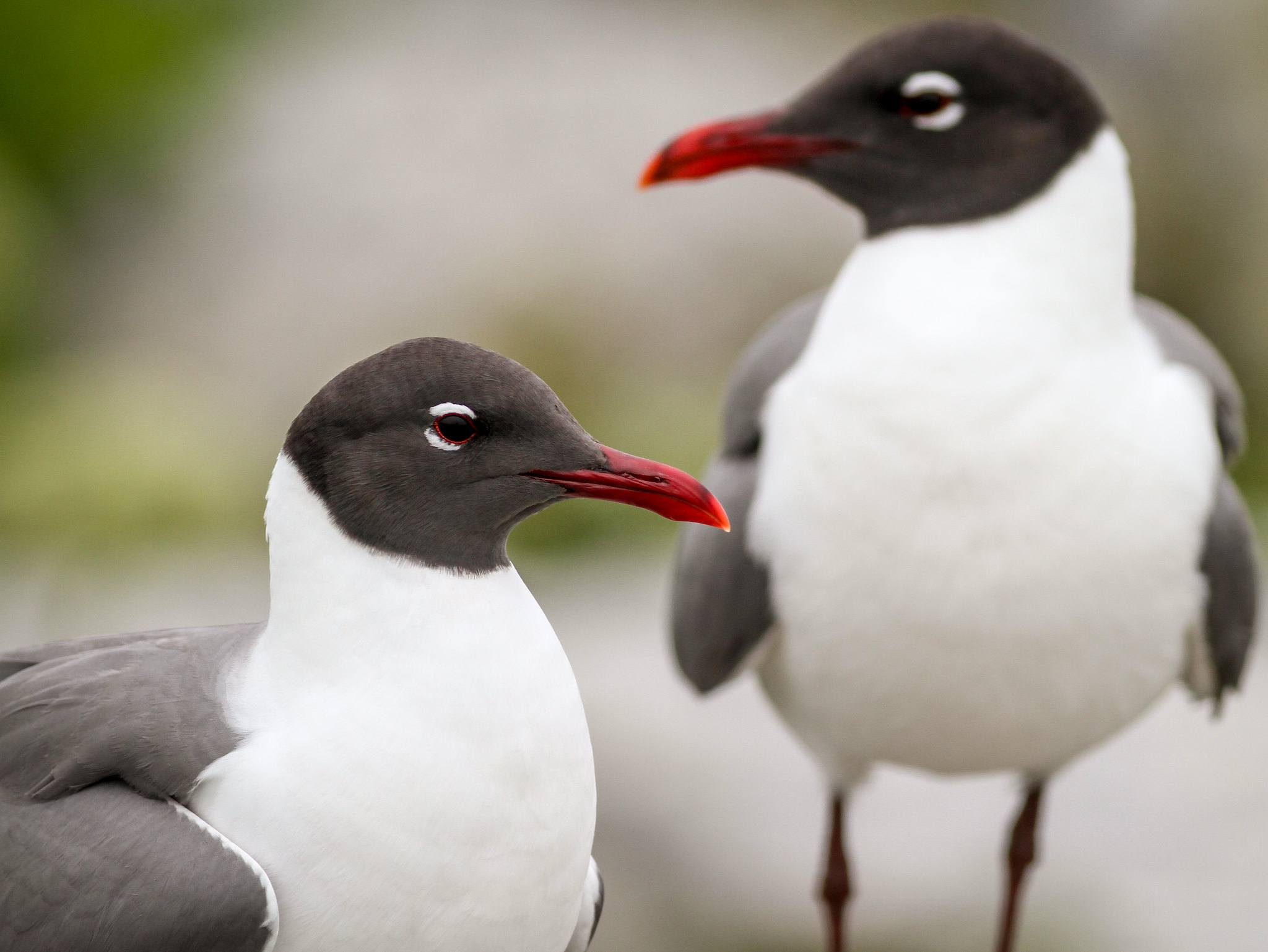
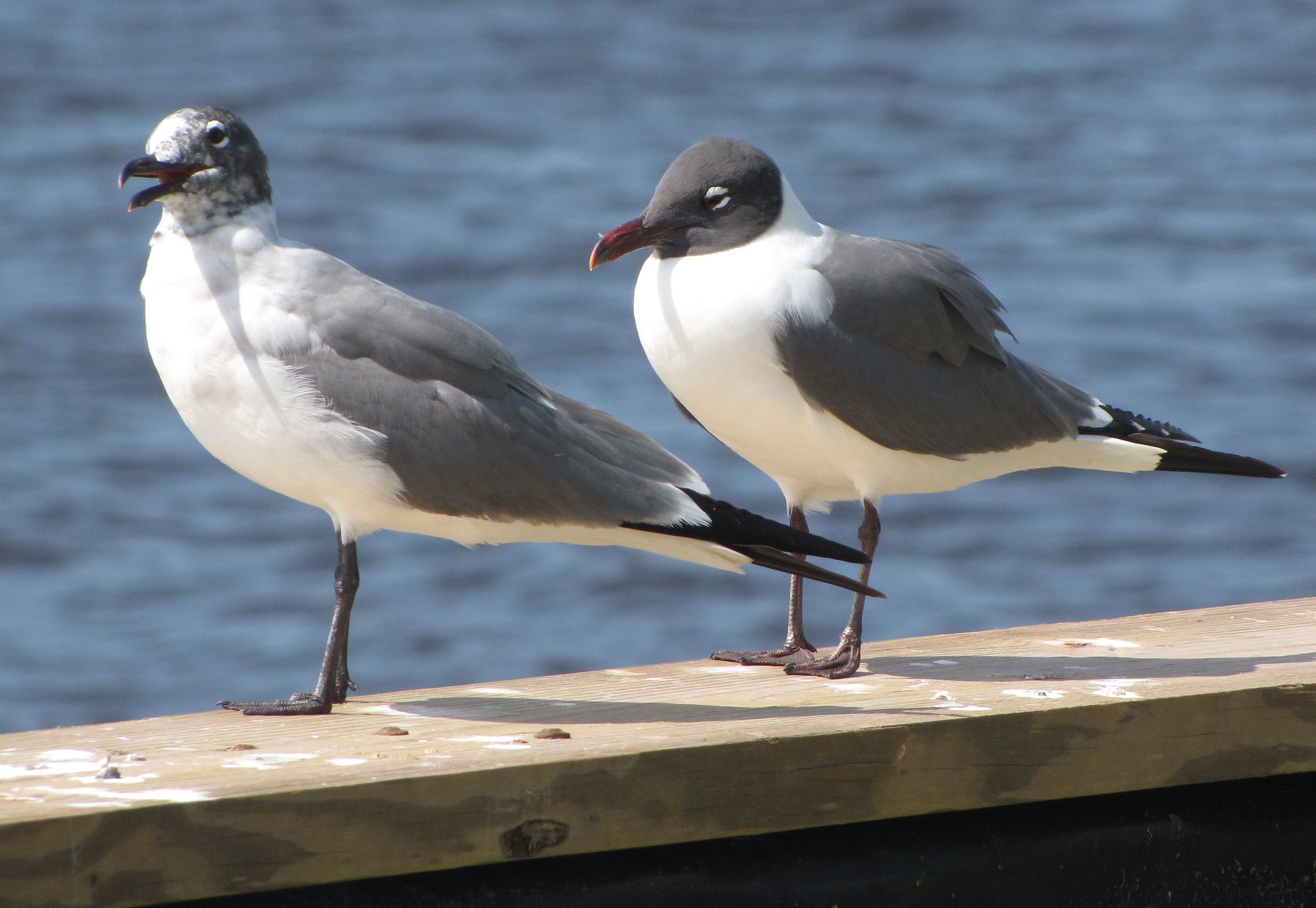
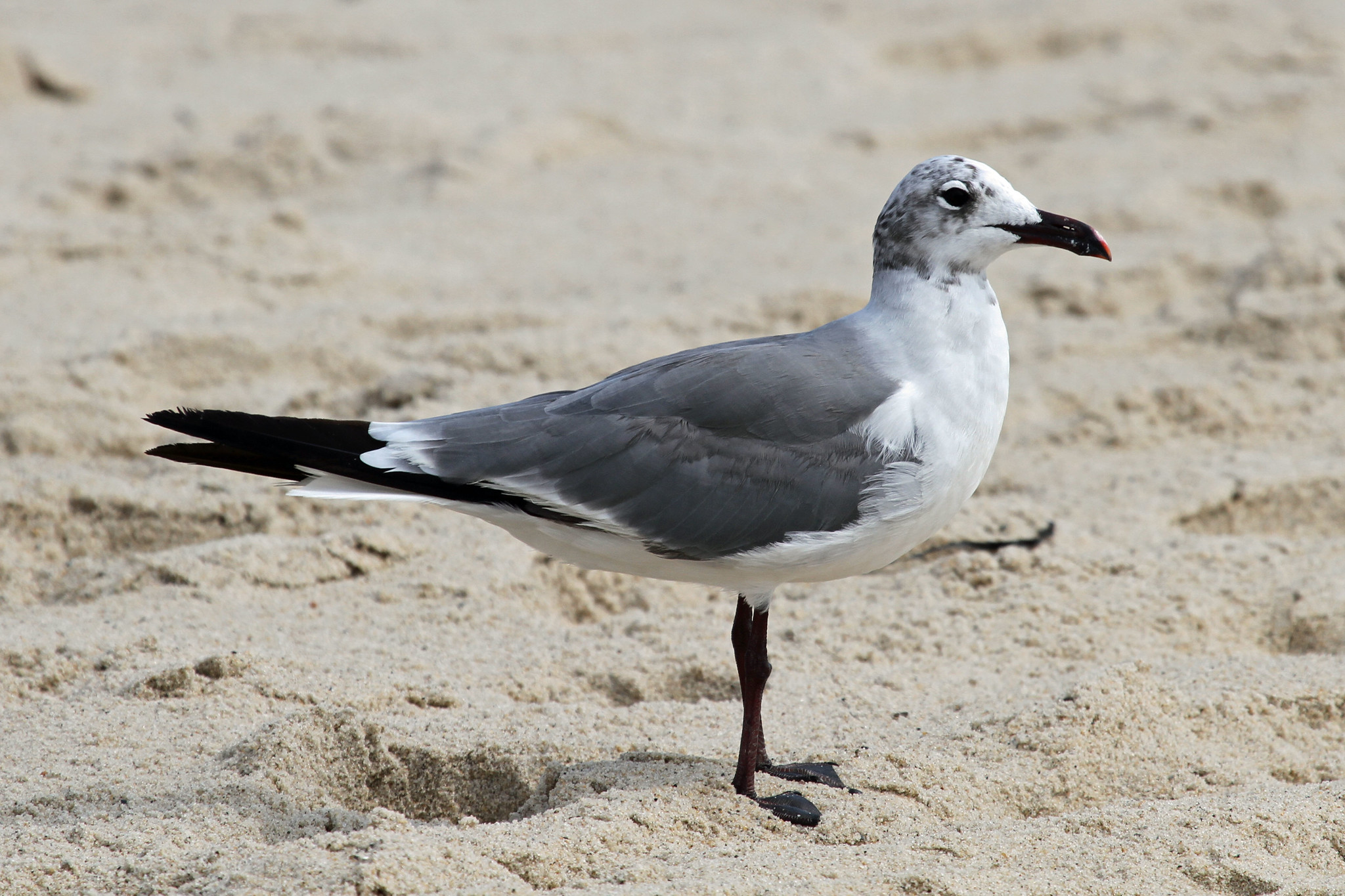
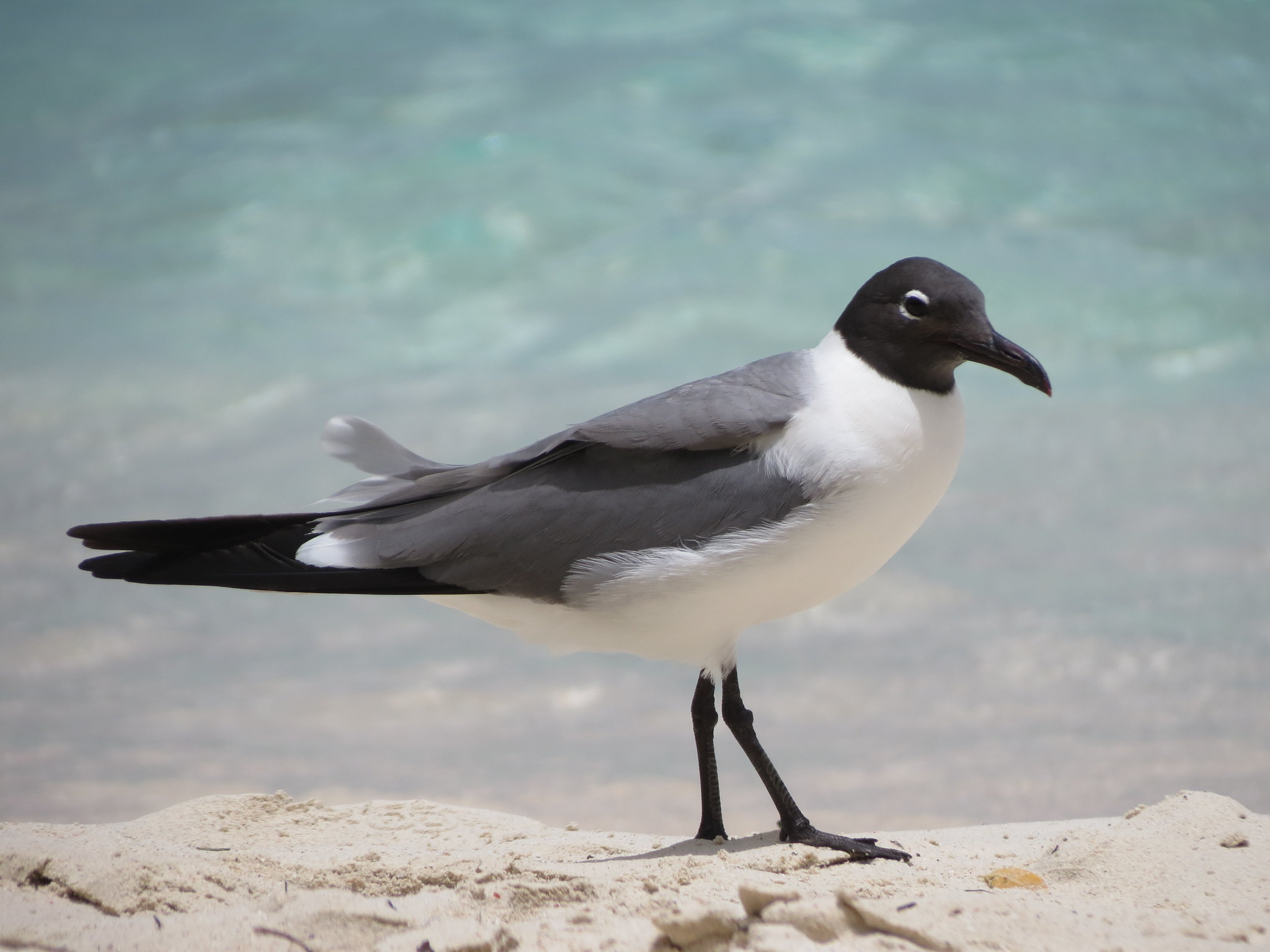
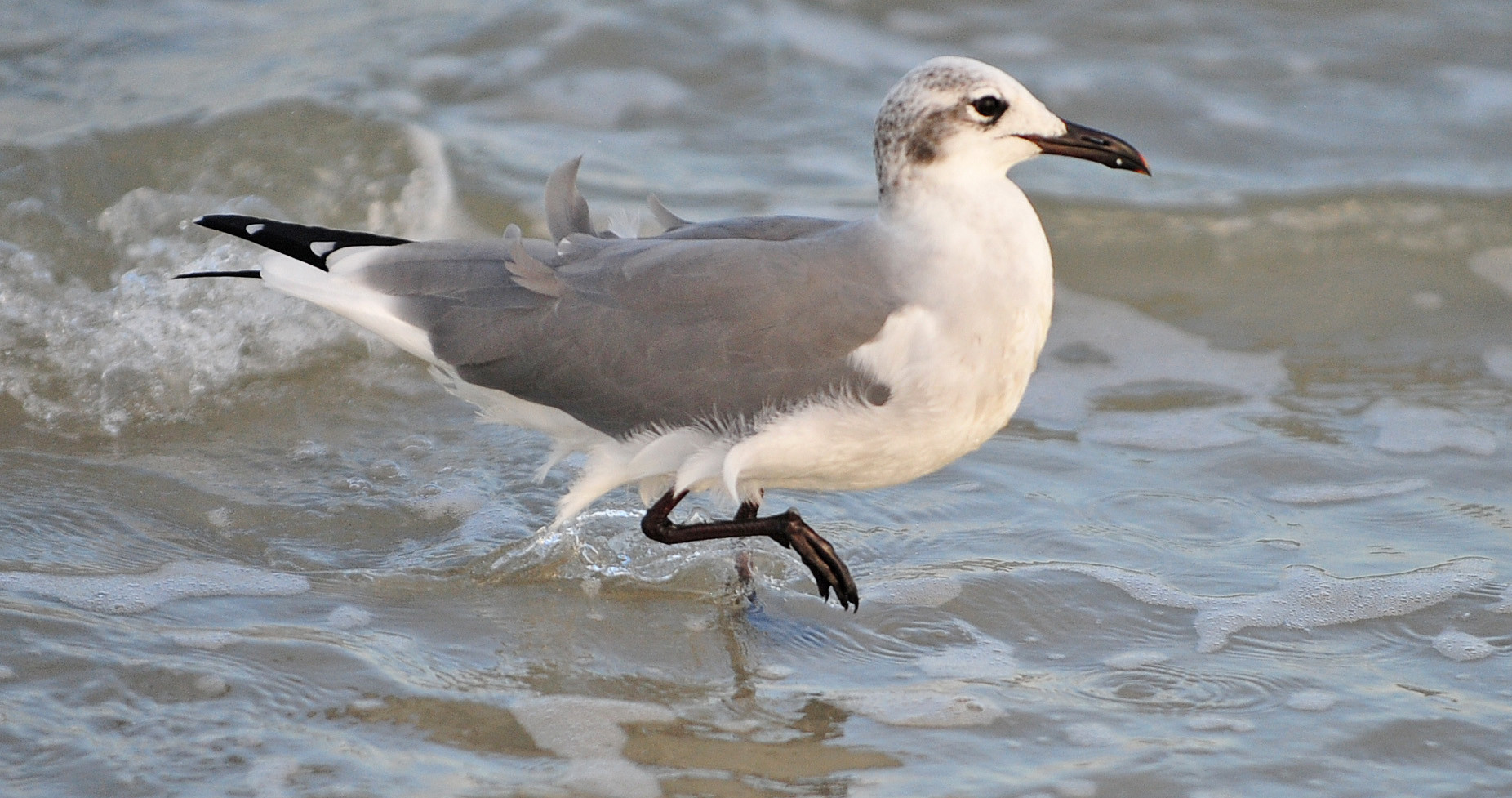
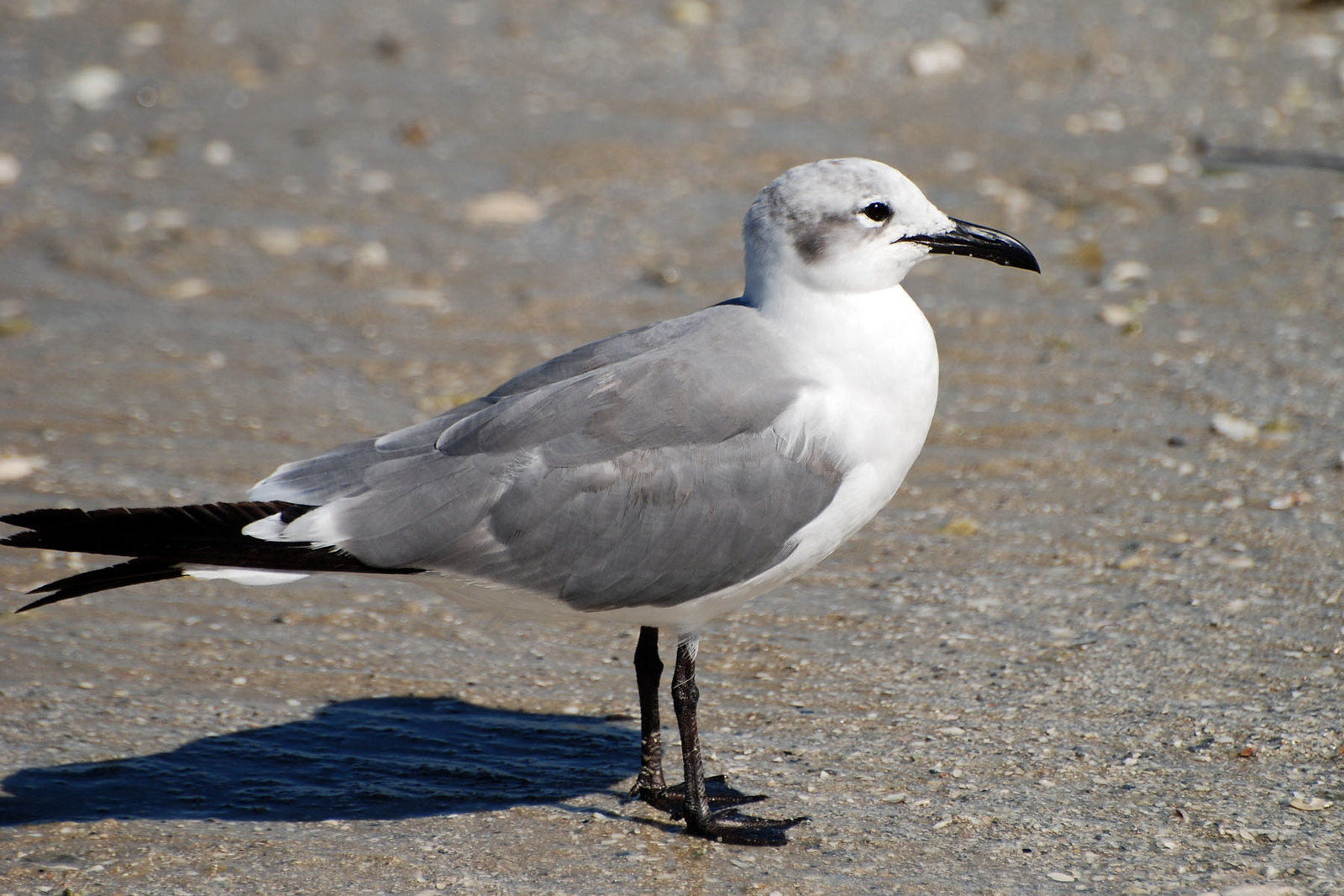
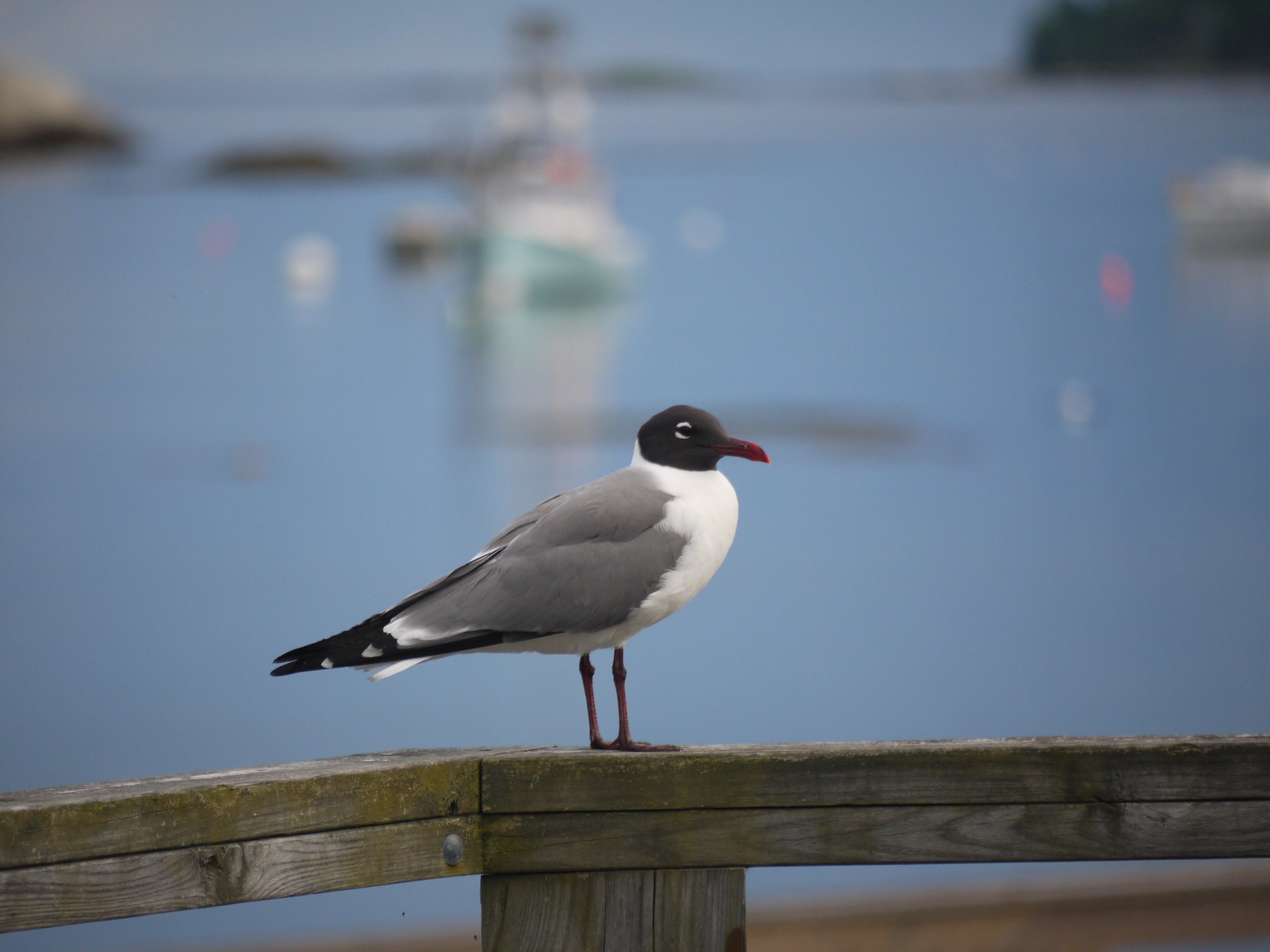
The Laughing Gull, scientifically known as Leucophaeus atricilla, is a medium-sized gull known for its distinctive call that sounds like laughter. This bird is easily recognizable by its deep black head, white underparts, and gray back. During the breeding season, the adult Laughing Gull sports a dark, almost black head, contrasting sharply with its white neck and underparts. In non-breeding plumage, the head turns white with smudgy gray patches. The bill is long and red, and the legs are dark.
The Laughing Gull is a coastal species commonly found along beaches, bays, estuaries, and near fishing ports. They are highly sociable and often seen in large flocks, especially during breeding and migration. These gulls are opportunistic feeders, consuming various food items, including fish, insects, and human food scraps. They are known for their acrobatic flight and ability to catch food items on the wing.
Laughing Gulls breed in large colonies on coastal islands, often with other seabird species. Their distinctive “laughing” call is a hallmark of the Atlantic and Gulf coasts in the United States during the summer months.
Laughing Gulls are medium-sized birds with a length of about 15-17 inches and a wingspan of around 40-43 inches. They have a slender build with a long, slightly rounded tail. In breeding plumage, the adult has a glossy black head, a dark red bill, and dark legs. The body is white, and the back is a pale gray. In the non-breeding season, their head becomes white with gray streaks, the bill turns blackish, and the legs become duller in color.
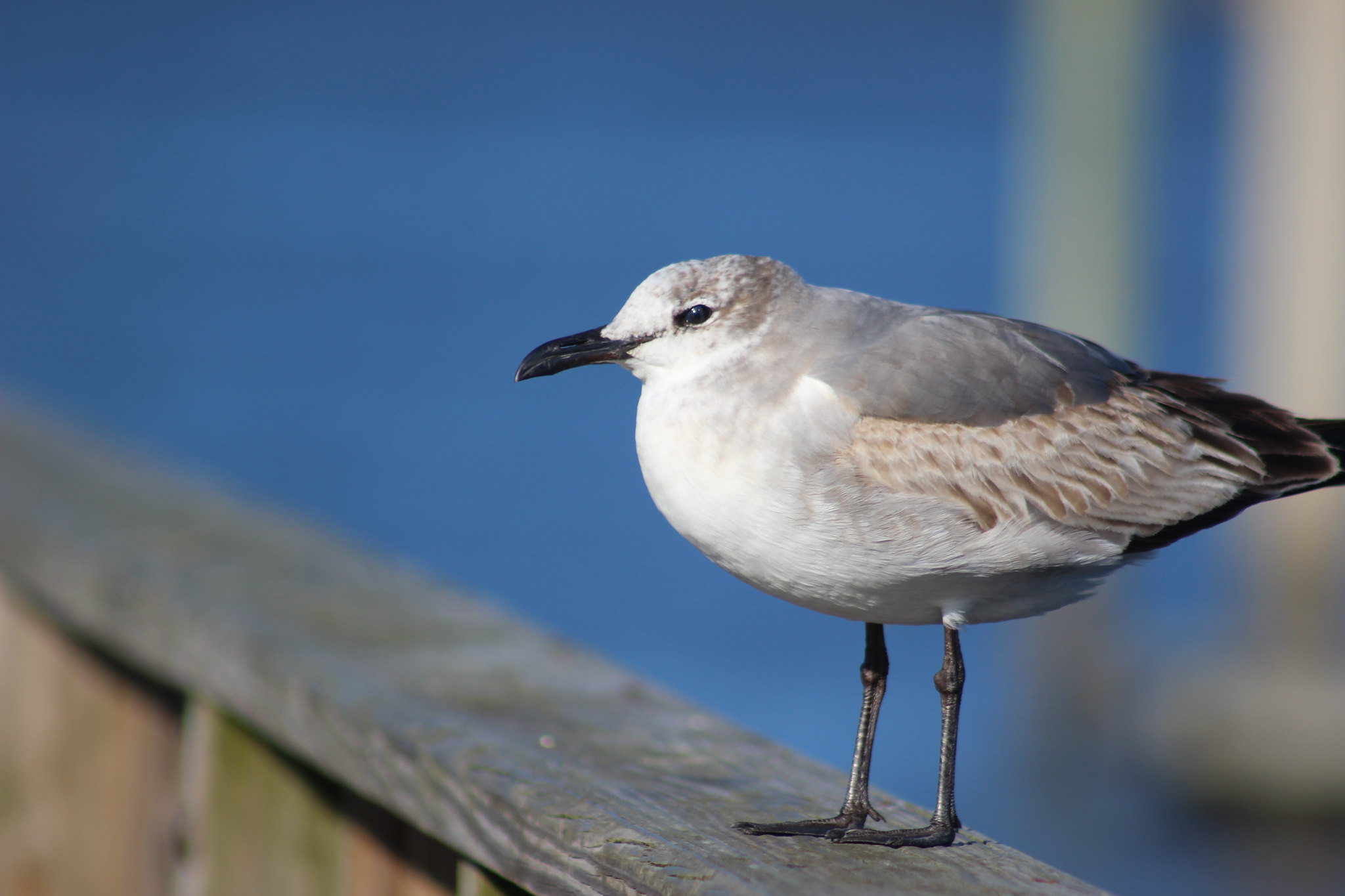
Juvenile Laughing Gulls have a mottled brown and white appearance and gradually acquire adult plumage over a few years. Their flight is buoyant and agile, with rapid wing beats. They often hover over water before diving to catch food or snatch food items from the surface.
Lifespan: Wild: ~10 Years || Captivity: ~20 Years
Weight: Male & Female: 8.5-14.5 oz (240-410 g)
Length: Male & Female: 15-17 inches (38-43 cm)
Wingspan: Male & Female: 40-43 inches (101-109 cm)
Laughing Gulls are coastal birds primarily found in beach environments, estuaries, marshes, and nearshore waters. They are a common sight along the Atlantic coast of North America, from Maine to Florida, and along the Gulf Coast. These gulls prefer habitats where they can easily access food, such as tidal flats, salt marshes, and areas near human activity.
Their breeding habitats typically include isolated islands or beaches where they can nest in large colonies. The availability of suitable nesting sites and food sources plays a crucial role in their habitat selection.
Laughing Gulls are opportunistic feeders with a varied diet. They primarily feed on small fish, crustaceans, and insects. They also scavenge and consume human food scraps, often frequenting beaches, picnic areas, and parking lots. These gulls are skilled at foraging and can catch food on the wing or pick items from the water’s surface.
During the breeding season, they may feed more intensively on insects and small fish to meet the increased energy demands. Their foraging behavior often includes following fishing boats to feed on discarded bycatch.
Laughing Gulls are monogamous and usually form pair bonds for a single breeding season. They breed in large colonies, which can include thousands of pairs. Courtship involves elaborate displays such as mutual preening, head tossing, and loud calling. The male presents the female with food as part of the courtship ritual.
Nesting occurs in colonies on coastal islands or isolated beaches. The female lays 2-4 eggs in a nest, which is a shallow scrape in the ground lined with grass and feathers. Both parents share the responsibilities of incubating the eggs and caring for the young. The chicks are precocial and leave the nest within a few days of hatching, but they depend on their parents for food and protection.
Laughing Gulls are highly social birds, often seen in large flocks, especially during migration and in their wintering grounds. They form large breeding colonies, which provide increased vigilance against predators and enhance foraging efficiency. Their social interactions include a variety of vocalizations and displays used for communication and establishing social bonds.
Outside of the breeding season, Laughing Gulls may gather in large flocks at feeding sites, particularly in abundant food areas. Their social structure is an adaptation to their lifestyle in open, exposed habitats, where group living can offer protection from predators.
The global population of Laughing Gulls is considered stable, with no immediate threats leading to a significant decline. They are widespread along the coasts where they occur. However, their populations can be affected by environmental changes, habitat destruction, and pollution.
Conservation efforts focus on protecting coastal habitats, particularly breeding and nesting areas. Monitoring and research are ongoing to better understand their population dynamics and the impacts of environmental changes.
Population Threats:
The primary threats to Laughing Gulls include habitat loss and degradation, particularly in coastal areas due to development and pollution. Oil spills and chemical contaminants can impact their food sources and nesting sites. Climate change poses a long-term threat by potentially altering their habitats and affecting food availability.
In some areas, disturbance by human activities can impact their breeding success and foraging behavior. Predating eggs and chicks by mammals, birds, and other predators is a natural threat.
Conservation Efforts:
Conservation efforts for Laughing Gulls include protecting and managing important habitats, such as coastal areas, estuaries, and islands. Efforts to reduce pollution and disturbance in these areas are crucial for their survival. Legal protections, where applicable, help safeguard these birds from overharvesting and exploitation.
Research and monitoring programs are essential for understanding their ecology, population trends, and the effectiveness of conservation strategies. Public education and awareness campaigns are also important in promoting the conservation of Laughing Gulls and their habitats.
Additional Resources:
Fun Facts
The Laughing Gull’s call, which sounds like high-pitched laughter, is familiar along many coastal areas.
They are often seen following boats and ferries, taking advantage of food scraps people throw.
Laughing Gulls are adaptable and thrive in various coastal environments, including urban areas.
They have a playful demeanor and are known to steal food from other birds and even unsuspecting beachgoers.
Juvenile Laughing Gulls have a mottled brown appearance and take several years to acquire the adult plumage.
These gulls are proficient swimmers and can often be seen floating on the water’s surface.
The Laughing Gull symbolizes the coastal environment and is featured in various cultural and artistic expression forms.
They are known for their opportunistic feeding habits, often scavenging at landfills, docks, and fishing piers.
Laughing Gulls play an important role in the coastal ecosystem, helping to control insect populations and clean up carrion and waste.
Their head color changes with the seasons; it’s black in the summer and grayish in the winter.